A dry country cooks in fat.
Sindh, southern Punjab and the Balochistan fringe share a river and not much rain. The kitchen that grew here uses fat where wetter regions use water: meat cooks in it, bread fries in it, and in the heat it keeps things edible longer than they have any right to be. Asafoetida sits underneath the onion and garlic in most savoury dishes rather than replacing them, and it is the single reason a Sindhi kitchen doesn’t smell like a Punjabi one. The souring is dry: amchur, tamarind, dried pomegranate seed. Yoghurt is used, but it is not the reflex it becomes upriver.
Why it cooks as one zone
The border that matters here is the Indus, not the line drawn in 1947. Sindh and the Saraiki belt of southern Punjab cook from the same larder. Lahore, three hundred miles upstream, does not. Cream, nuts and rose water do the work there that fat and souring agents do here.
The technique holding the zone together is seyal. No water goes into the pot at any stage. Onions are cooked down until they collapse completely, and the meat, fish or torn roti then cooks in what they release, over low heat, for a long time. Give the onions longer than you think they need; the whole dish is built on them, and rushing that stage is the usual reason a seyal comes out thin. Seyal gosht, seyal murgh, seyal machi and seyal roti are the same method four times over.
The rest follows the climate. Animal fat is both cooking medium and preservative. Millet stands beside wheat because bajra grows where wheat struggles. Sindhi kadhi shows the souring logic most clearly: it is gram flour soured with tamarind, with no dairy in it at all, while most versions elsewhere in the region start from yoghurt.
Partition split the people who cook this food without splitting the food. Sindhi kitchens run in Karachi and Hyderabad, and in Ulhasnagar and Mumbai, and the recipes on both sides stayed recognisably the same.
The pantry
The ingredients that make a dish belong to the Indus Plains:
- Asafoetida (hing) is bloomed in hot fat as the first move in most savoury dishes. Use a pinch. It smells alarming in the jar and disappears into the background of the finished dish.
- Dried mango powder (amchur) for souring, where a wetter kitchen would use yoghurt.
- Tallow and ghee. Rendered animal fat carries this cuisine, and swapping to oil changes the dish more than you’d expect.
- Bajra (pearl millet), the flatbread flour in the drier districts, where wheat doesn’t reliably grow. Darker and heavier than wheat flour, and the rotis are made smaller because the dough tears more easily.
- Chana dal, doing three jobs at once: thickener, filler, protein. Cooked into greens as readily as served alone.
- Sesame, toasted, in the sweets and on the breads.
- Bhee (lotus stem), cut into wheels and cooked until it softens. A Sindhi signature that you rarely meet elsewhere on the plains.
- Tamarind for wet souring, where amchur won’t do. It carries the kadhi, and goes into the chutneys and the fish.
Where to find it
Most of this is easier to source than it sounds.
In the UK, any South Asian grocer carries the staples: Southall in west London, Green Street in Newham, the Curry Mile in Rusholme, Alum Rock Road in Birmingham. Look to TRS or East End for asafoetida, amchur and ajwain, KTC for ghee, and the loose-grain aisle for chana dal and bajra flour. Lotus stem turns up fresh or frozen in the larger shops; ask for bhee by name, and take the Indian variety rather than the thick Japanese renkon, which behaves like a different vegetable. Bone-in mutton from any halal butcher.
In the US, Patel Brothers and the larger Indian grocers stock the same list, and H-Mart carries frozen lotus stem. Vandevi or Laxmi for asafoetida, Deep for amchur and bajra flour.
Palla, the Indus shad, is the one genuine difficulty outside Pakistan. The recipe that calls for it names a substitute.
The recipes
The everyday cooking of the plains, the feast dishes that mark an occasion, the street food of Karachi and Hyderabad, the sweets, and the drinks a dry country invented to get through the heat.
Everyday & Weeknight
-
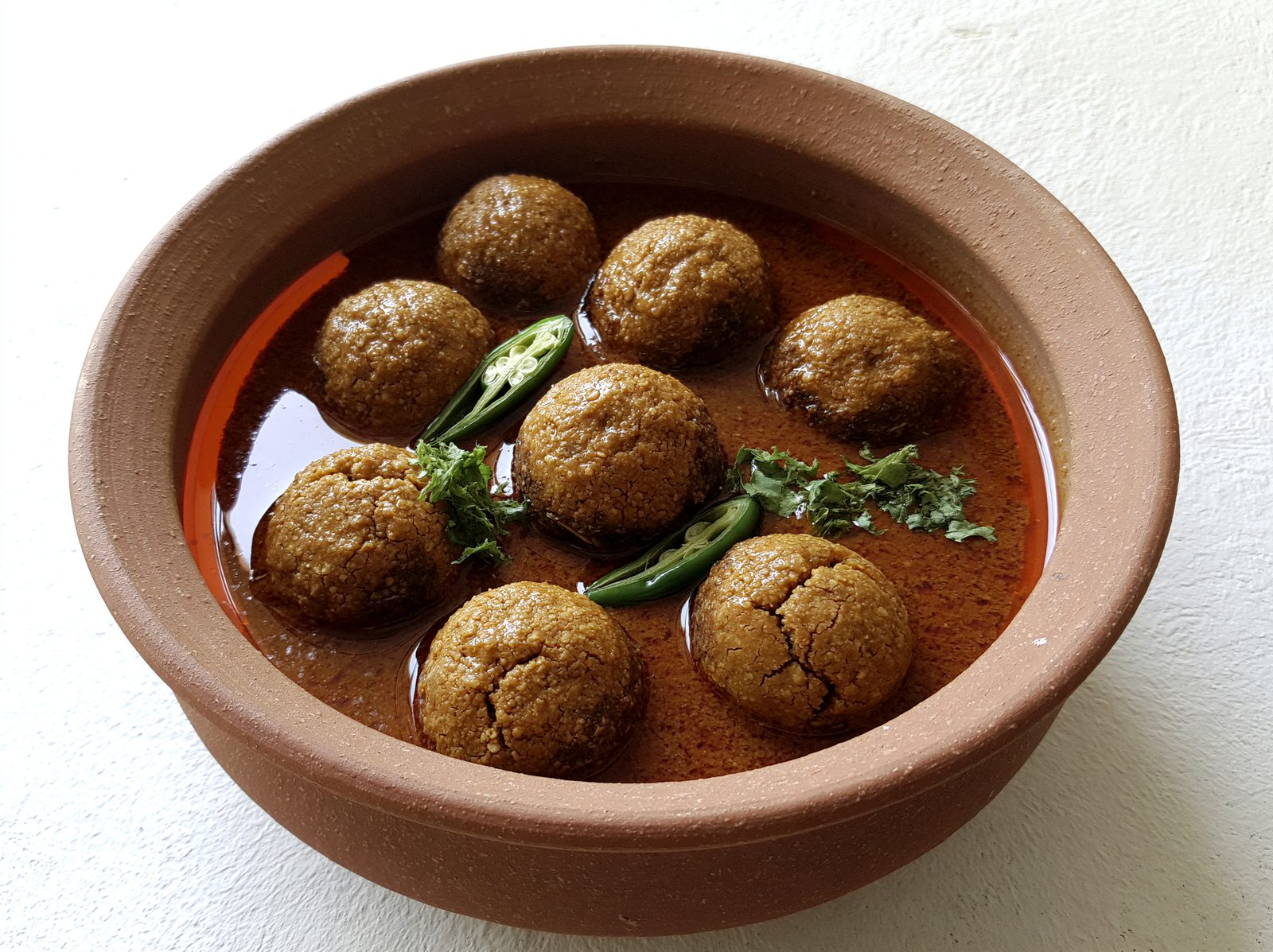
Vadiyoo Jo Salan
Vadiyoo jo salan: sun-dried Sindhi lentil dumplings rehydrated and cooked in a tamarind curry — the preserved-legume tradition of the Indus Plains.
-
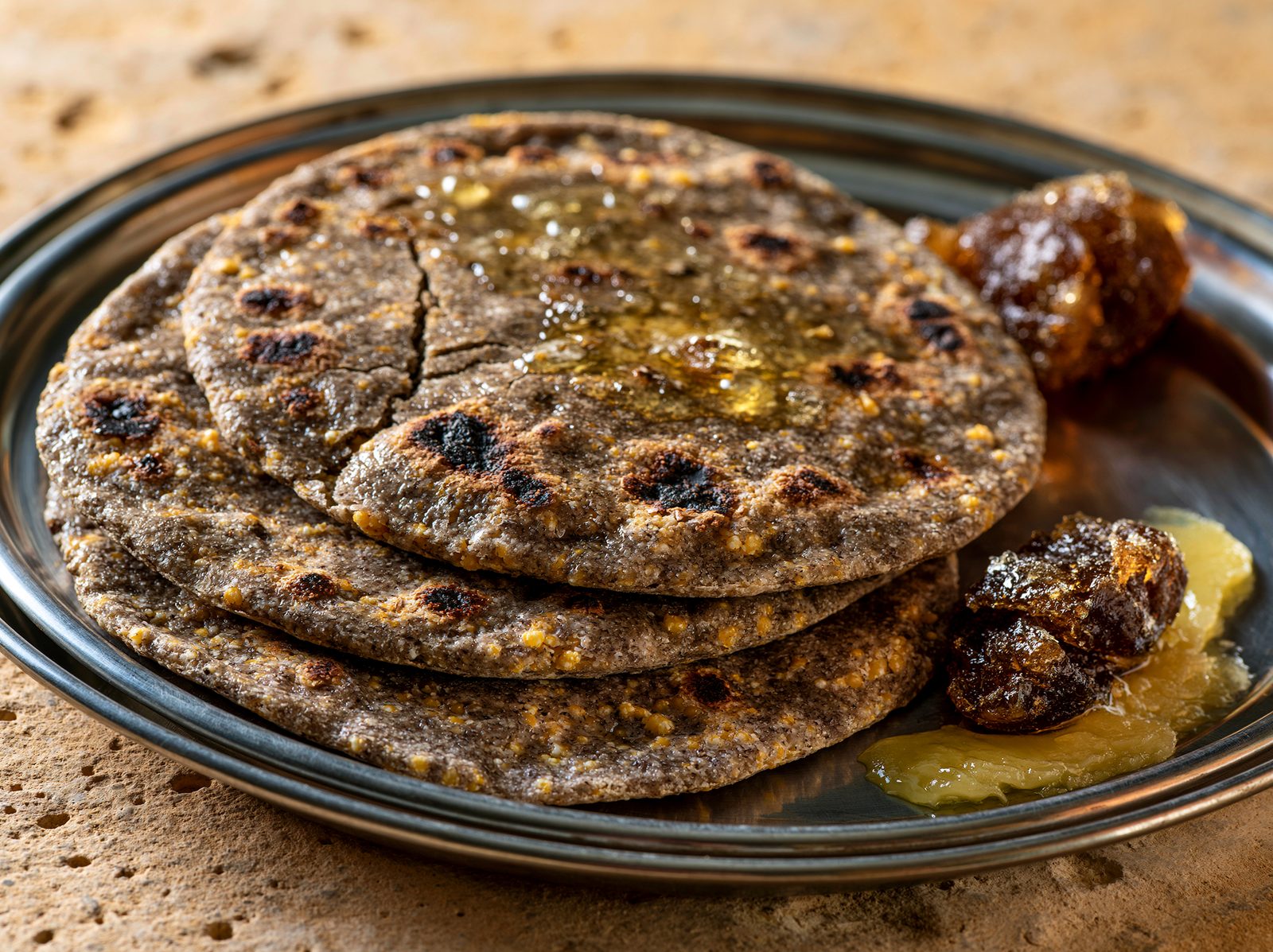
Bajri jo Roto
Bajri jo Roto: Sindhi pearl millet flatbread — thick, rough-textured, made without water — the ancient arid-zone bread eaten with ghee and jaggery.
-
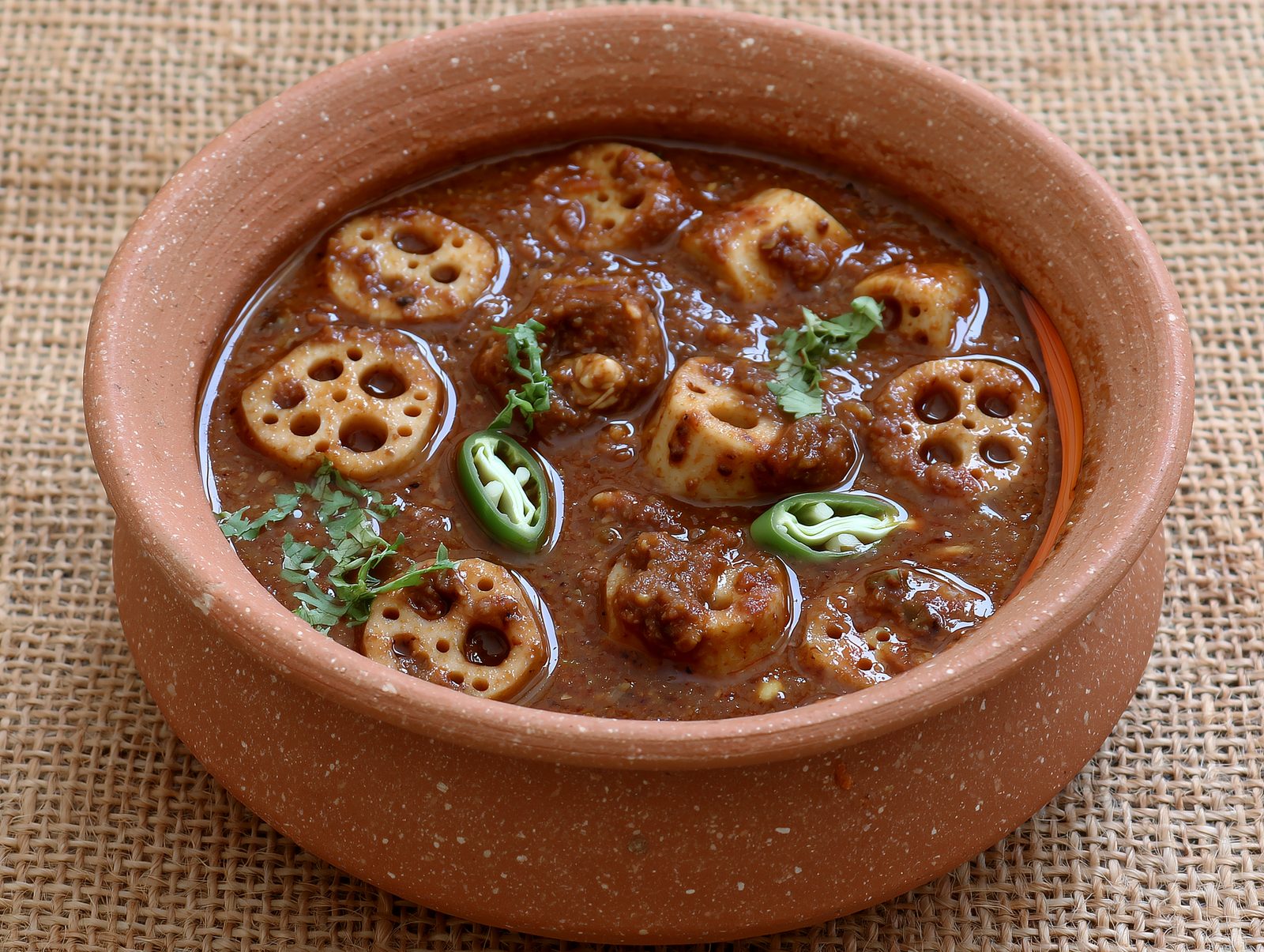
Bhee jo Salan
Bhee jo salan: lotus root simmered in a tamarind-soured Sindhi curry — the zone’s vegetarian signature, the lotus of the Indus Valley brought to the table.
-
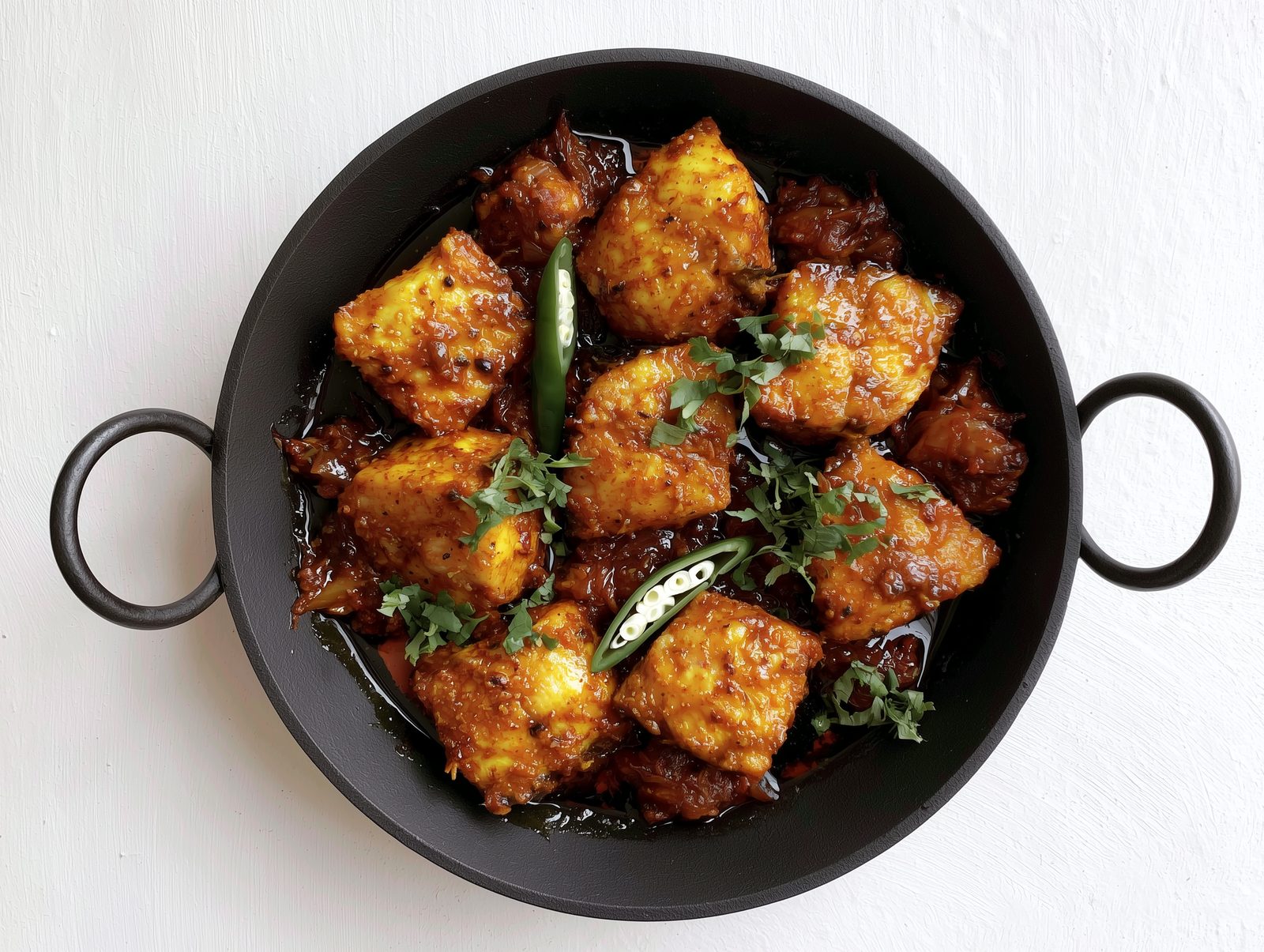
Seyal Machi
Seyal machi: firm fish cooked by the Sindhi seyal technique — no added water — with caramelised onions and tamarind, on the table in thirty minutes.
-
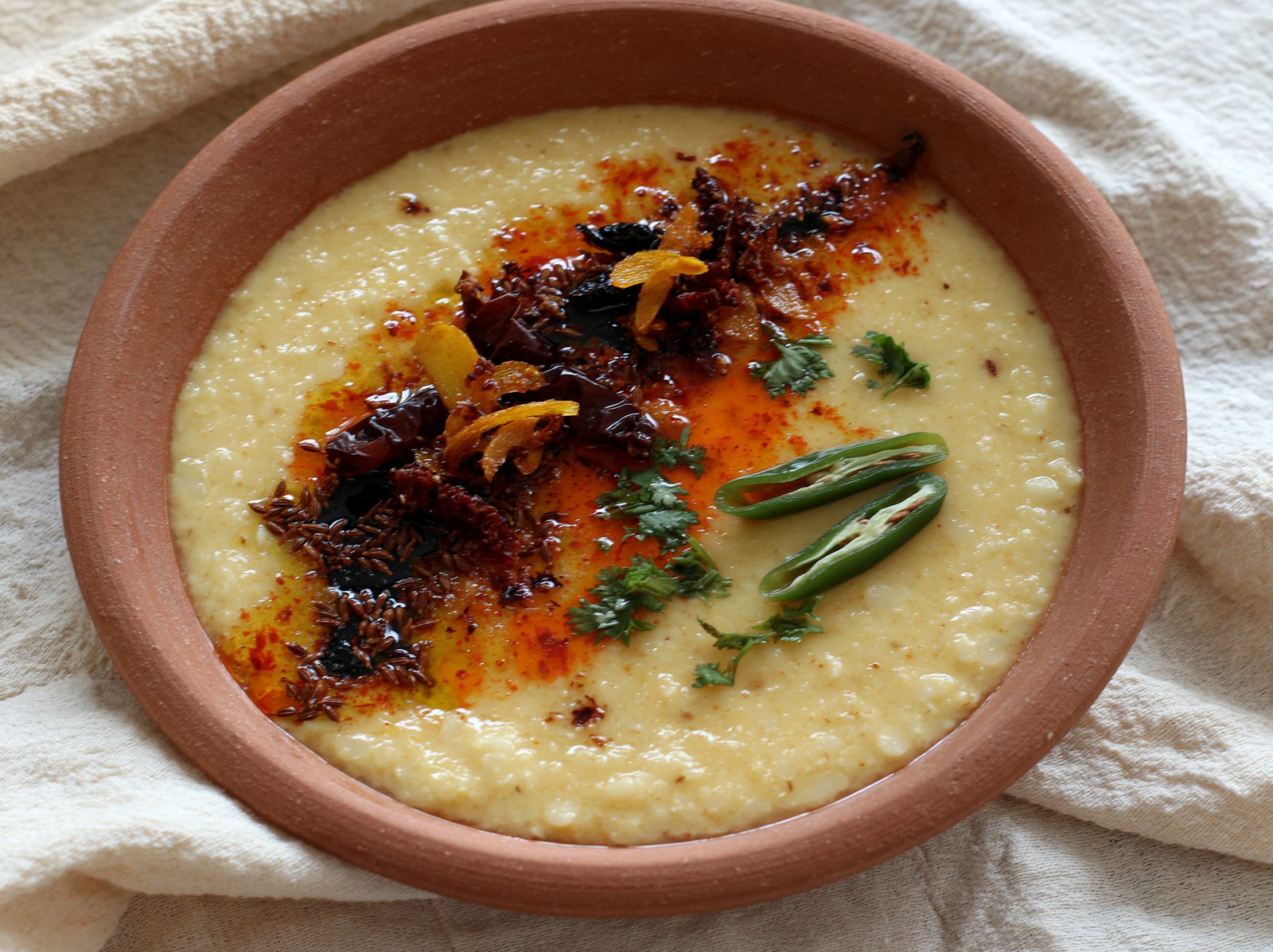
Maash ki Dal
Sindhi maash ki dal: urad lentils with a fierce asafoetida and chilli tarka — no cream, no tomato — the lean Sindhi approach to a classic South Asian pulse.
-
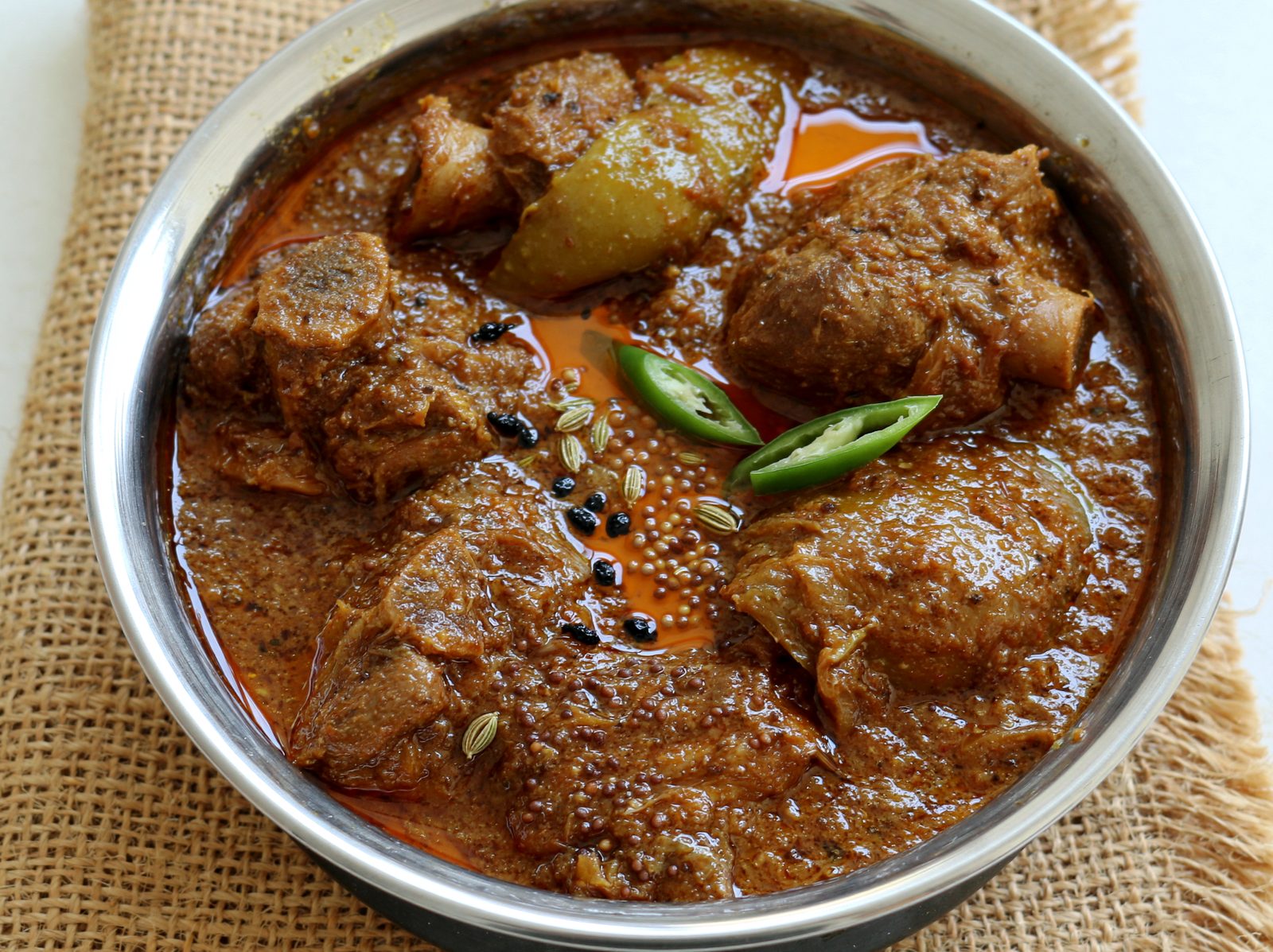
Sindhi Achar Gosht
Sindhi achar gosht: lamb cooked with pickle-spice masala and raw green mango pieces — the Indus Plains achar curry where the whole mango is the souring agent.
-
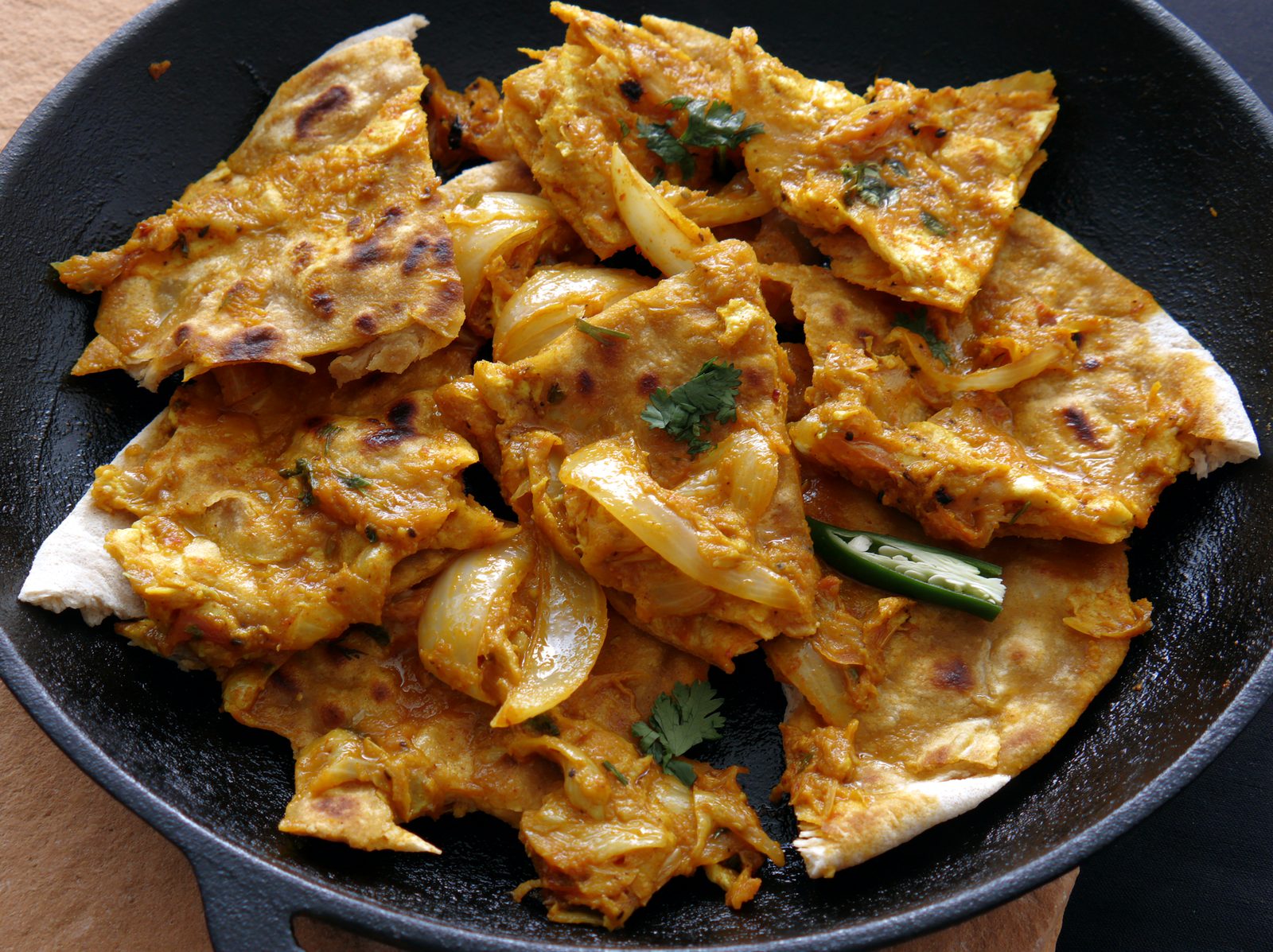
Seyal Roti
Seyal roti: leftover flatbread cooked in a spiced onion base with no added water — the Sindhi seyal technique applied to bread, twenty minutes, nothing wasted.
-
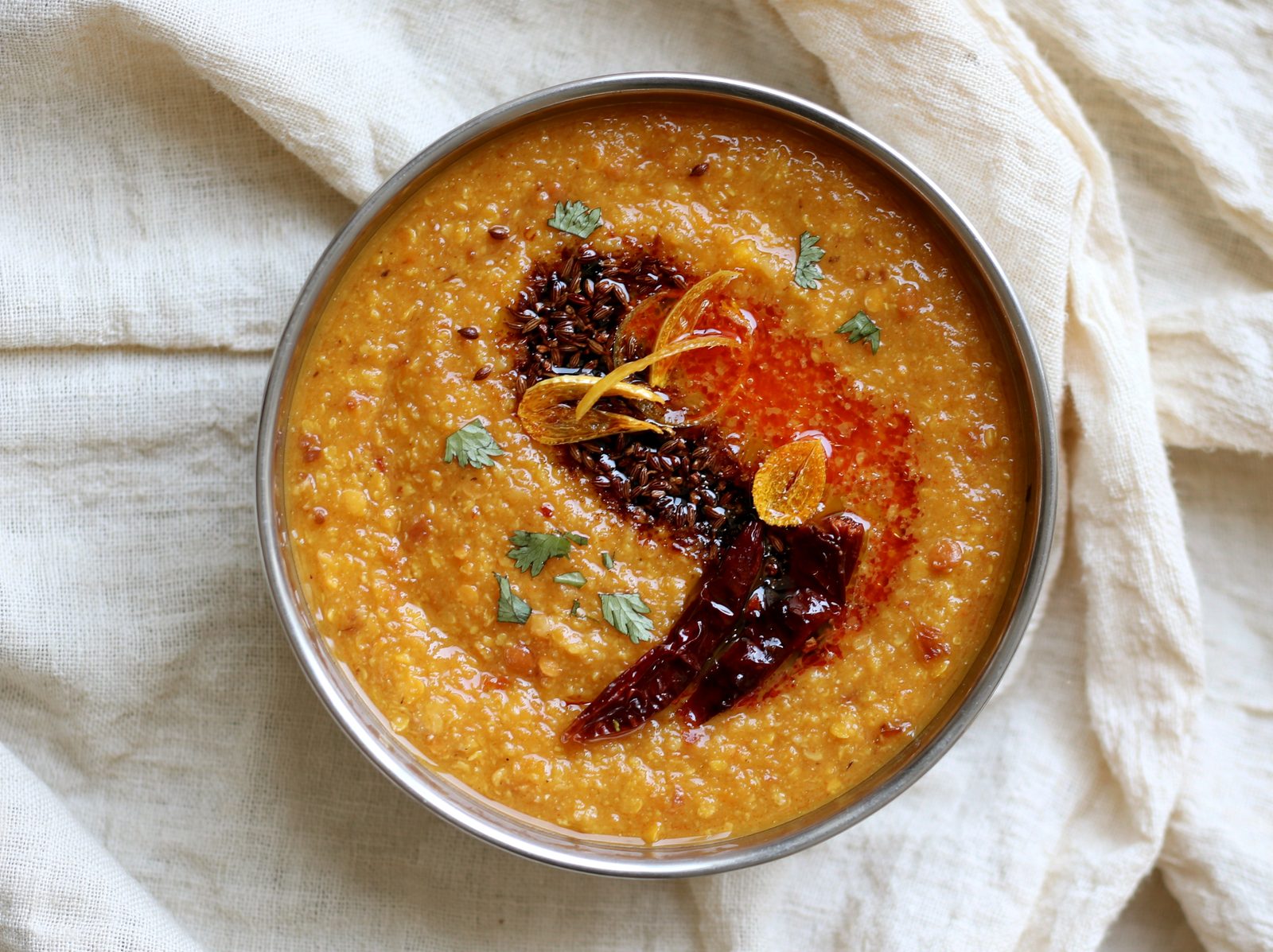
Tidali Dal
Tidali dal: moong, masoor and chana dal simmered together with a fierce asafoetida and ghee tarka — the everyday three-lentil dal of Sindhi households.
-
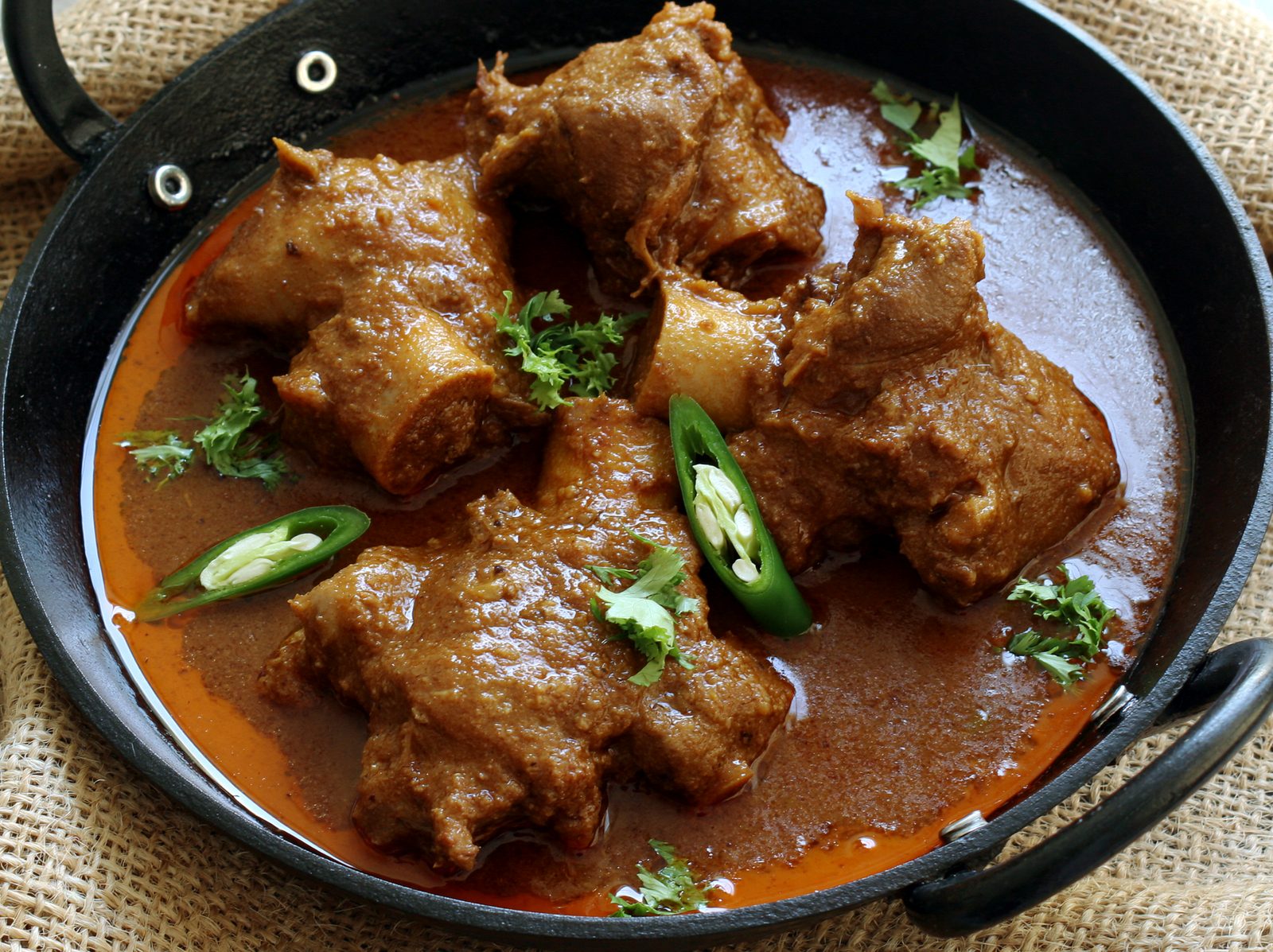
Teevan
Teevan: Sindhi lamb curry sharpened with kokum or raw mango until the sourness is structural, not background — the everyday sour curry of the Indus Plains.
-
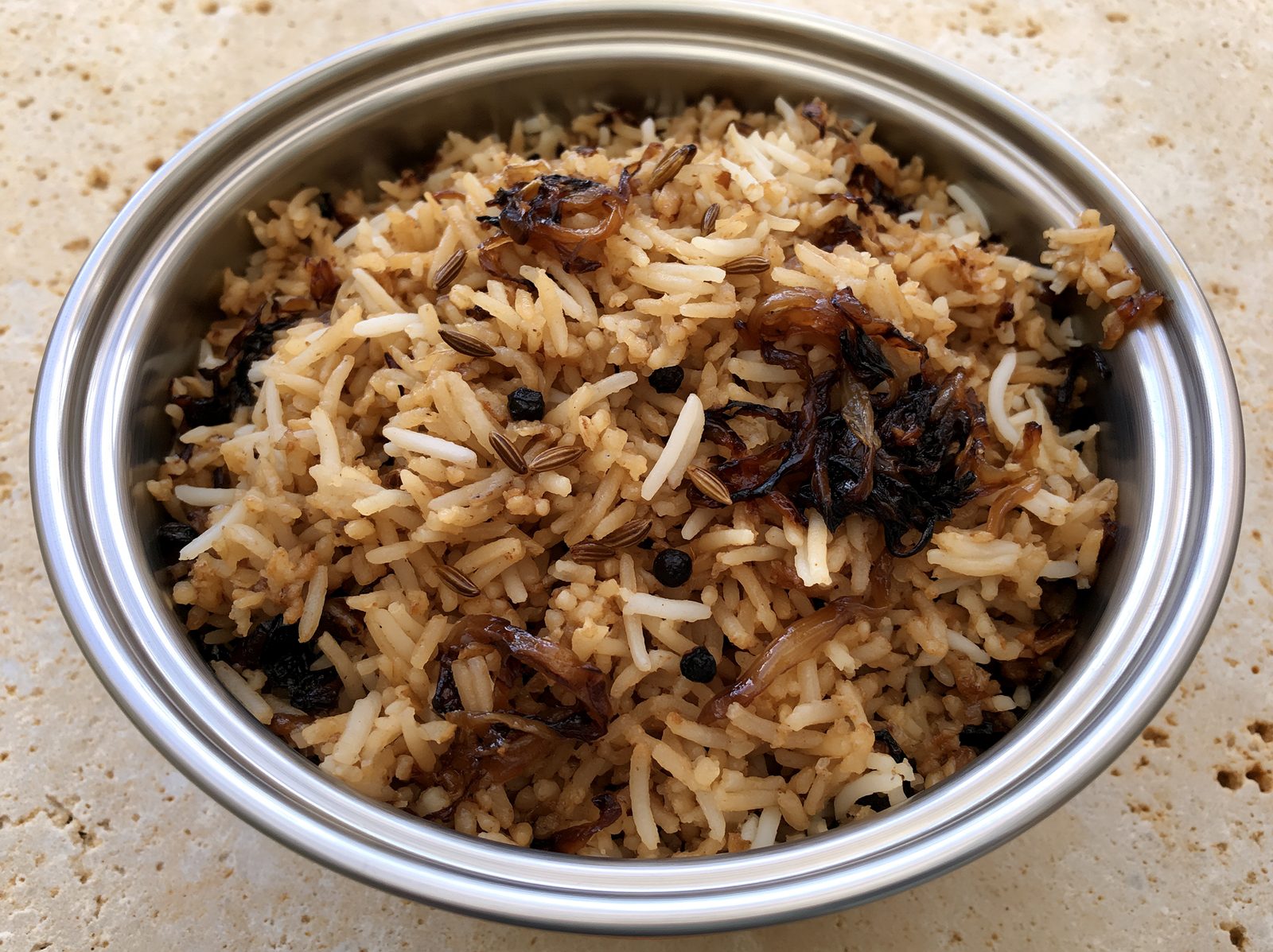
Bhuga Chawal
Bhuga chawal: rice cooked in deeply caramelised mahogany onions — the Sindhi one-pot rice dish where the browned onion is everything.
-
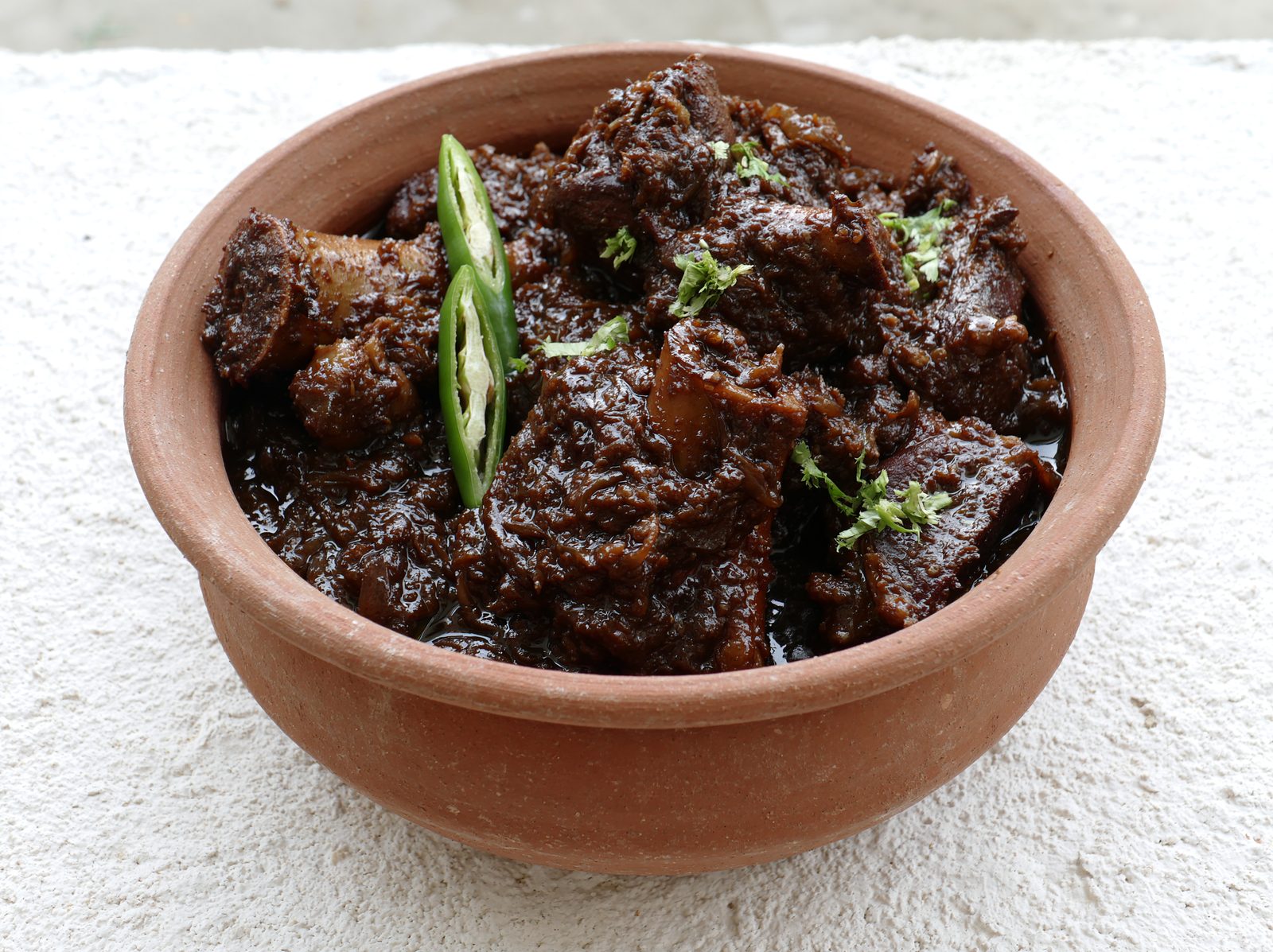
Seyal Gosht
Seyal gosht: lamb braised in its own moisture with caramelised onions and no added water — the defining Sindhi cooking technique applied to meat.
-
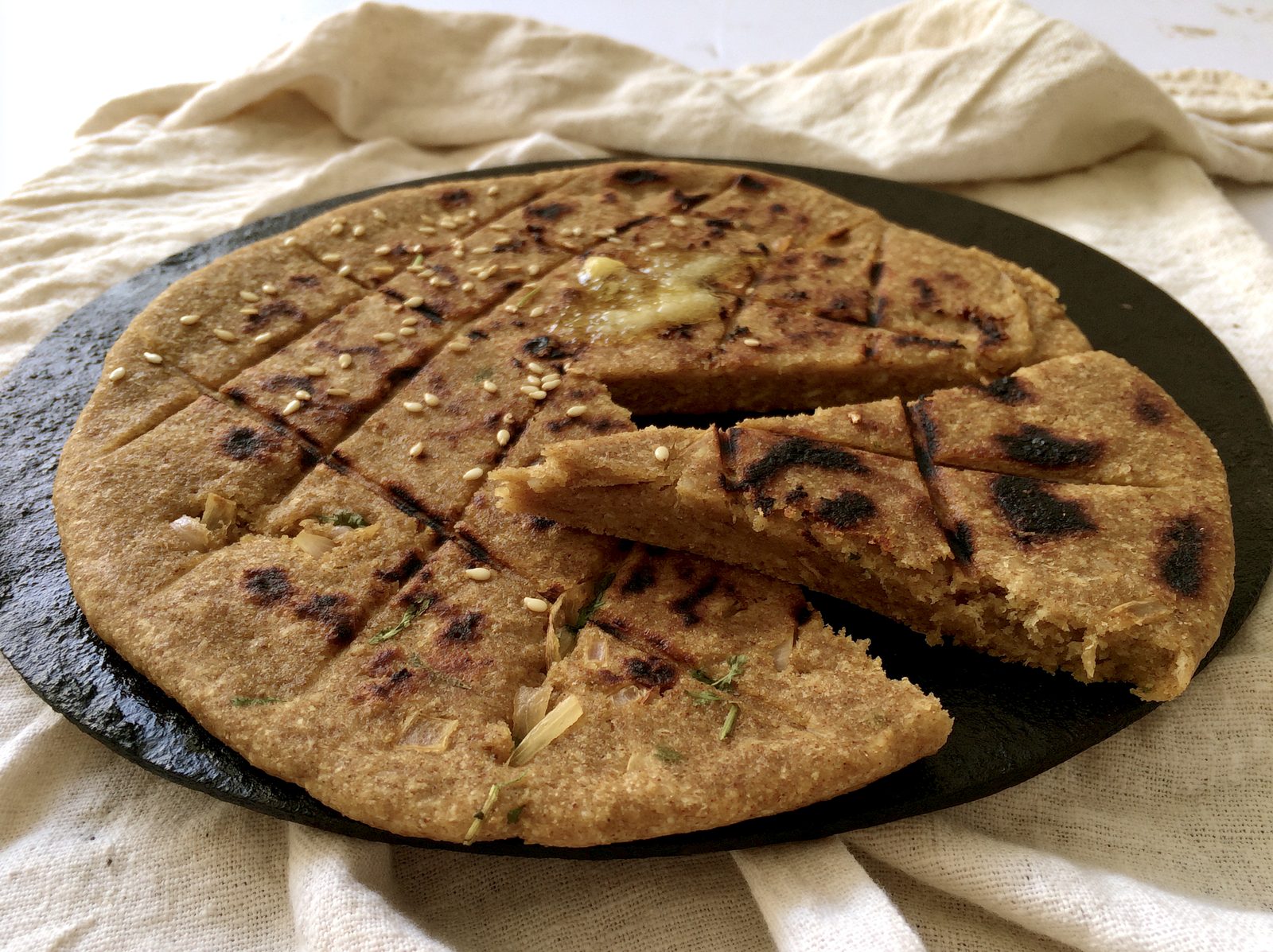
Koki
Koki: thick Sindhi breakfast flatbread with onion, sesame and cumin, cooked twice until crumbly and char-spotted — the bread of Sindhi mornings.
-
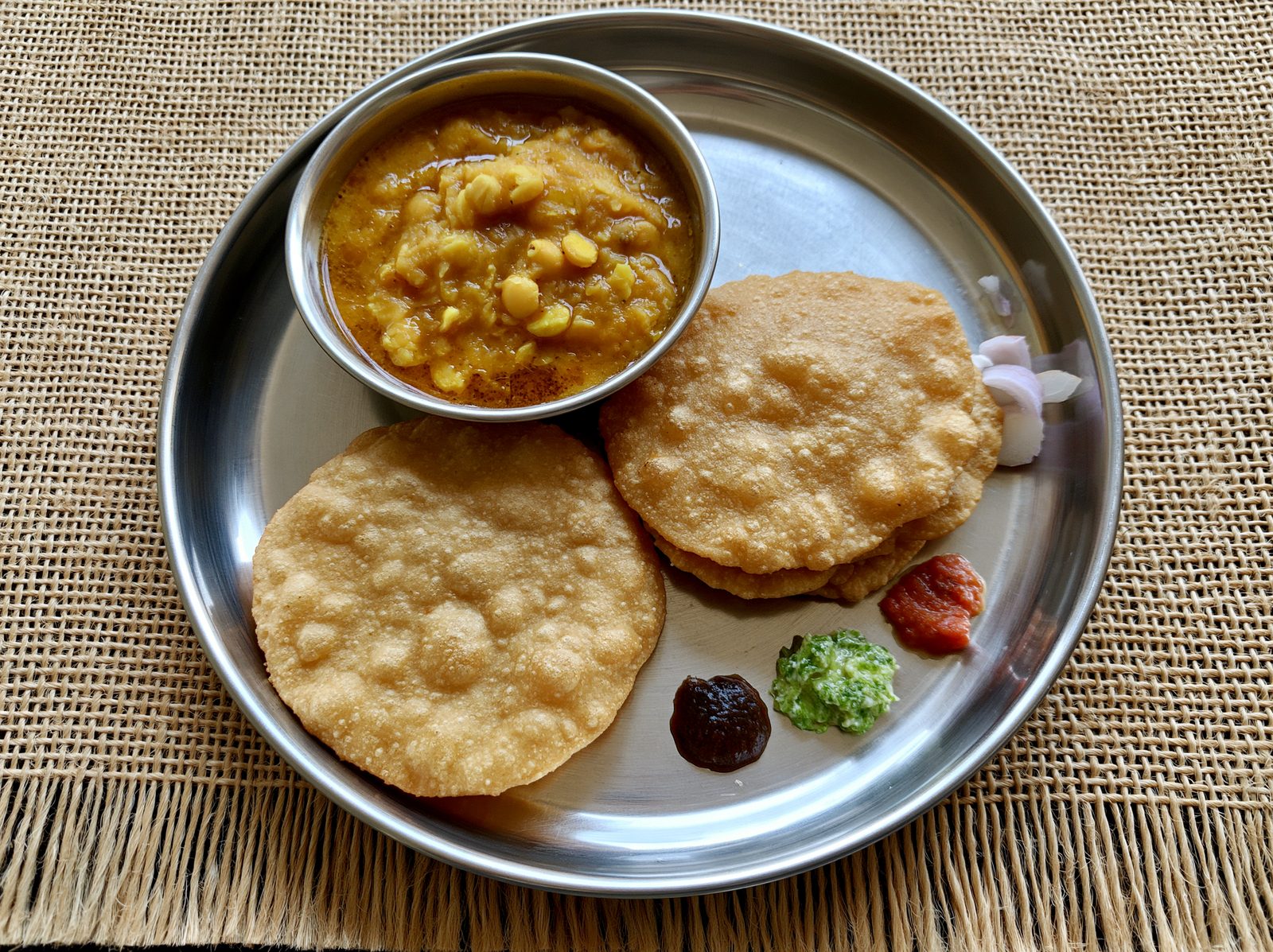
Dal Pakwan
Dal pakwan: chana dal simmered with cumin and chilli, served with crispy fried ajwain flatbread, coconut chutney and tamarind — the Sindhi Sunday breakfast.
-
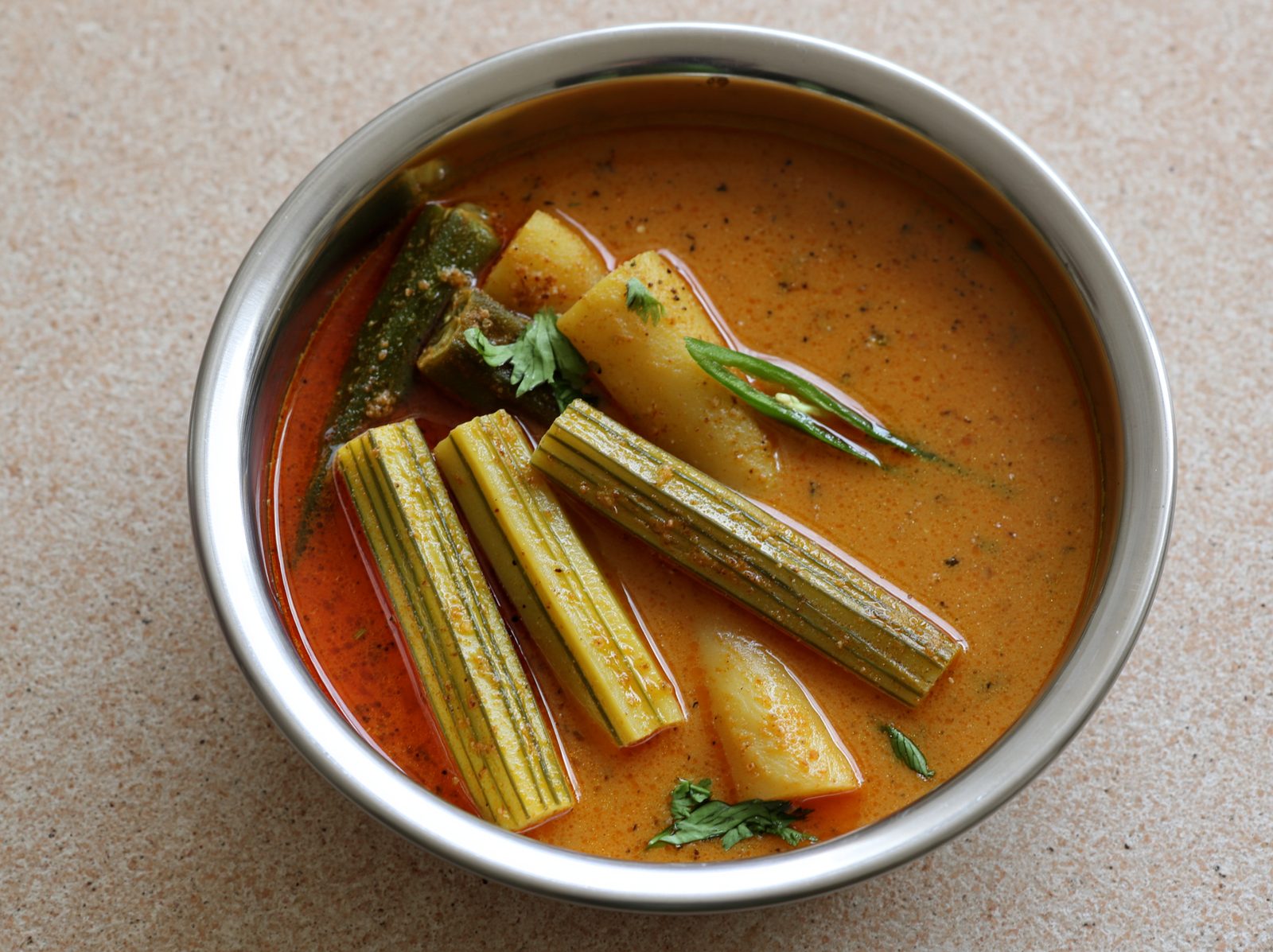
Sindhi Kadhi
Sindhi kadhi: gram flour fried golden, tamarind-soured, loaded with drumstick, potato and okra — the yoghurt-free kadhi of Sindh, eaten over rice.
-
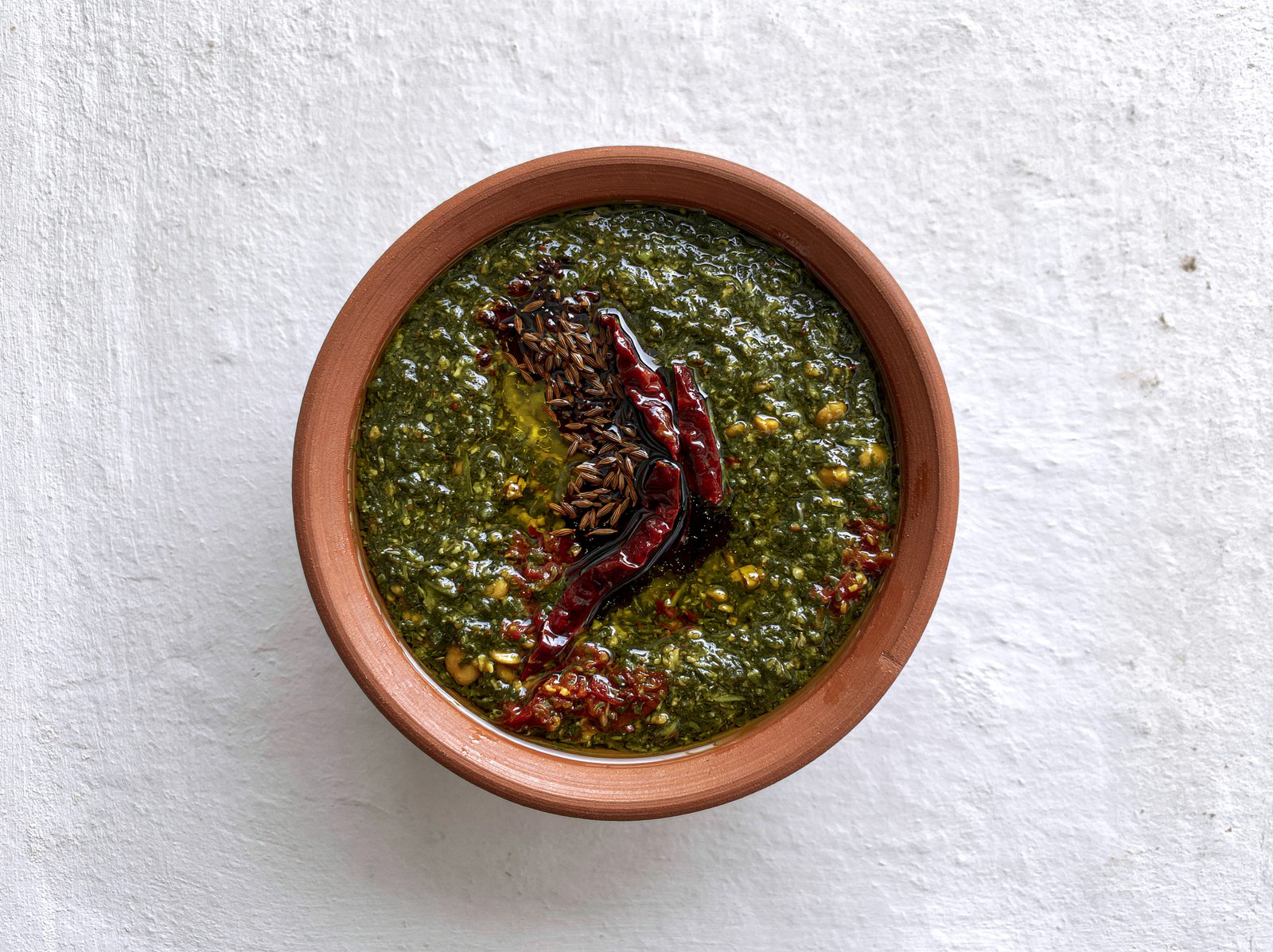
Sai Bhaji
Sai bhaji: spinach, chana dal and mixed greens slow-cooked into one softly spiced mass with an asafoetida and ghee tarka — the daily pot of Sindh.
Celebration & Occasion
-
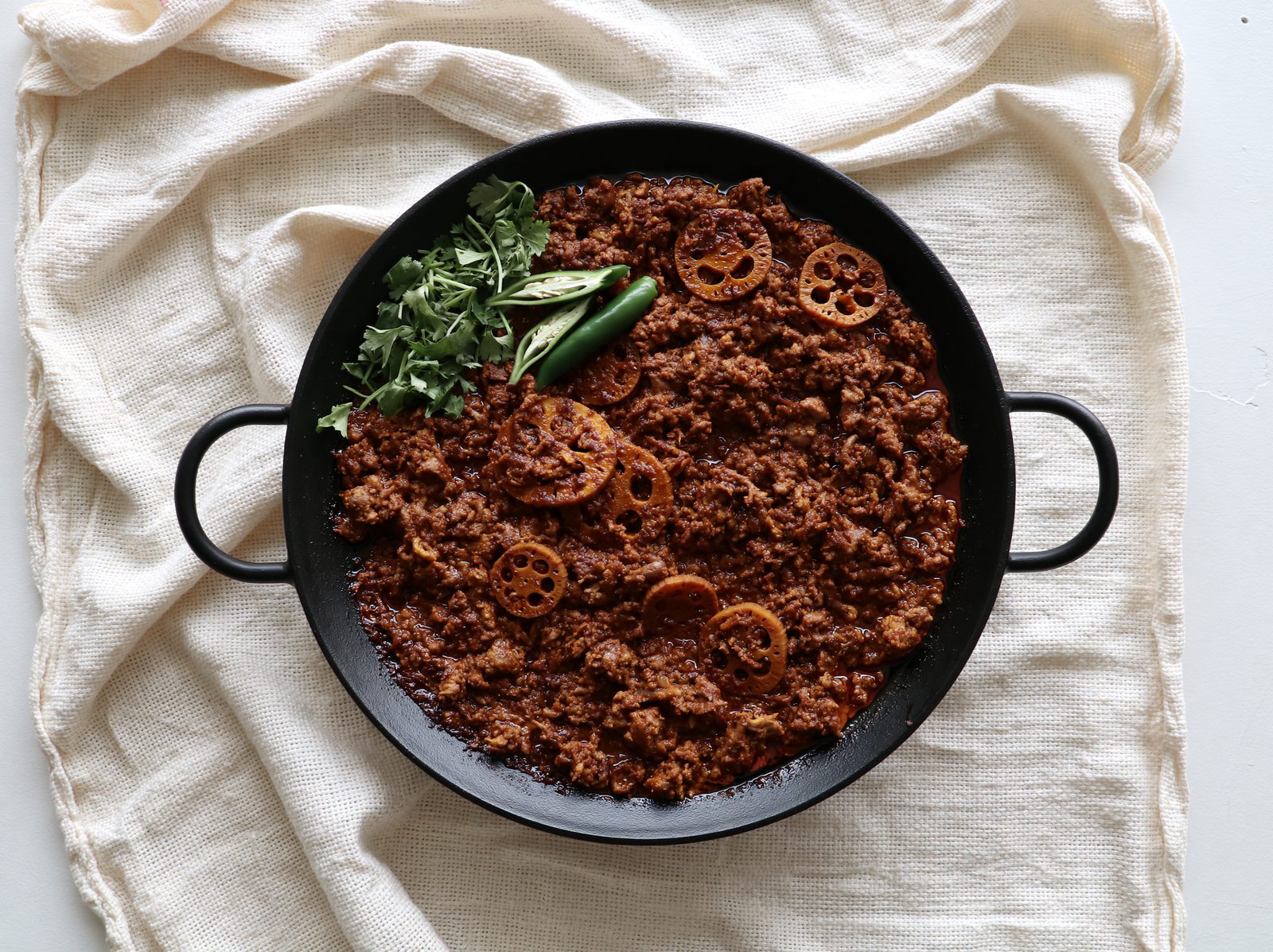
Bhee Keema
Bhee keema: lotus root simmered with spiced minced lamb — the Sindhi celebration combination of the sacred Indus plant and the everyday protein, made one.
-
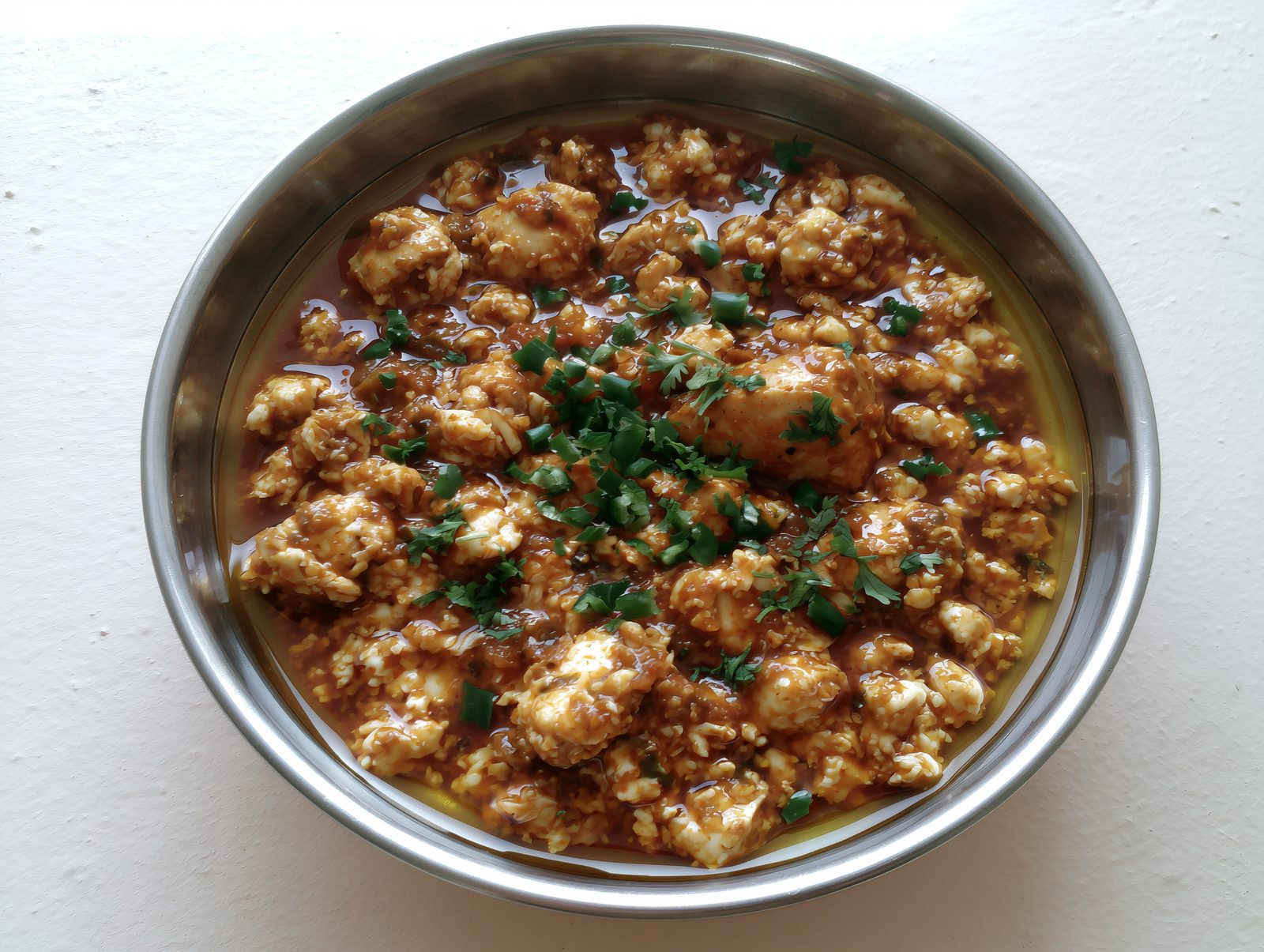
Bheja Fry
Bheja fry: Sindhi lamb brain cooked in a spiced onion and tomato base with asafoetida and amchur — the guest dish, the mark of Sindhi hospitality.
-
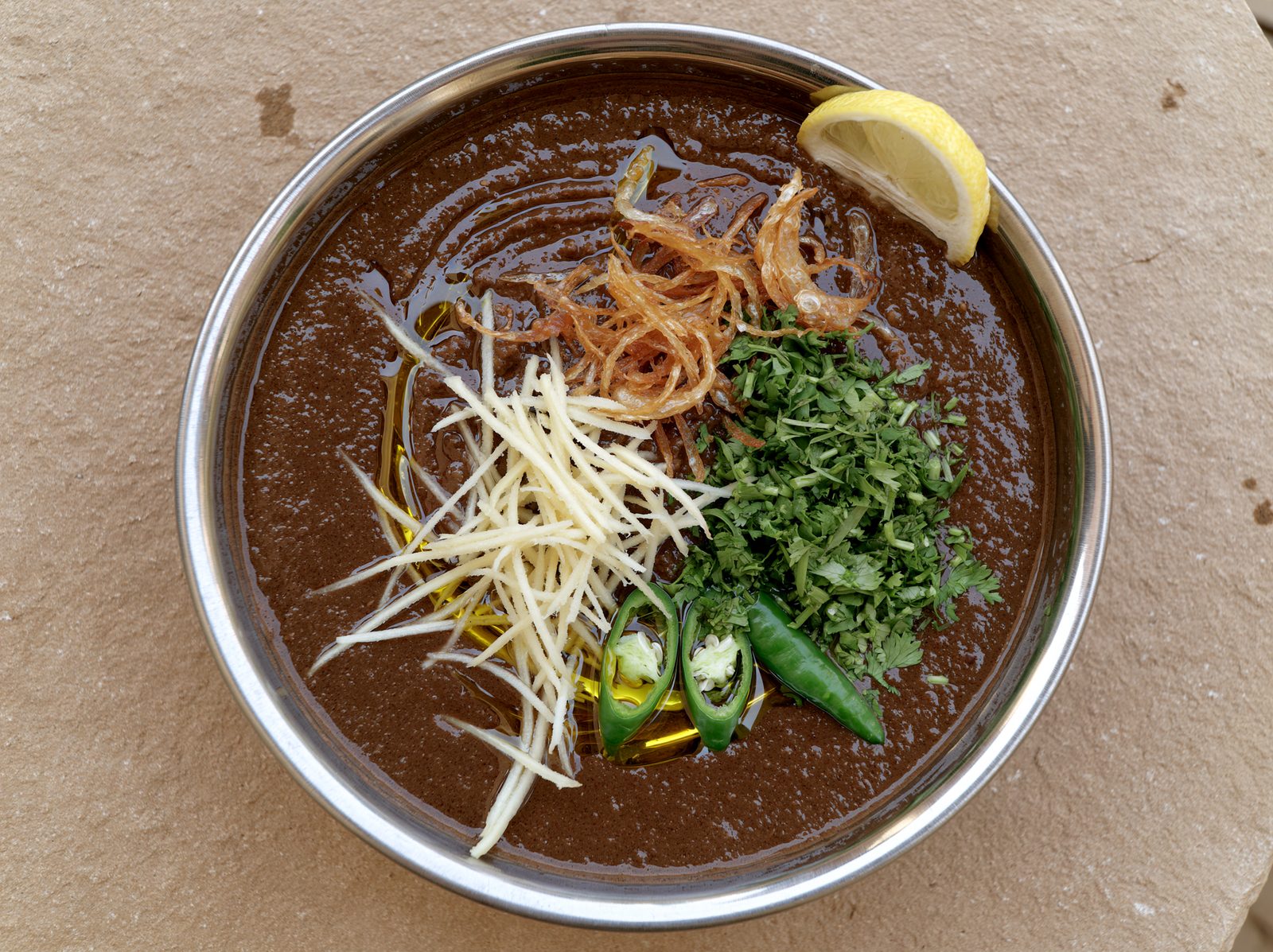
Sindhi Haleem
Sindhi haleem: wheat, lentil and meat slow-cooked to a thick stew with tamarind and asafoetida — the sour-spiced Indus Plains version, distinct from Lucknawi haleem.
-
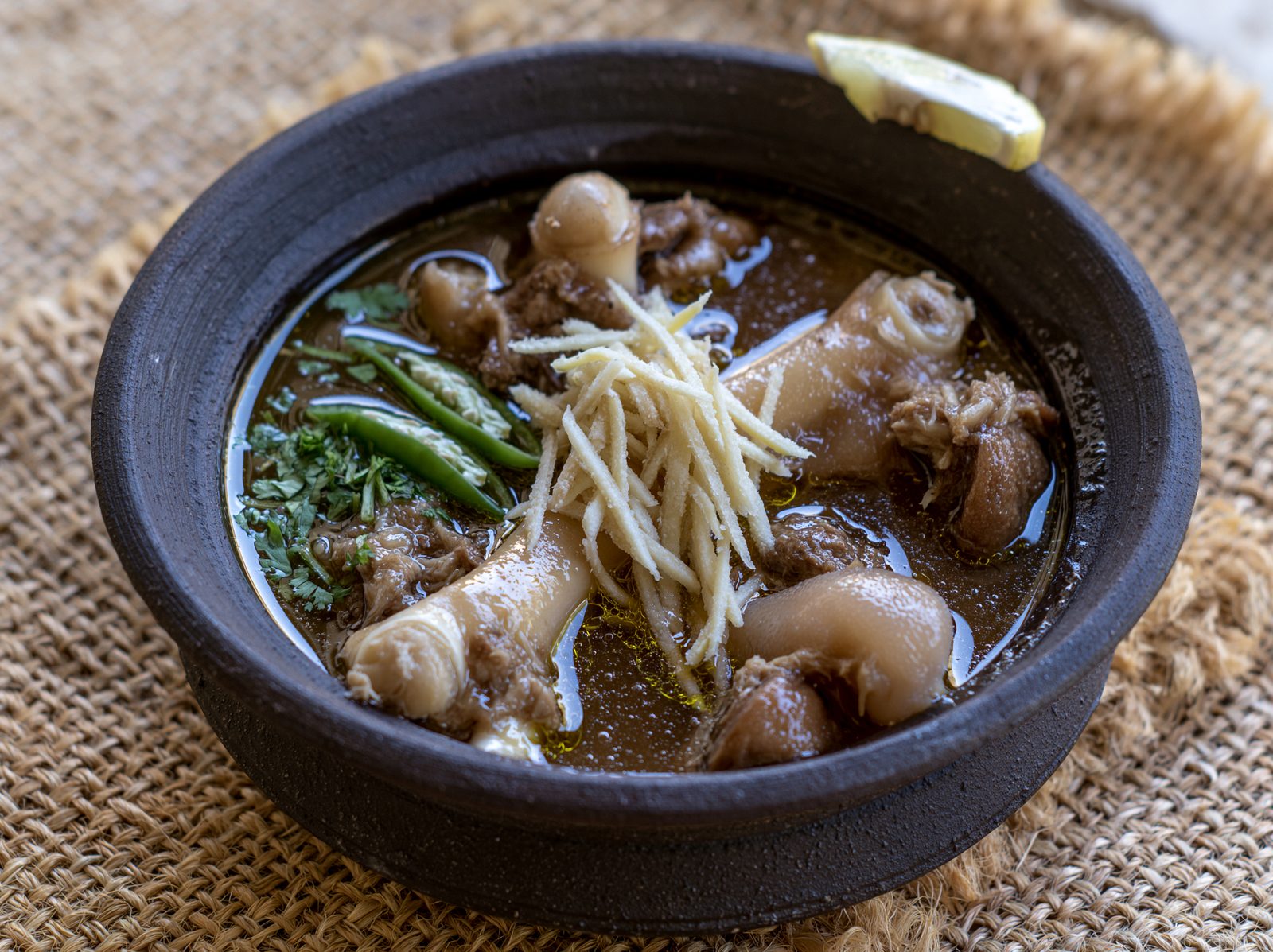
Sindhi Siri Paye
Sindhi siri paye: goat head and trotters slow-cooked overnight with asafoetida and amchur — the Sindhi sour-spiced version, distinct from Lahore’s plain paya broth.
-
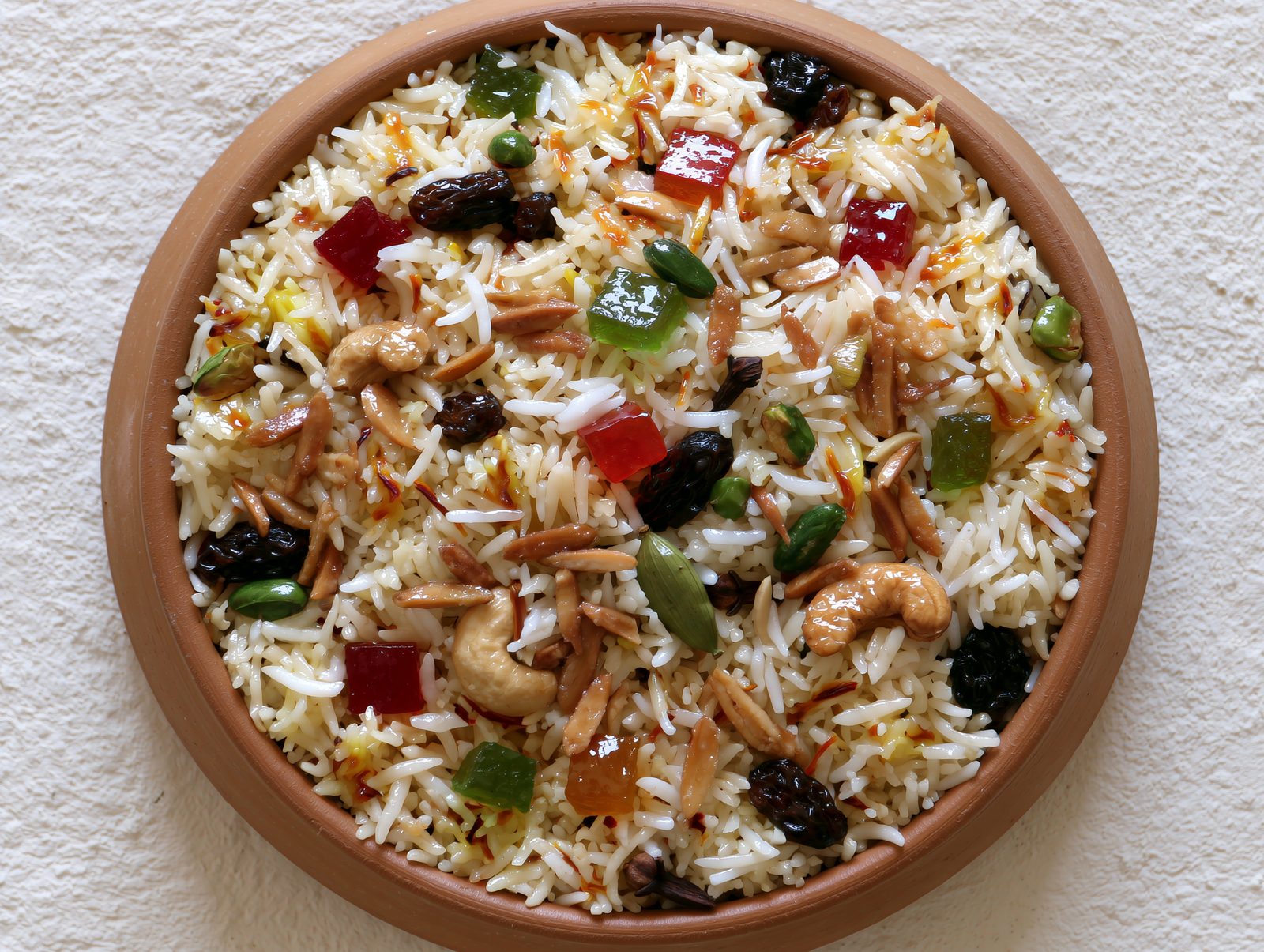
Sindhi Zarda
Sindhi zarda: saffron-yellow sweet rice with meethi saunf (sweet aniseed), nuts and dried fruit — the Sindhi Eid and wedding rice, distinguished by its anise fragrance.
-
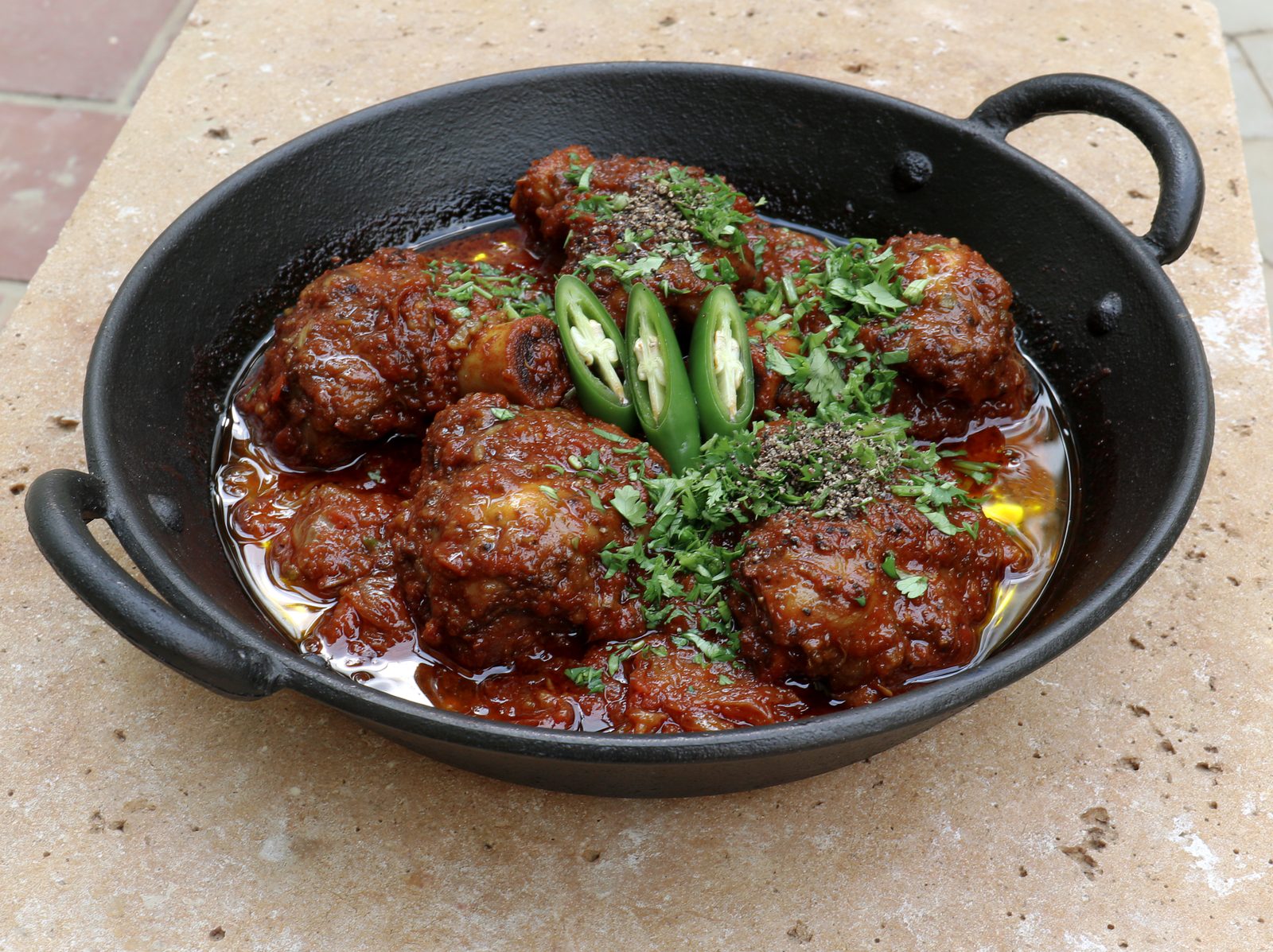
Dumba Karahi
Dumba karahi: fat-tail lamb cooked in its own rendered tallow with minimal spicing — the generous Sindhi celebration dish where the fat is the entire point.
-
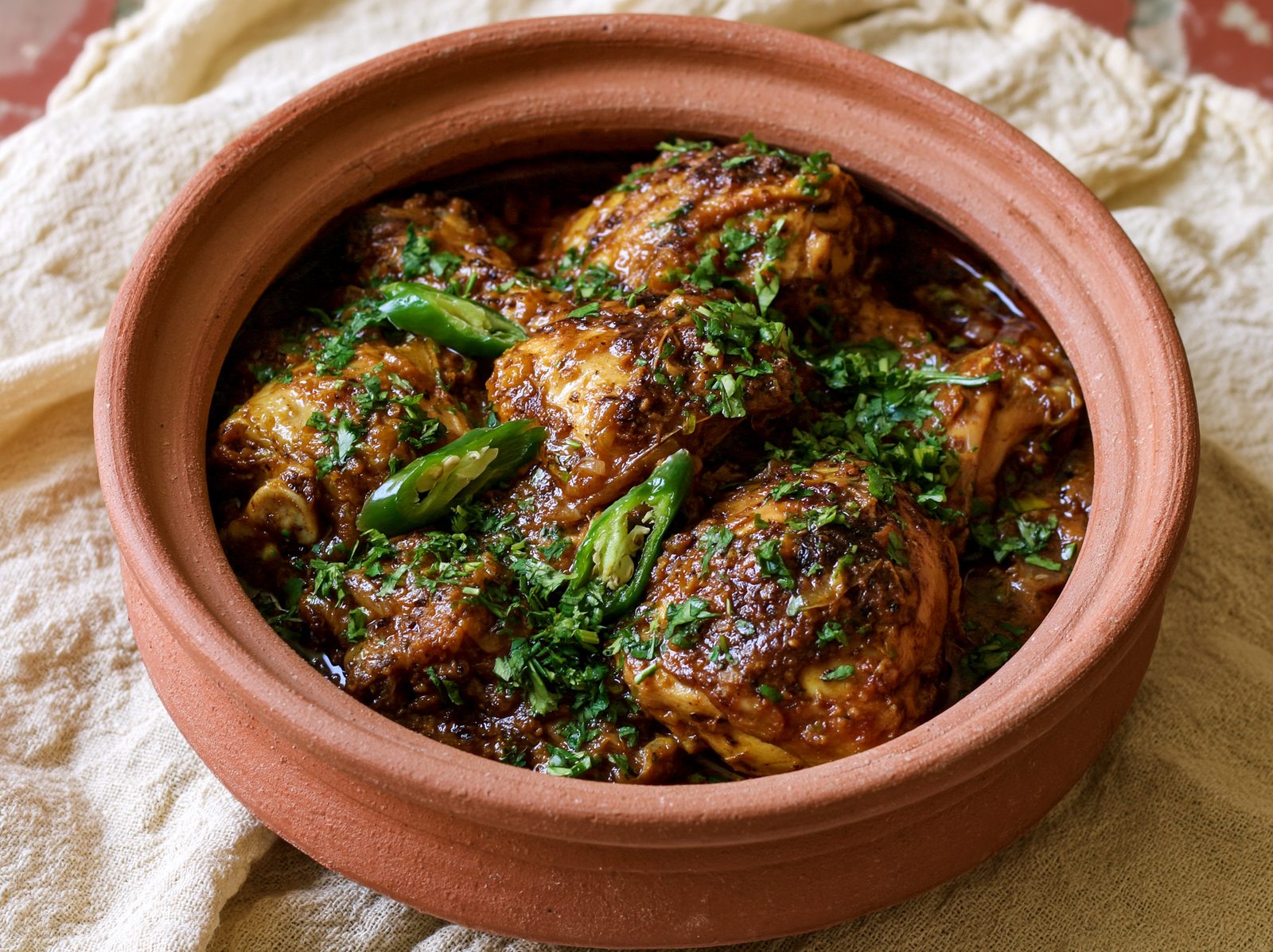
Seyal Murgh
Seyal murgh: chicken cooked by the Sindhi seyal method — no water added — the moisture coming from the onions and the bird itself. The technique is everything.
-
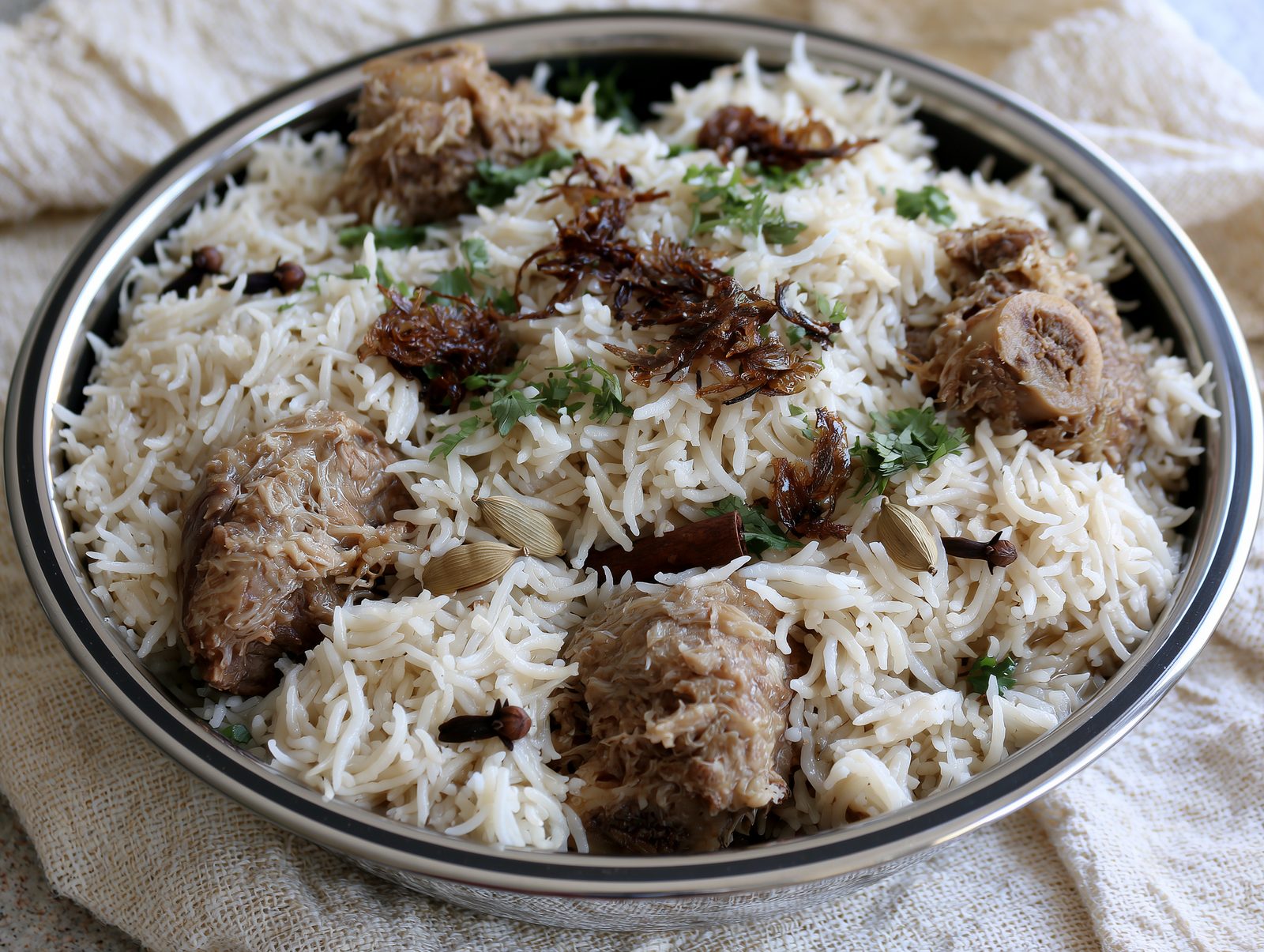
Sindhi Yakhni Pulao
Sindhi yakhni pulao: basmati cooked in a deep lamb broth with whole spices — no layering, one pot, the subtler celebration rice of Sindhi feasts.
-
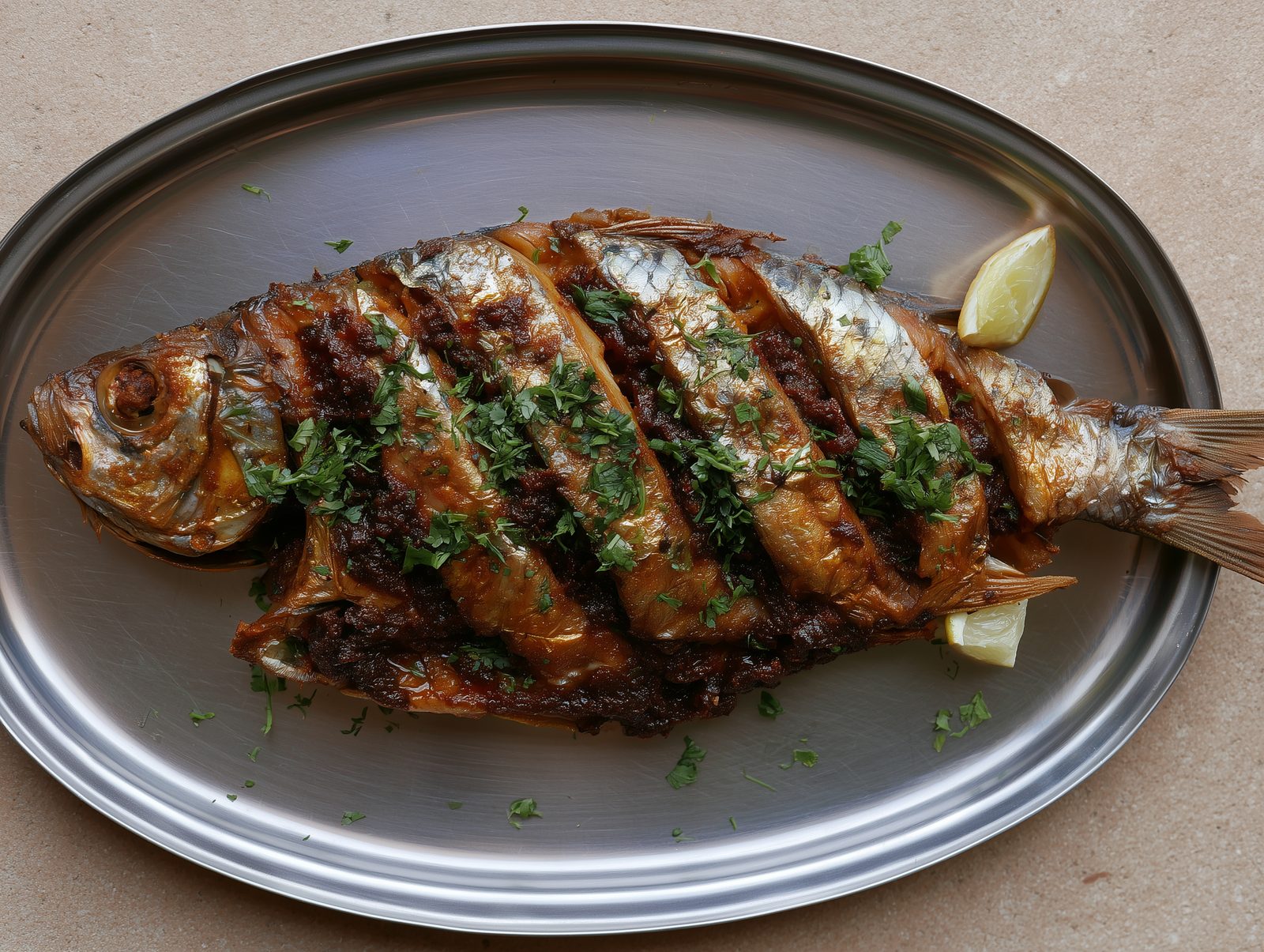
Pallo Machhi
Pallo machhi: the Indus shad stuffed with tamarind spice paste and cooked whole in mustard oil — Sindh’s festival fish, arriving once a year with the monsoon.
-
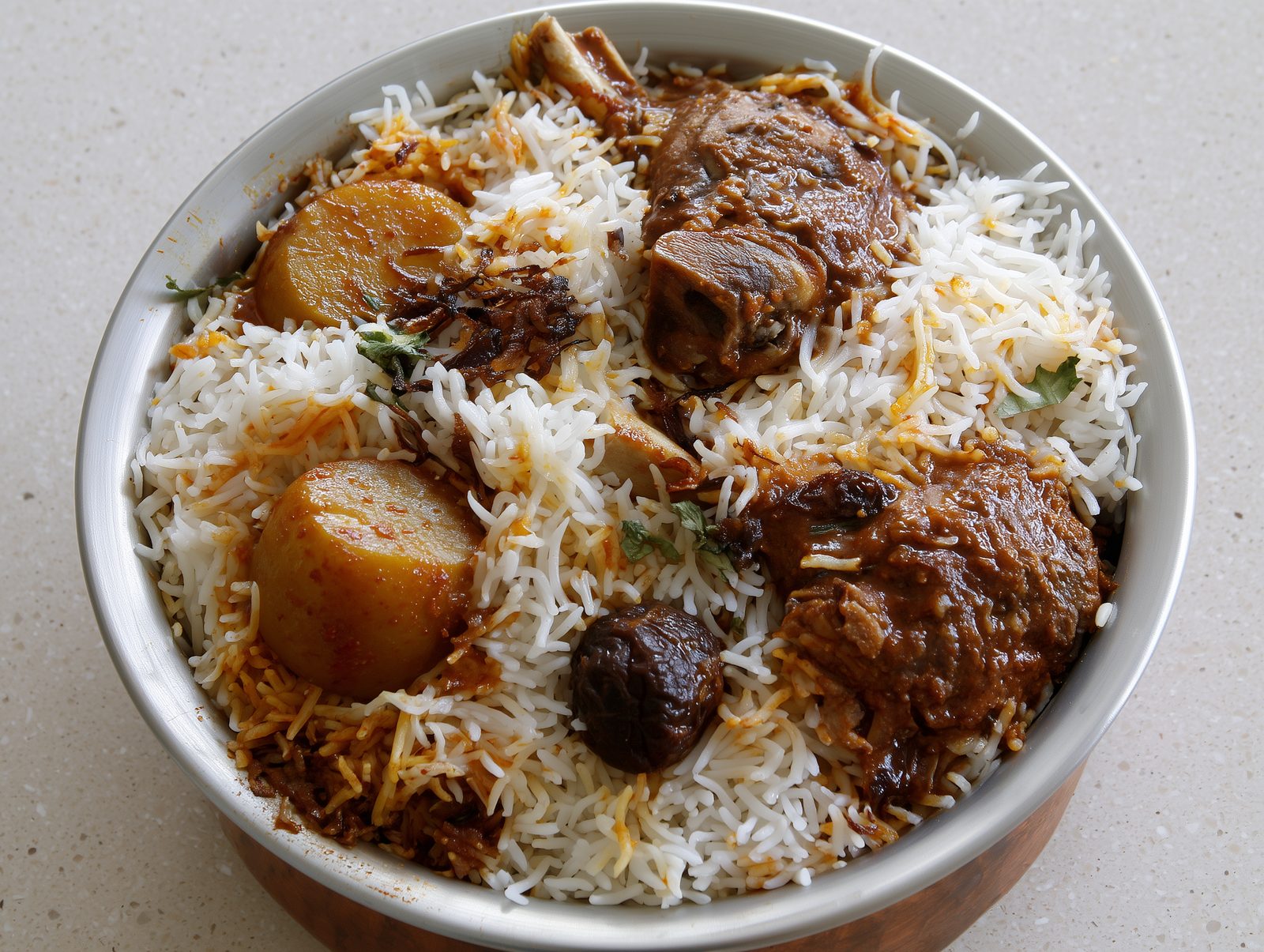
Sindhi Biryani
Sindhi biryani: lamb biryani layered with alu bukhara dried plums, raw mango, and potatoes — the sour-noted rice dish that defines the Indus Plains feast.
Street Food & Snacks
-
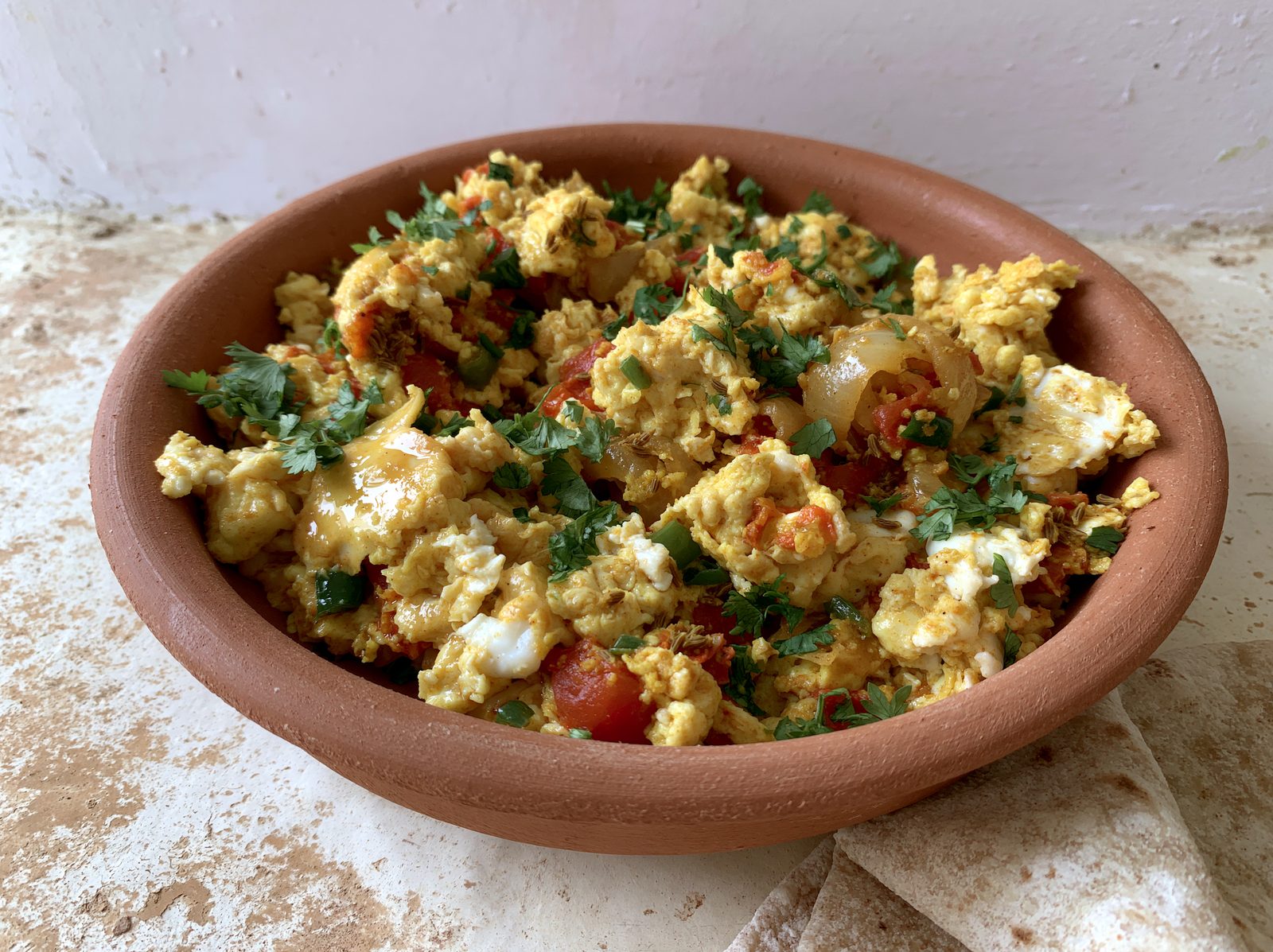
Khagina
Khagina: Sindhi spiced scrambled eggs built on an asafoetida base — the breakfast stall dish of Karachi, fast, cheap and defined by the hing.
-
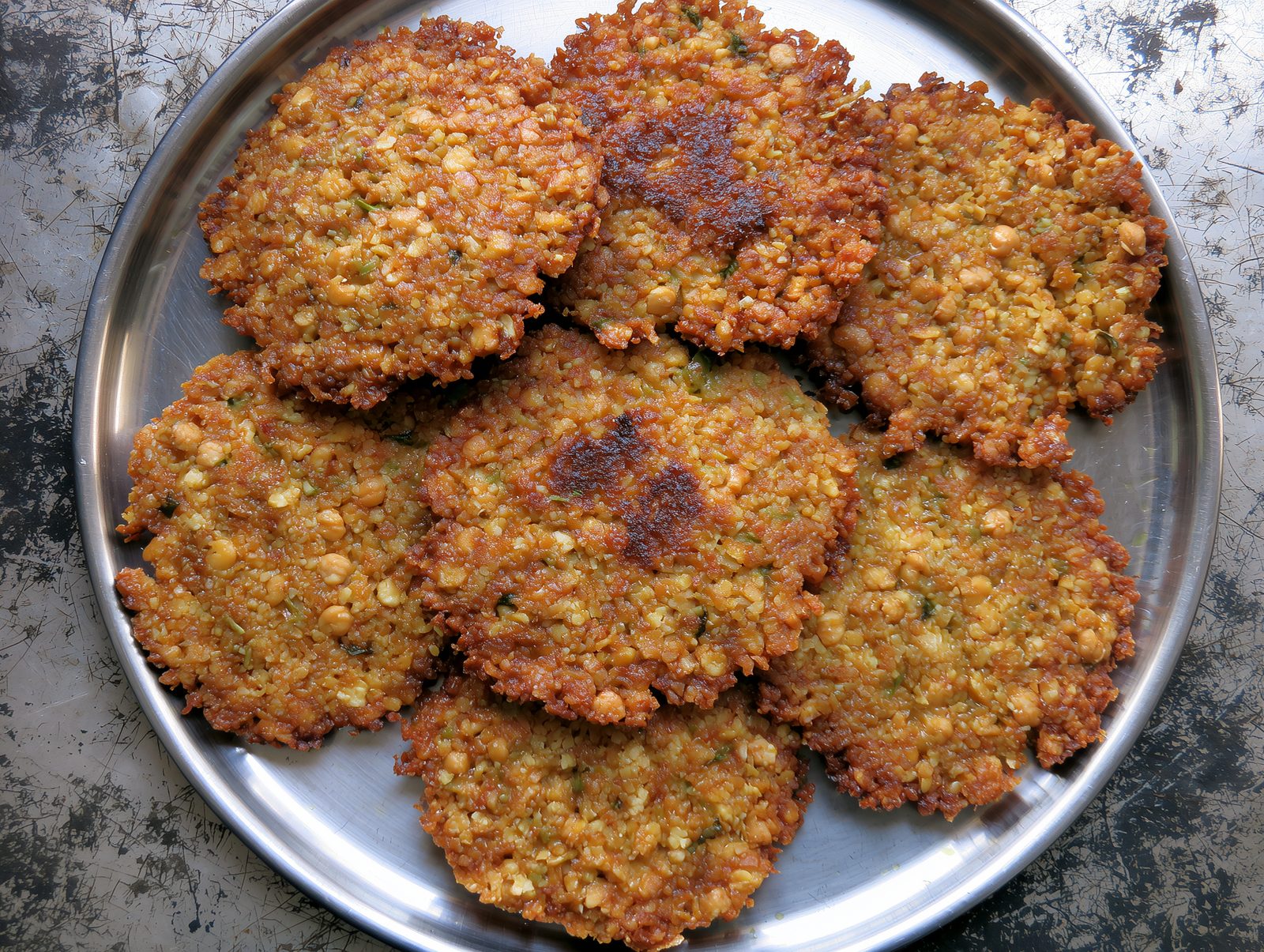
Sindhi Dhal Vada
Sindhi dhal vada: coarsely ground chana dal fritters spiced with asafoetida, green chilli and coriander, fried golden — the Sindhi lentil fritter, not a medu vada.
-
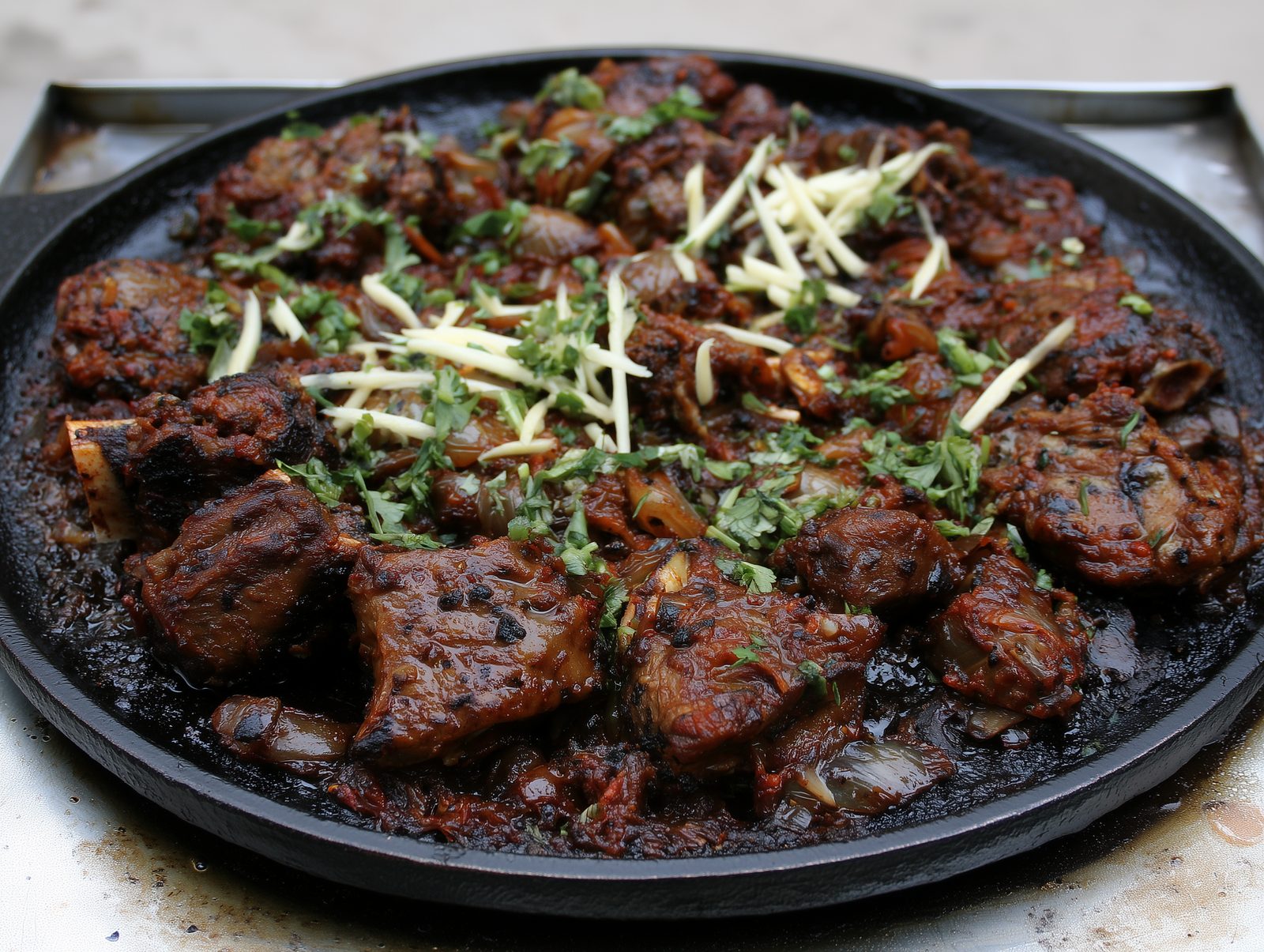
Tawa Gosht
Sindhi tawa gosht: lamb cooked on a flat iron griddle in rendered fat-tail tallow with asafoetida — the highway dhaba dish of the Indus Plains.
-
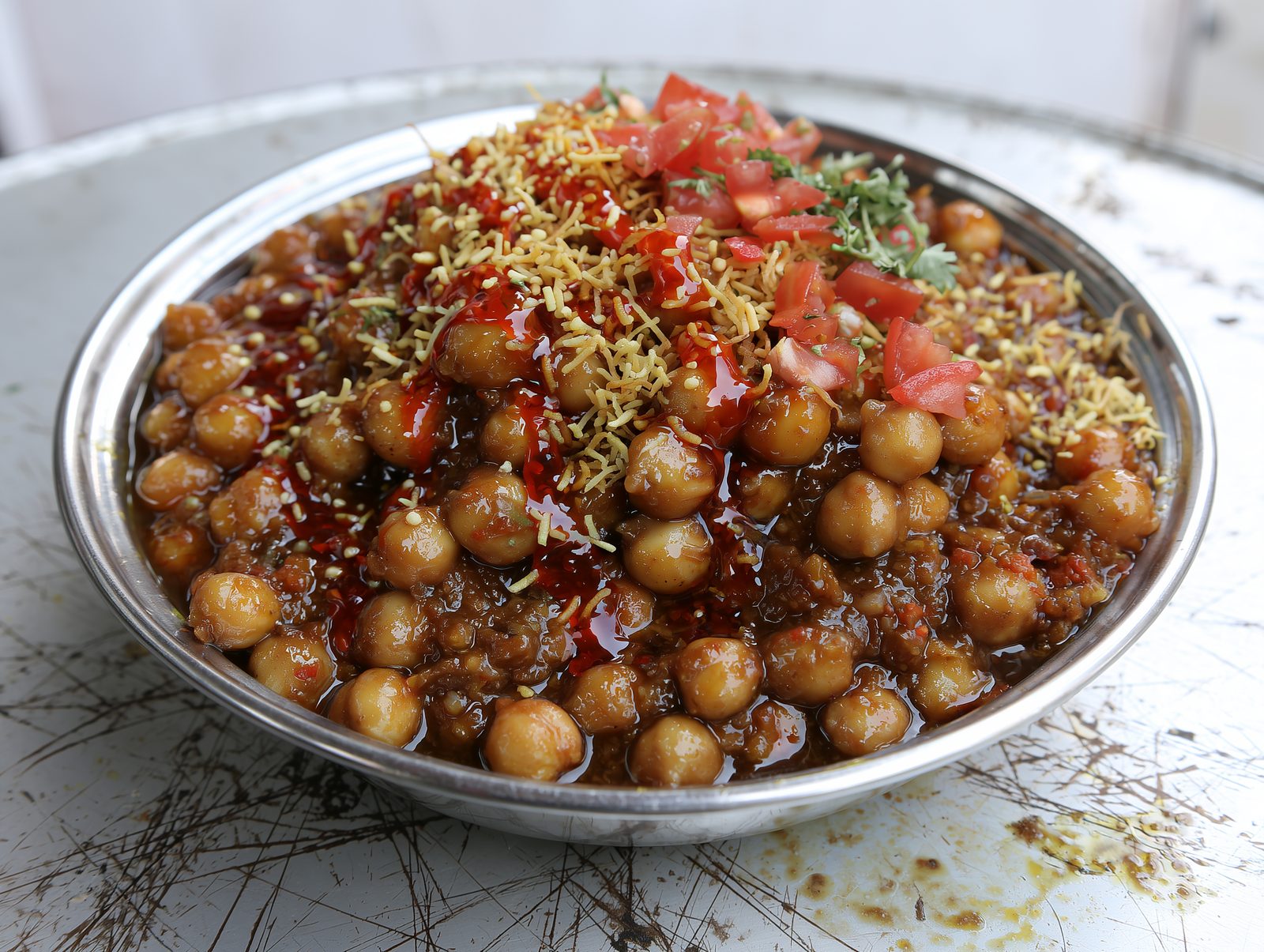
Cholay
Karachi street cholay: chickpeas in a gur-tamarind masala, topped with chilli oil, sev and tomato and served alongside a fried puri — Karachi’s mid-morning street cart. Also known as chole.
-
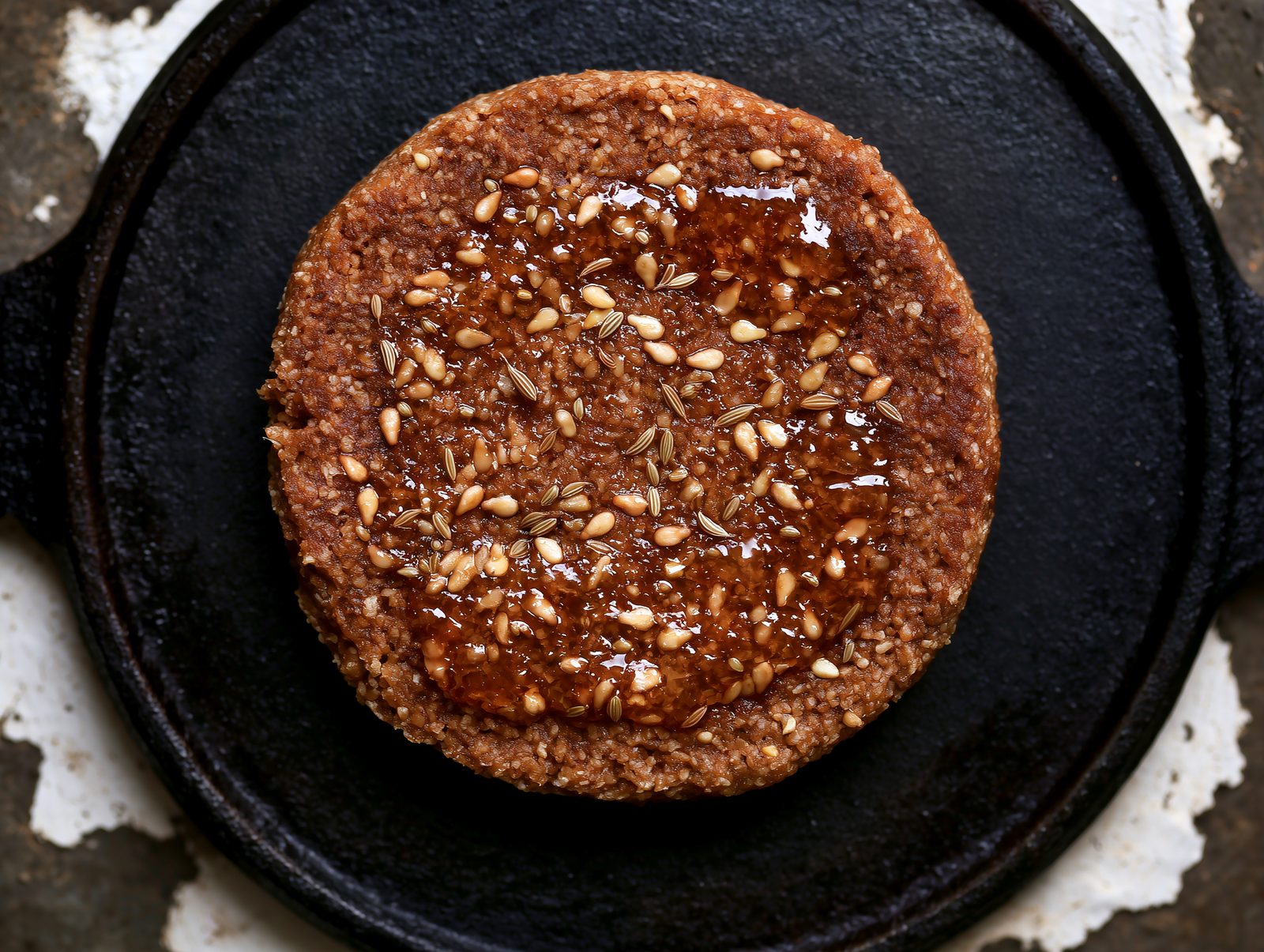
Dodo
Dodo: Sindhi whole wheat flatbread pancake with jaggery, sesame and fennel, cooked until the gur caramelises in spots — a Sindhi snack with no close equivalent.
-
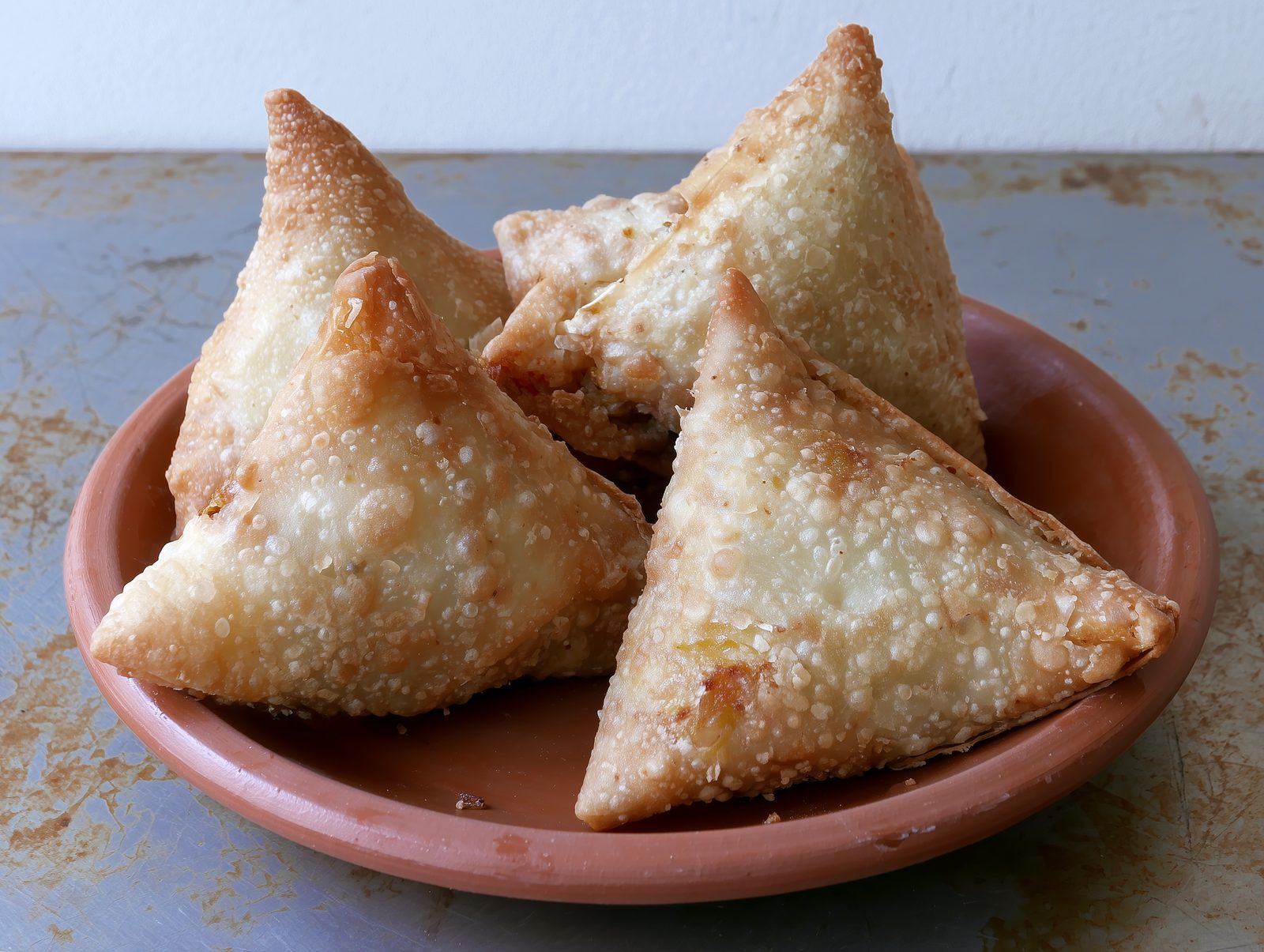
Sindhi Samosa
Sindhi samosa: thin, brittle pastry with an asafoetida-dominant potato filling — the Indus Plains samosa, sharper and more pungent than the Punjabi version.
-
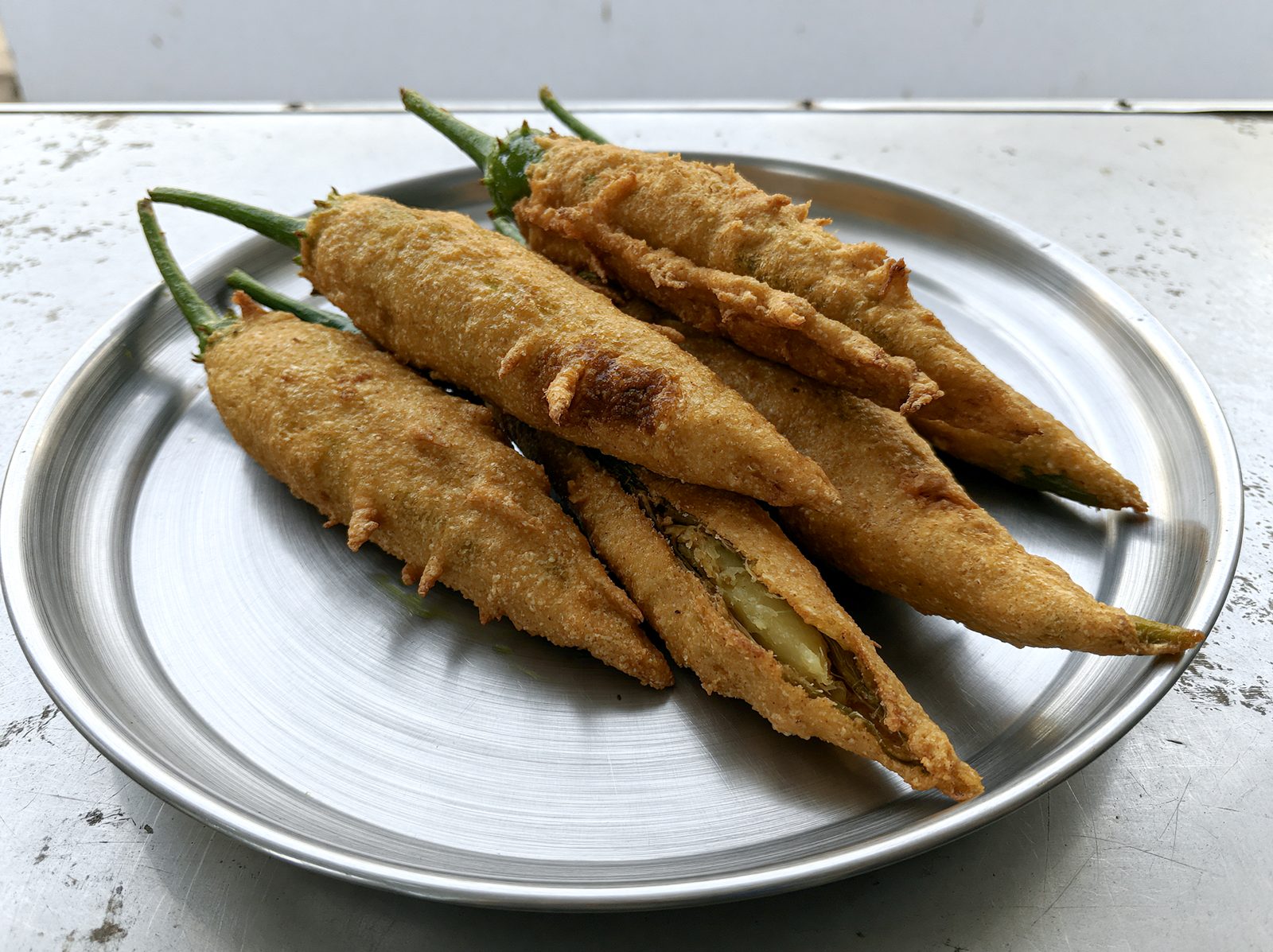
Mirchi Bhajji
Mirchi bhajji: large green chillies stuffed with spiced potato, battered in gram flour and deep-fried — Burns Road Karachi’s most popular street snack.
-
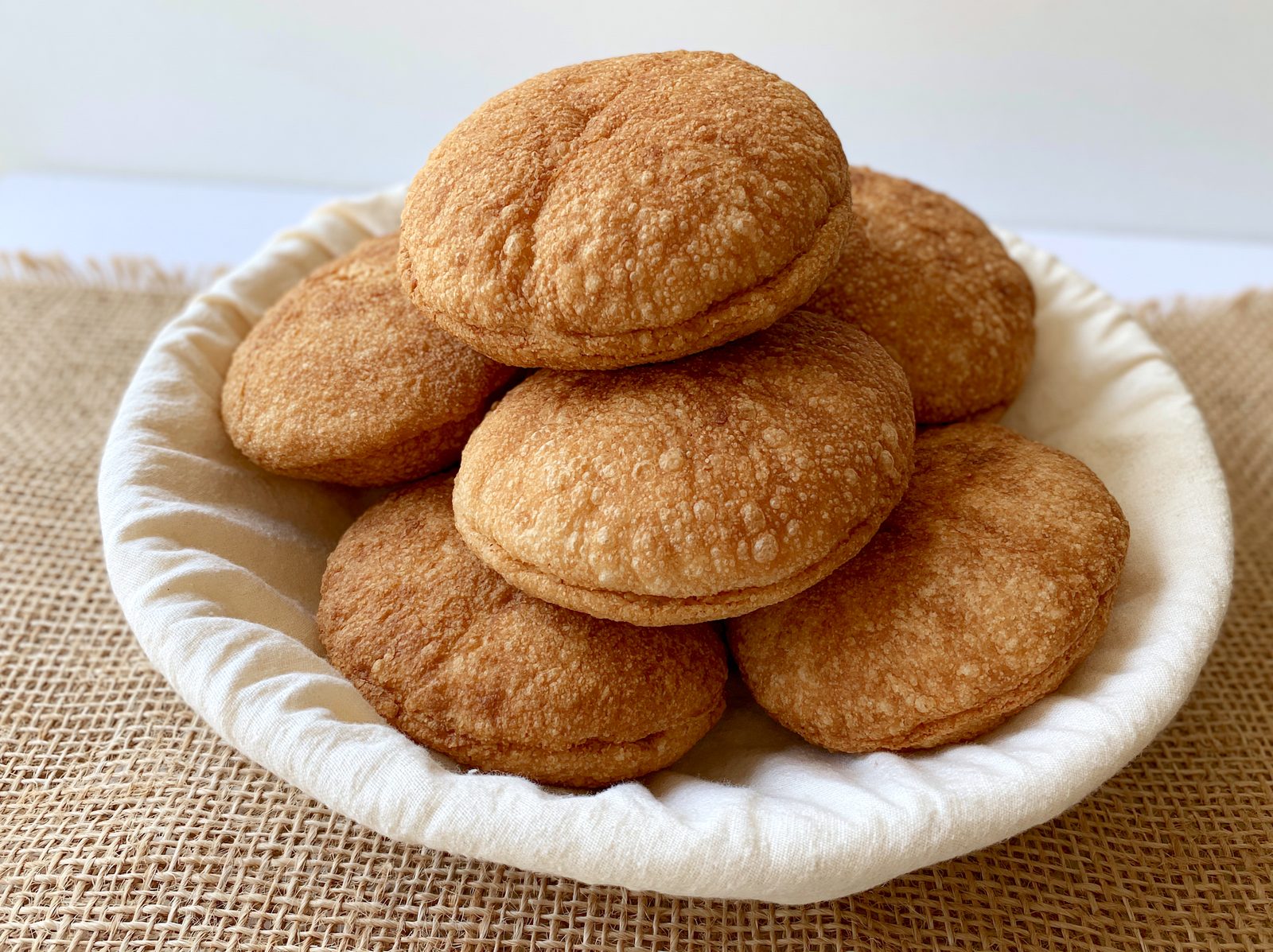
Dal Kachori
Sindhi dal kachori: thin crispy pastry stuffed with a dry asafoetida-spiced chana dal filling — the sharper, more brittle Sindhi version of this fried street snack.
-
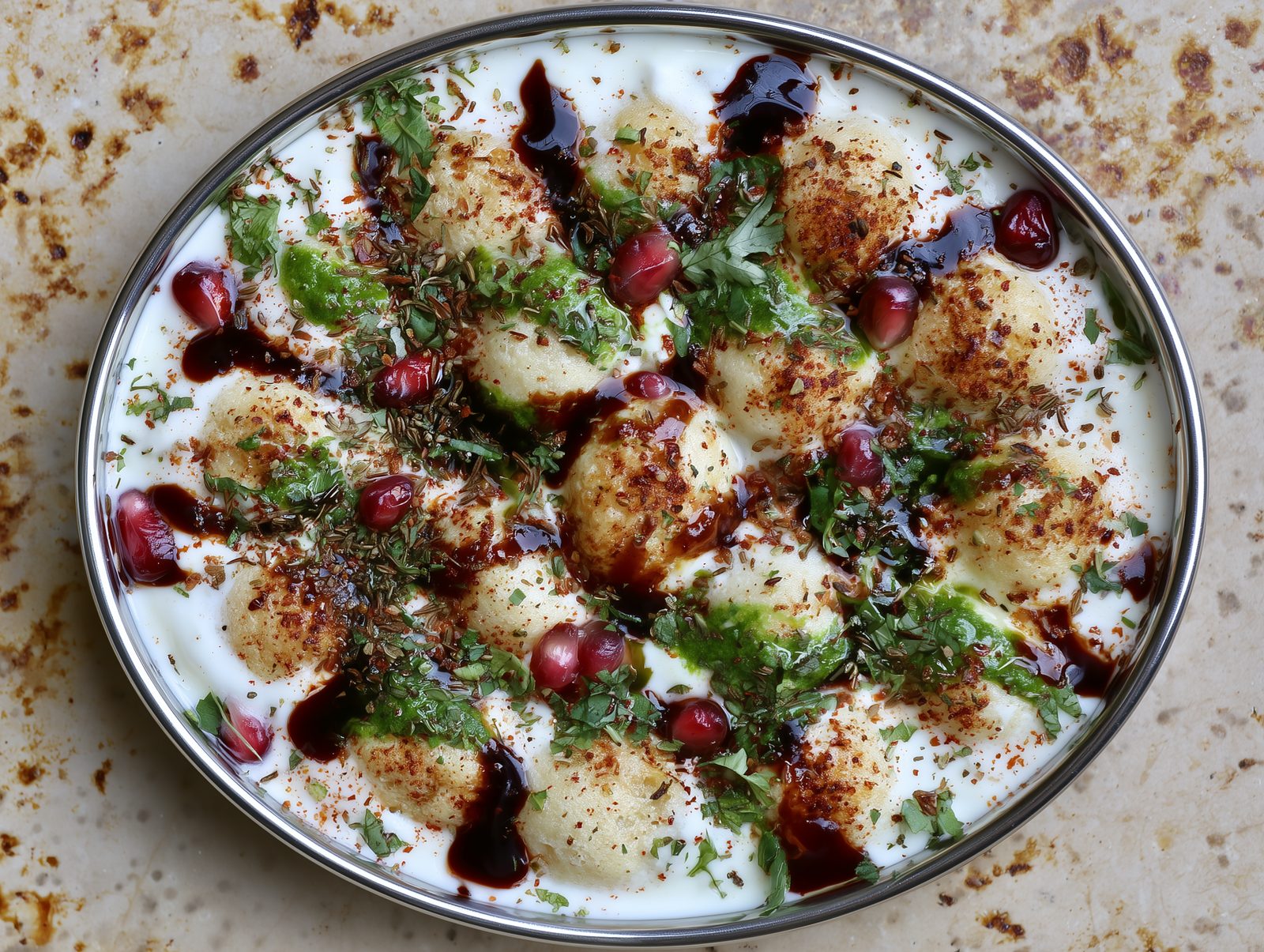
Dahi Phulki
Dahi phulki: light asafoetida-spiced gram flour dumplings soaked soft in chilled yoghurt with tamarind and green chutney — Sindhi festive street food.
-
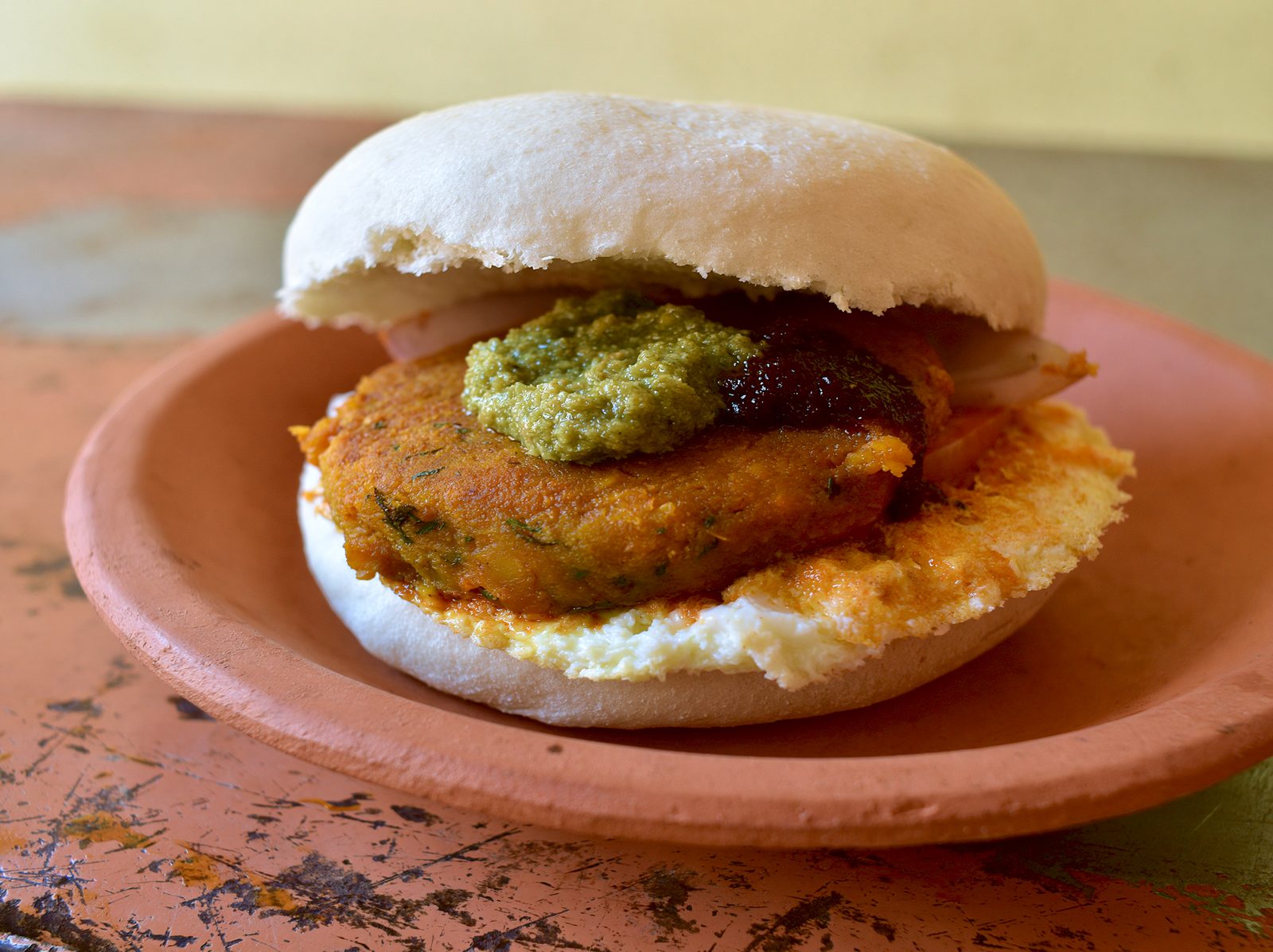
Bun Kebab
Bun kebab (bun kabab): the Karachi street burger — a spiced chana dal and potato patty with a fried egg exterior, green-tamarind chutney and raw onion in a soft bun.
-
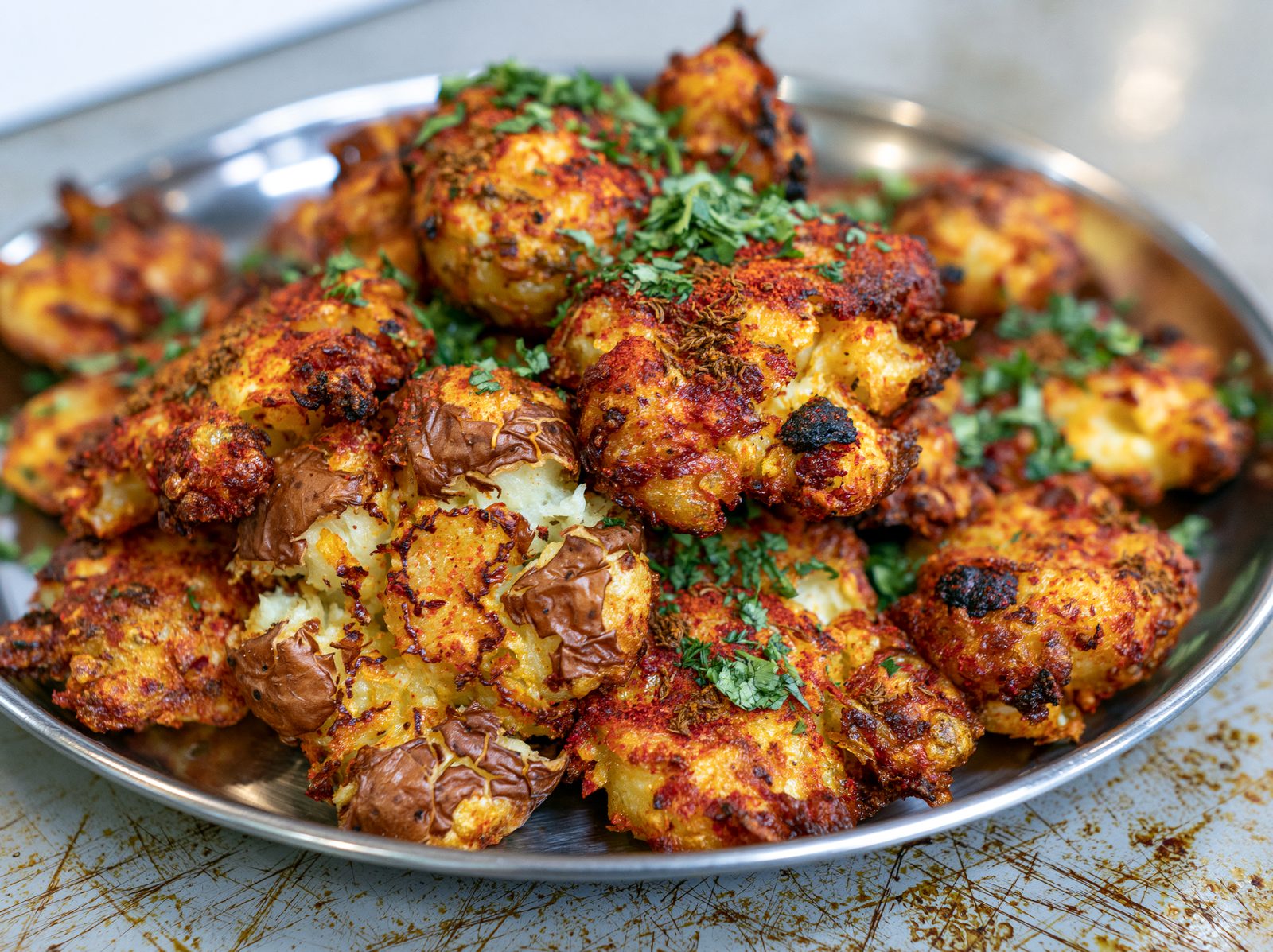
Aloo Tuk
Aloo tuk: parboiled potatoes flattened and fried twice until blistered, then tossed with amchur, chilli and cumin — the iconic Sindhi street snack.
Sweets & Desserts
-
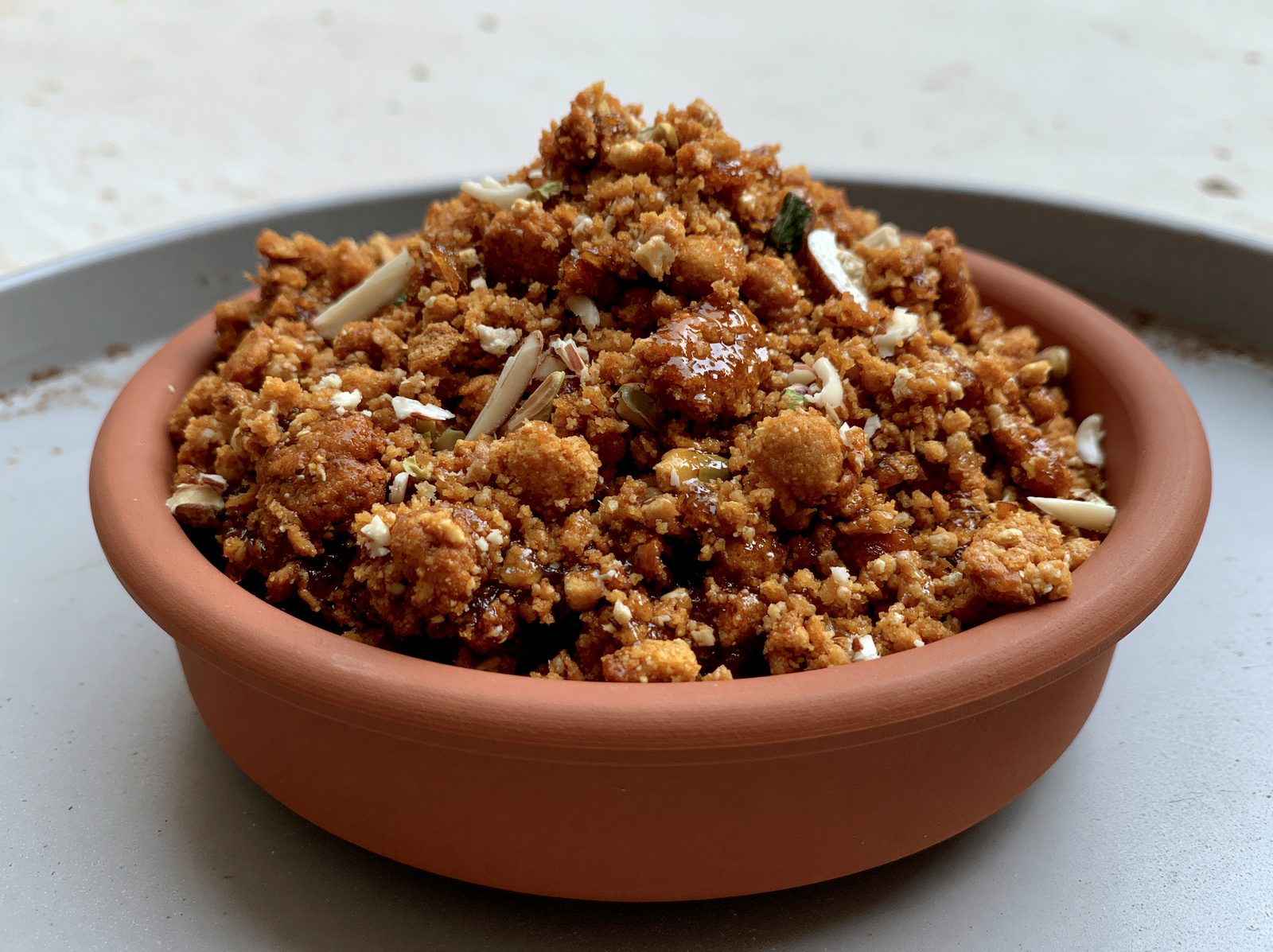
Sindhi Choorma
Sindhi choorma: rotis fried in ghee, crushed hot, bound with jaggery and cardamom — made for mourning, for beginnings, for condolence. Ten minutes.
-
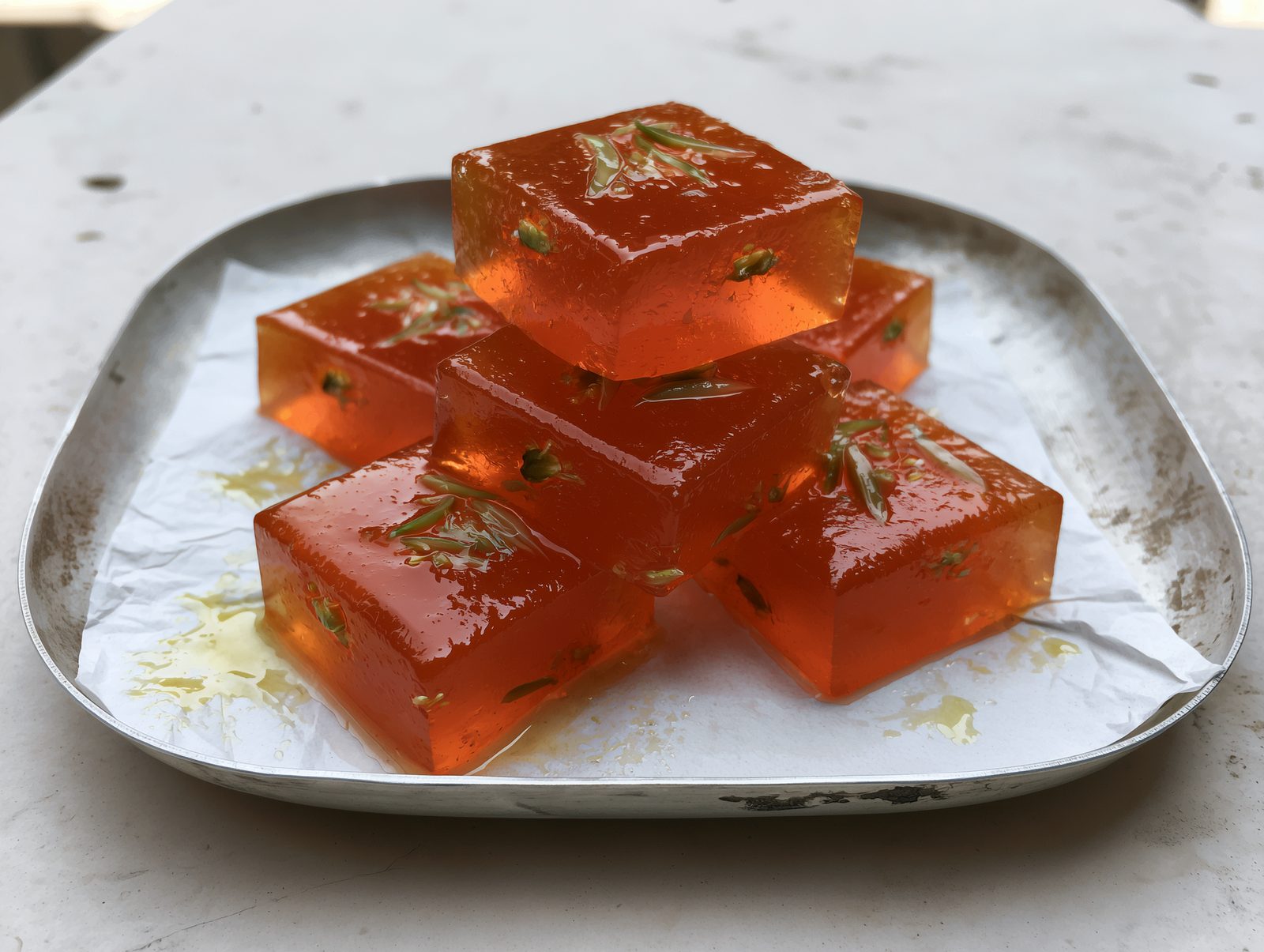
Karachi Halwa (Bombay Halwa)
Karachi halwa (Bombay halwa): jewel-bright, chewy translucent corn flour sweet with pistachios — the Sindhi confectioner’s sweet that crossed the border in 1947.
-
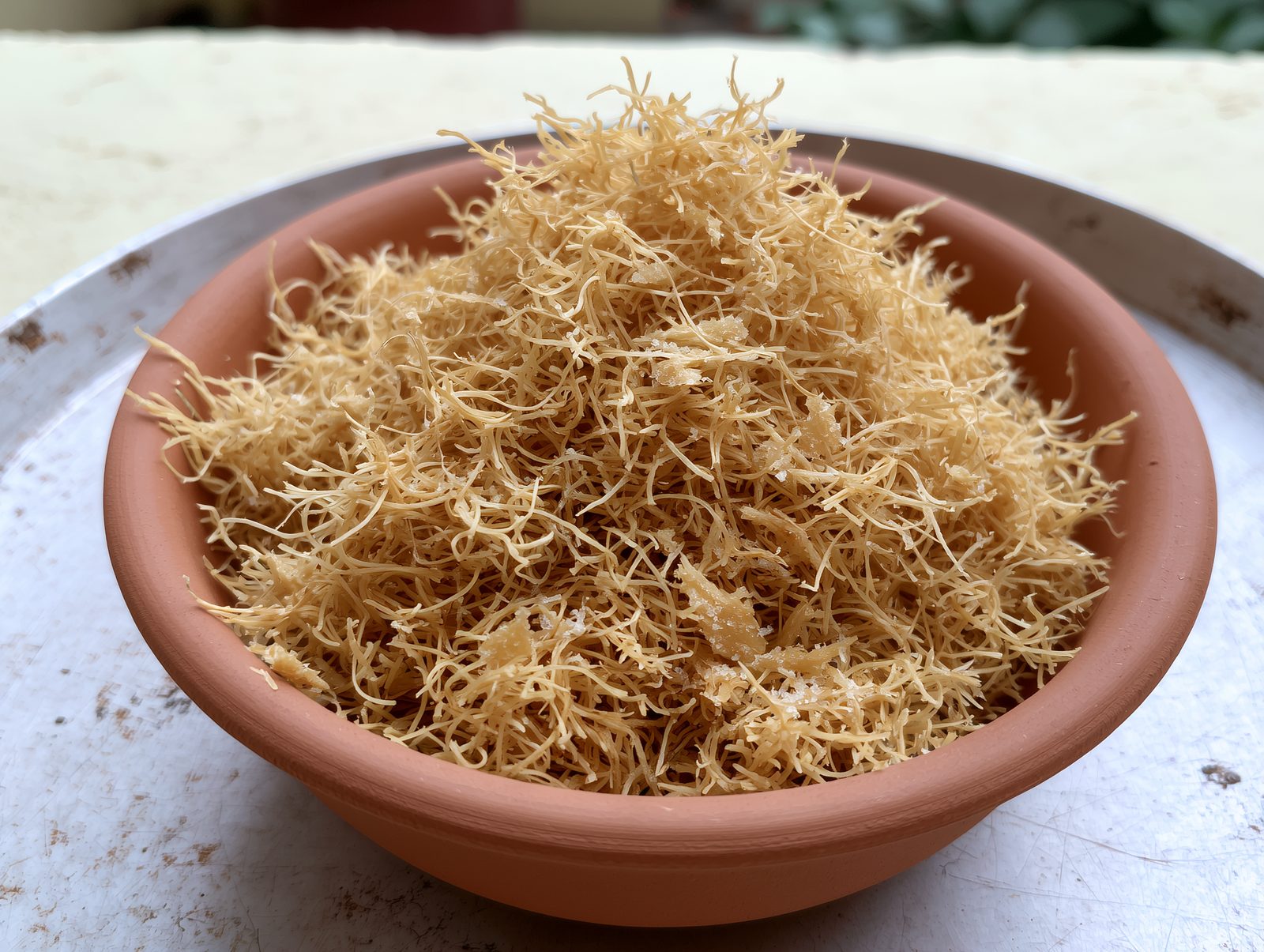
Sindhi Pheeni
Sindhi pheeni: ultra-fine dry-roasted vermicelli eaten with cold milk and sugar for Ramadan sehri — the pre-dawn sweet of Sindhi tradition.
-
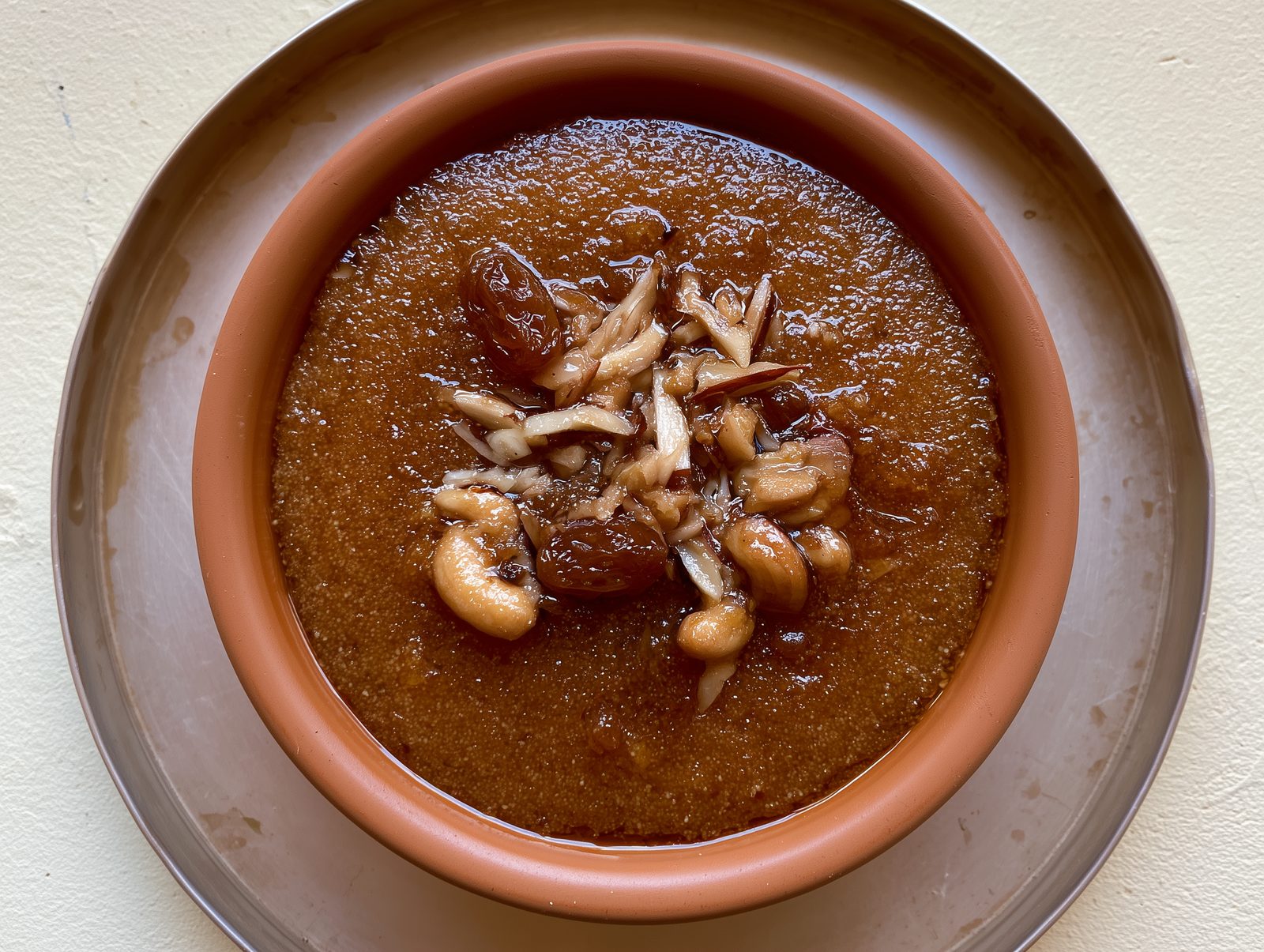
Mitho Dalia
Mitho dalia: semolina halwa made with jaggery rather than sugar — darker, warmer, less sweet, the molasses-flavoured Sindhi version of the subcontinent’s classic.
-
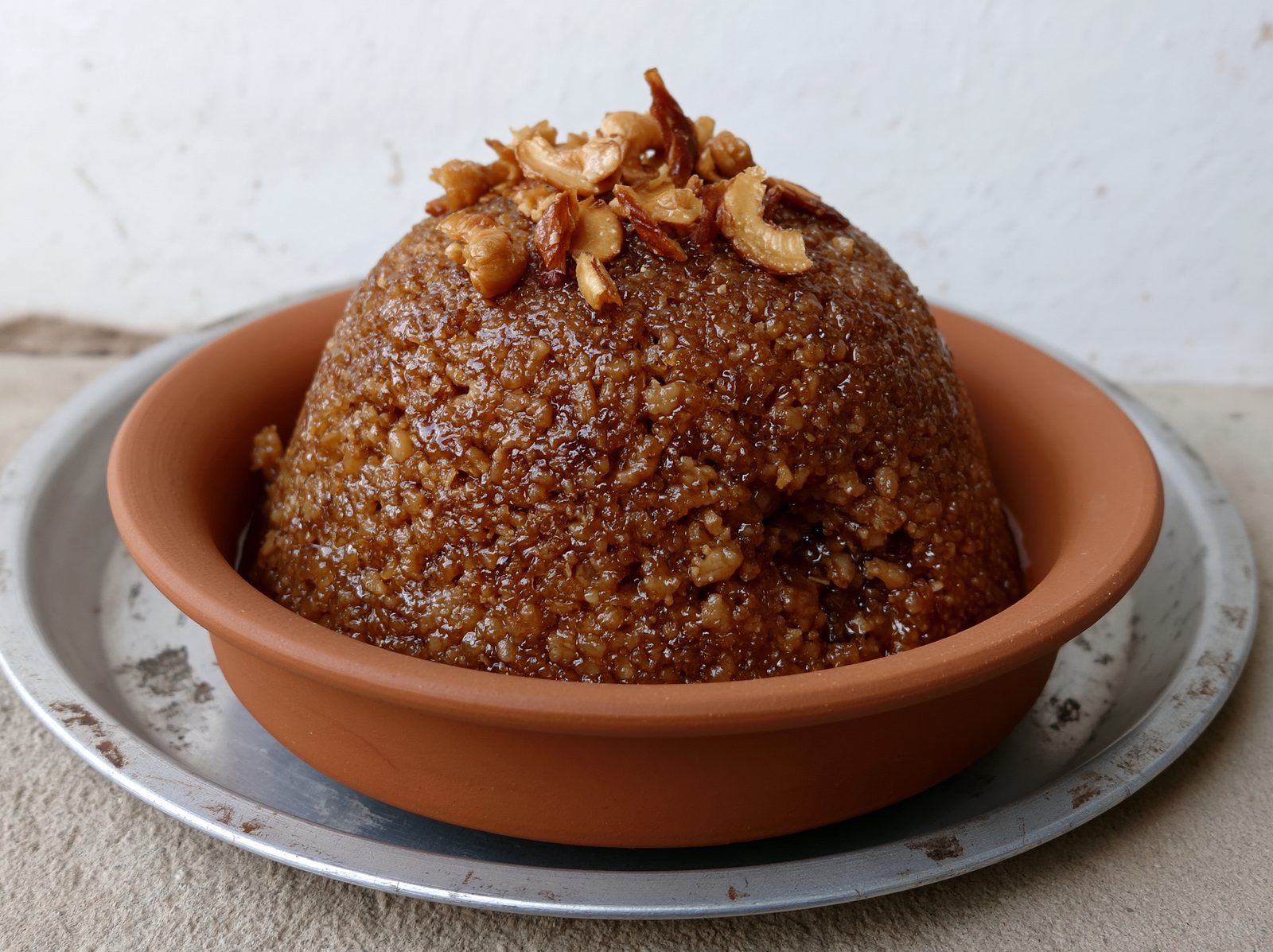
Lapsi
Lapsi: broken wheat cooked with jaggery and ghee — the Sindhi sweet made for mourning, for recovery, for auspicious beginnings. Food as care.
-
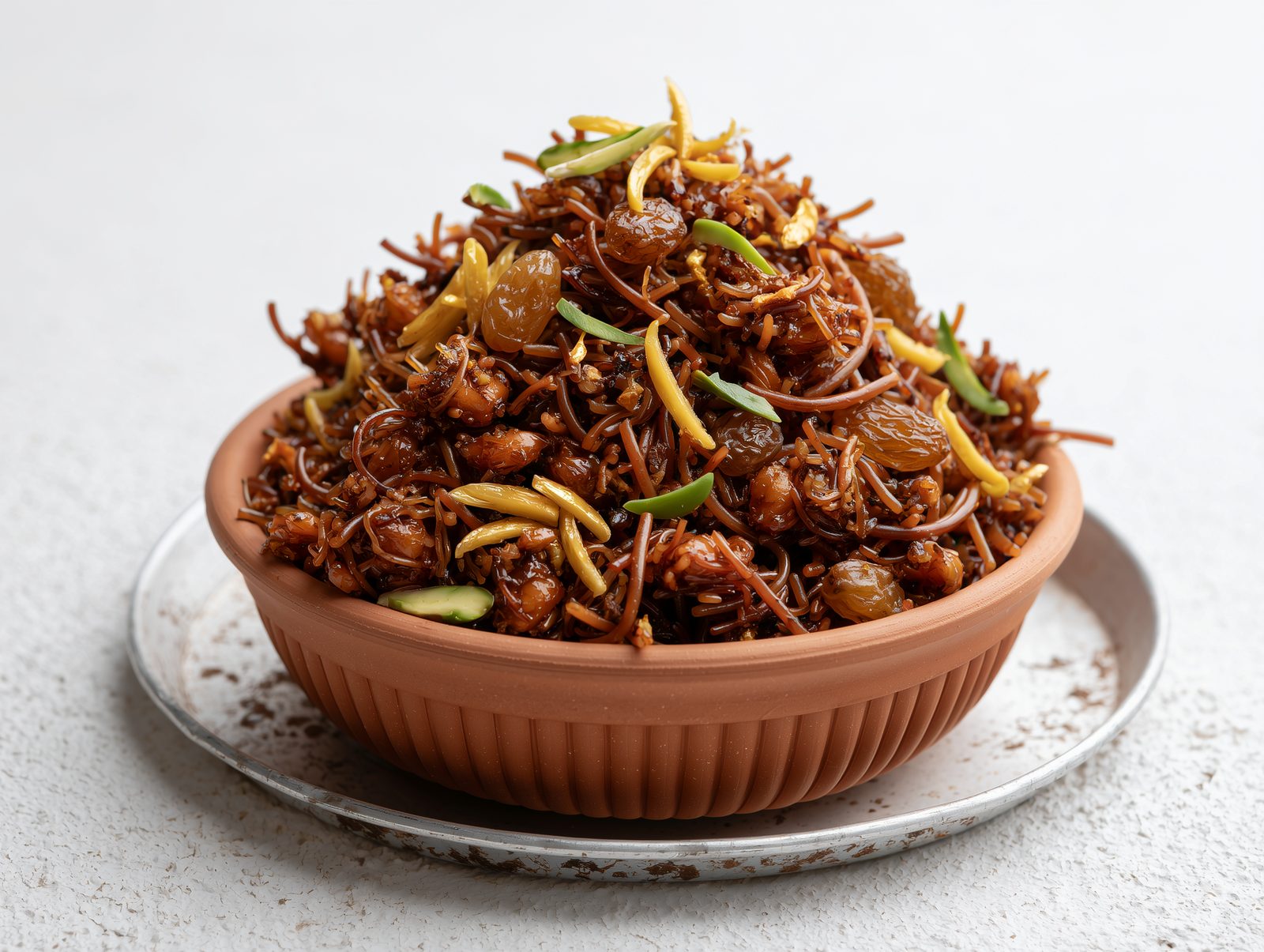
Sindhi Seviyan
Sindhi seviyan: ultra-fine vermicelli dry-toasted in ghee and bound with jaggery — the Eid al-Fitr sweet of Sindhi households, not cooked in milk.
-
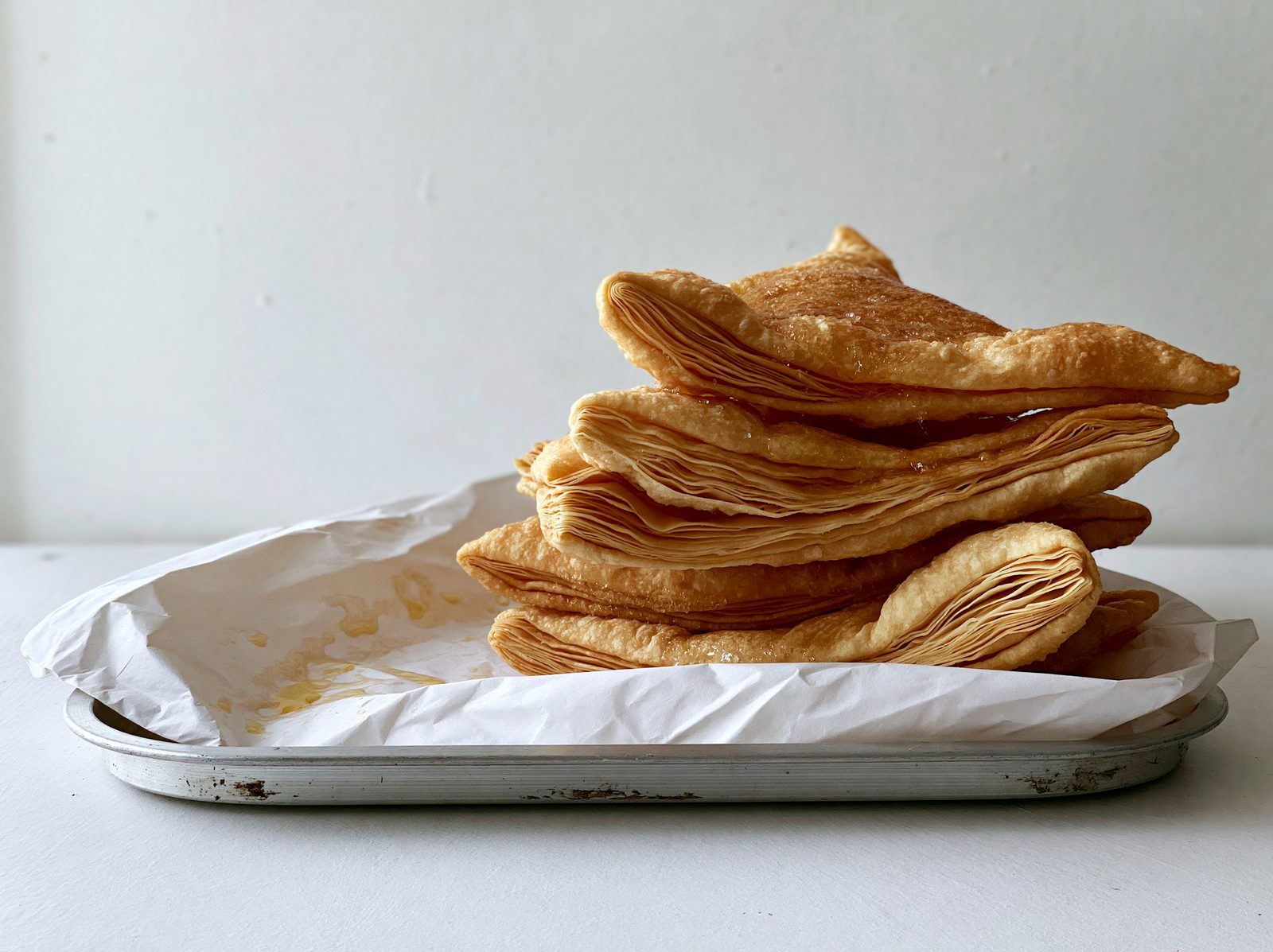
Khaja
Khaja: Sindhi crispy layered fried pastry dipped in light sugar syrup — the flaky sweet of the Hyderabad bazaars, a confectioner’s tradition.
-
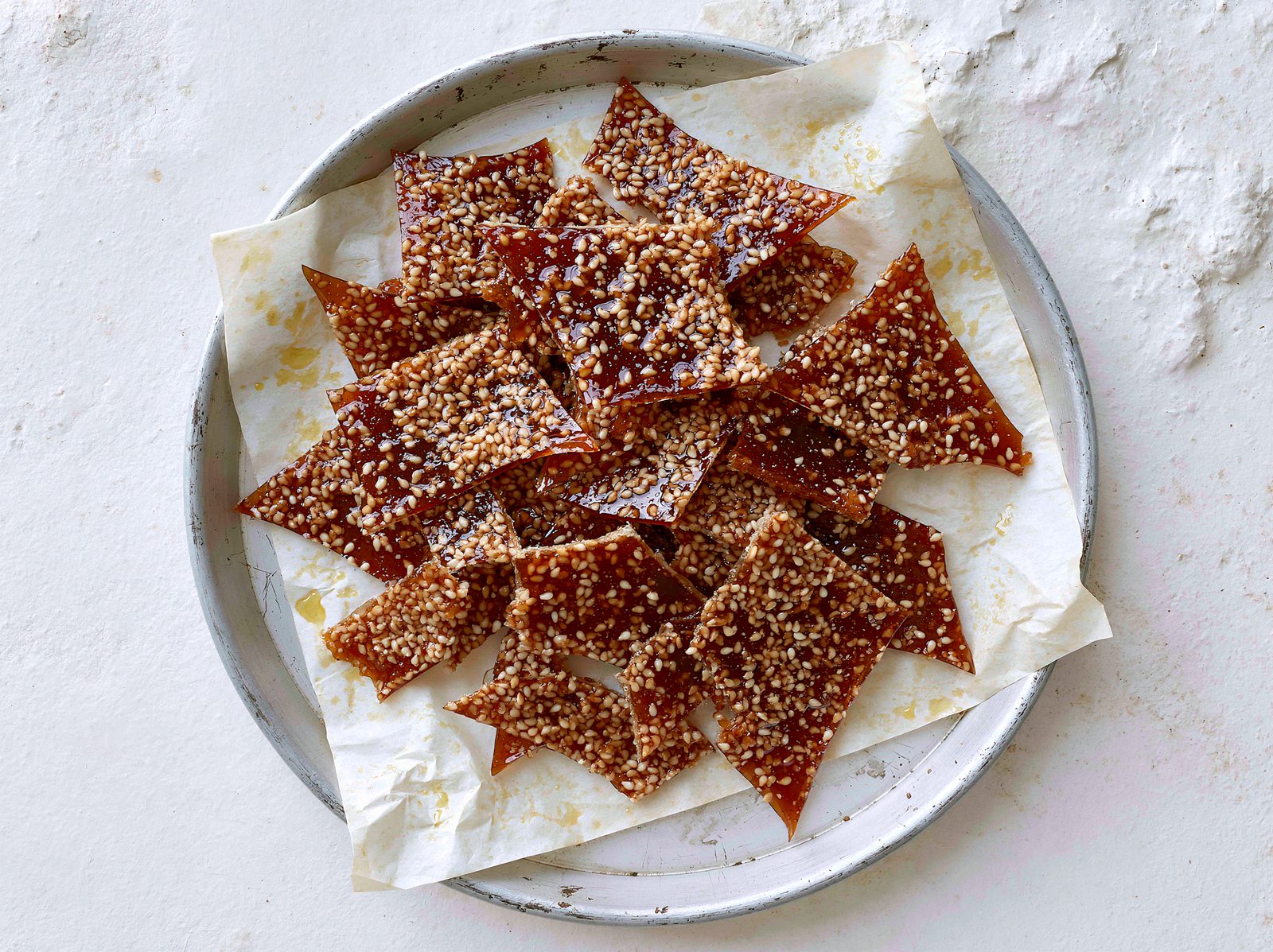
Gur Papri
Gur papri: new-season jaggery cooked to hard crack, mixed with toasted sesame and cardamom, spread thin and shattered — the Sindhi winter festival brittle.
-
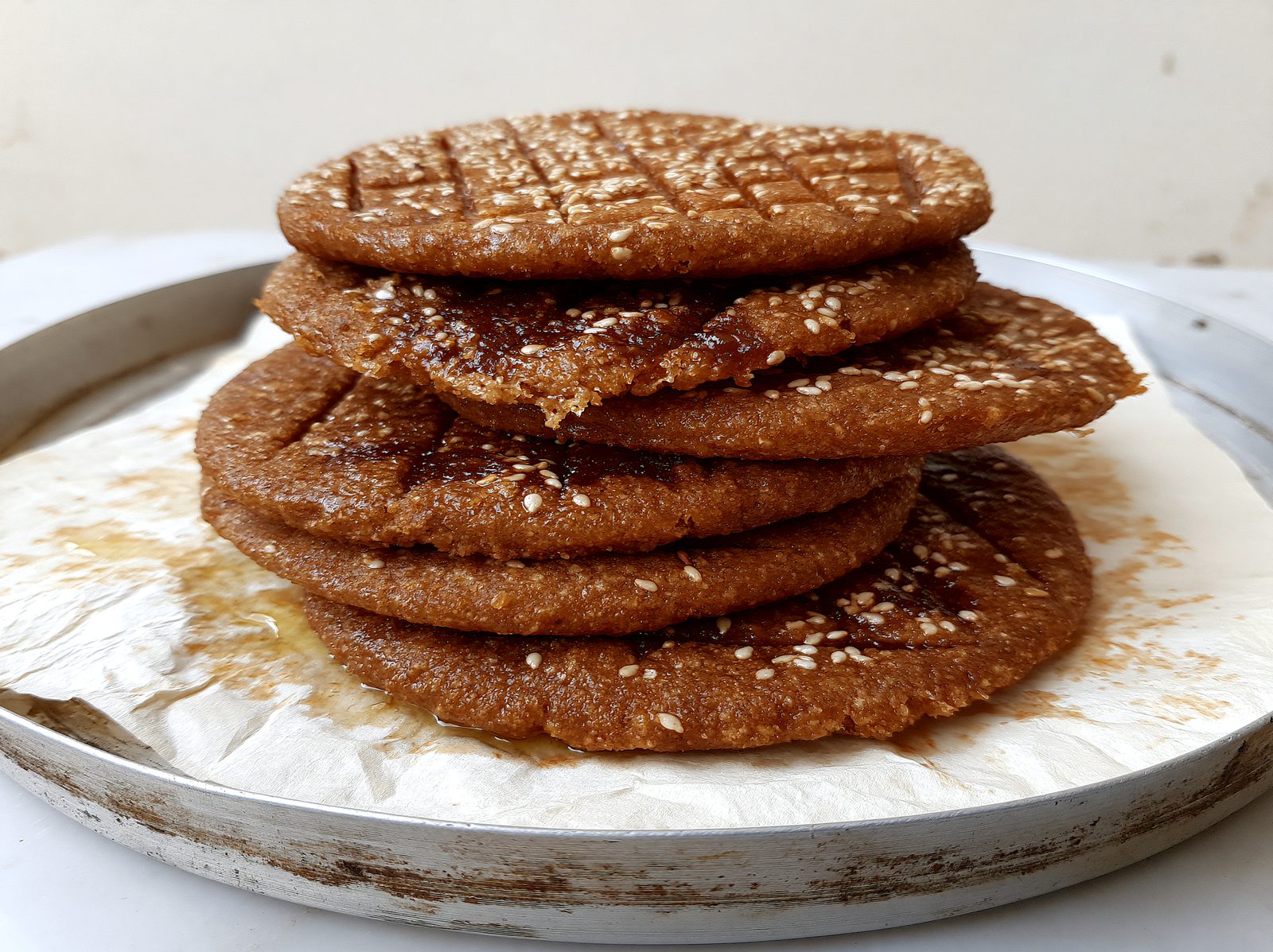
Sweet Lolo
Lolo: Sindhi sweet fried bread with jaggery, sesame and cardamom — made for Eid, distributed to neighbours, a home sweet that crosses every threshold.
-
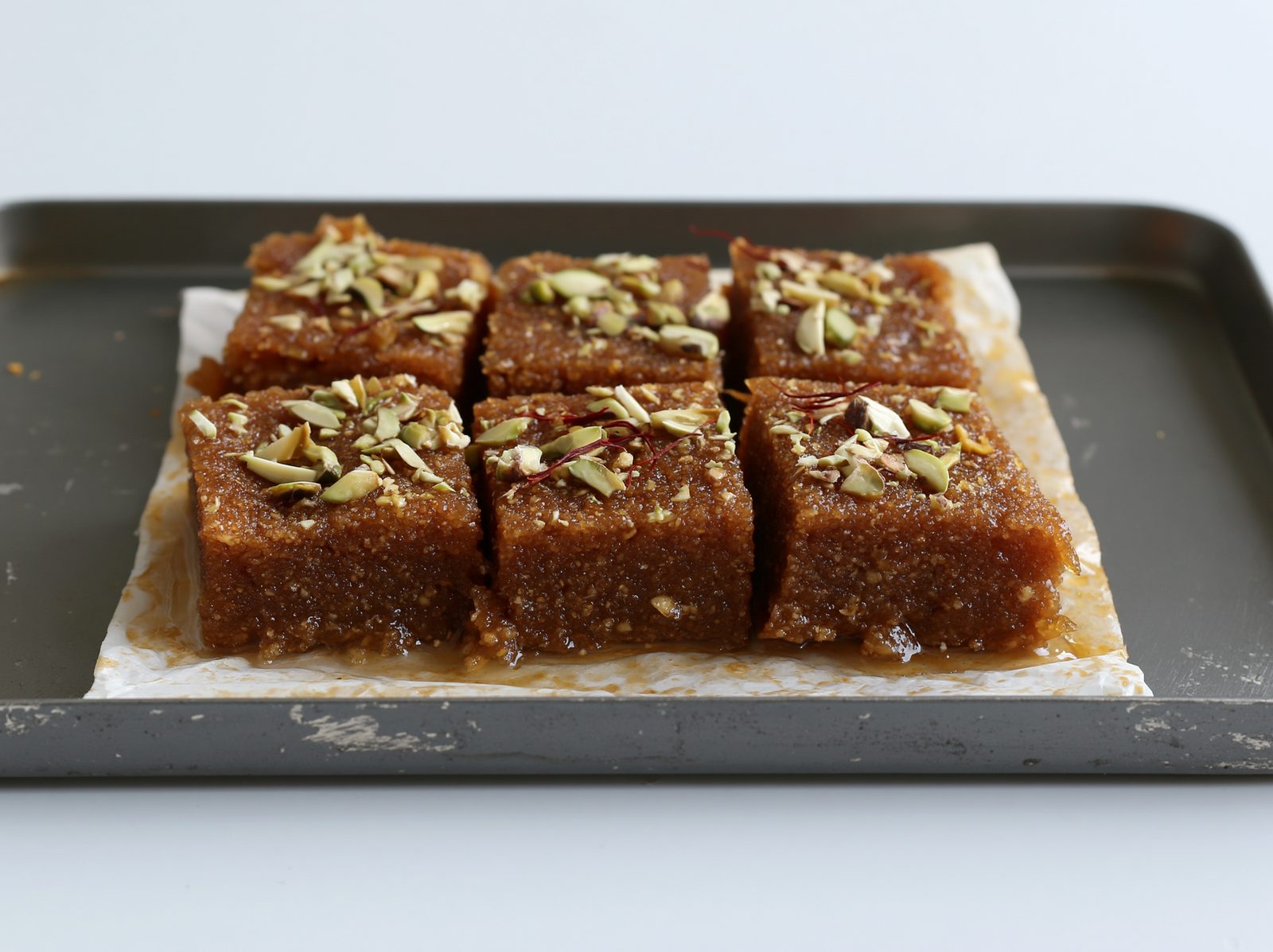
Sohan Halwa
Sohan halwa: the hard, chewy crystalline wheat-starch sweet of Multan — saffron-scented, pistachio-studded, the edible announcement of the Indus Plains.
Drinks
-

Tukh Malanga Sharbat
Tukh malanga sharbat: basil seeds soaked until they swell into translucent pearls, mixed with rose water, lemon and sugar — Karachi’s Ramadan cooling drink.
-
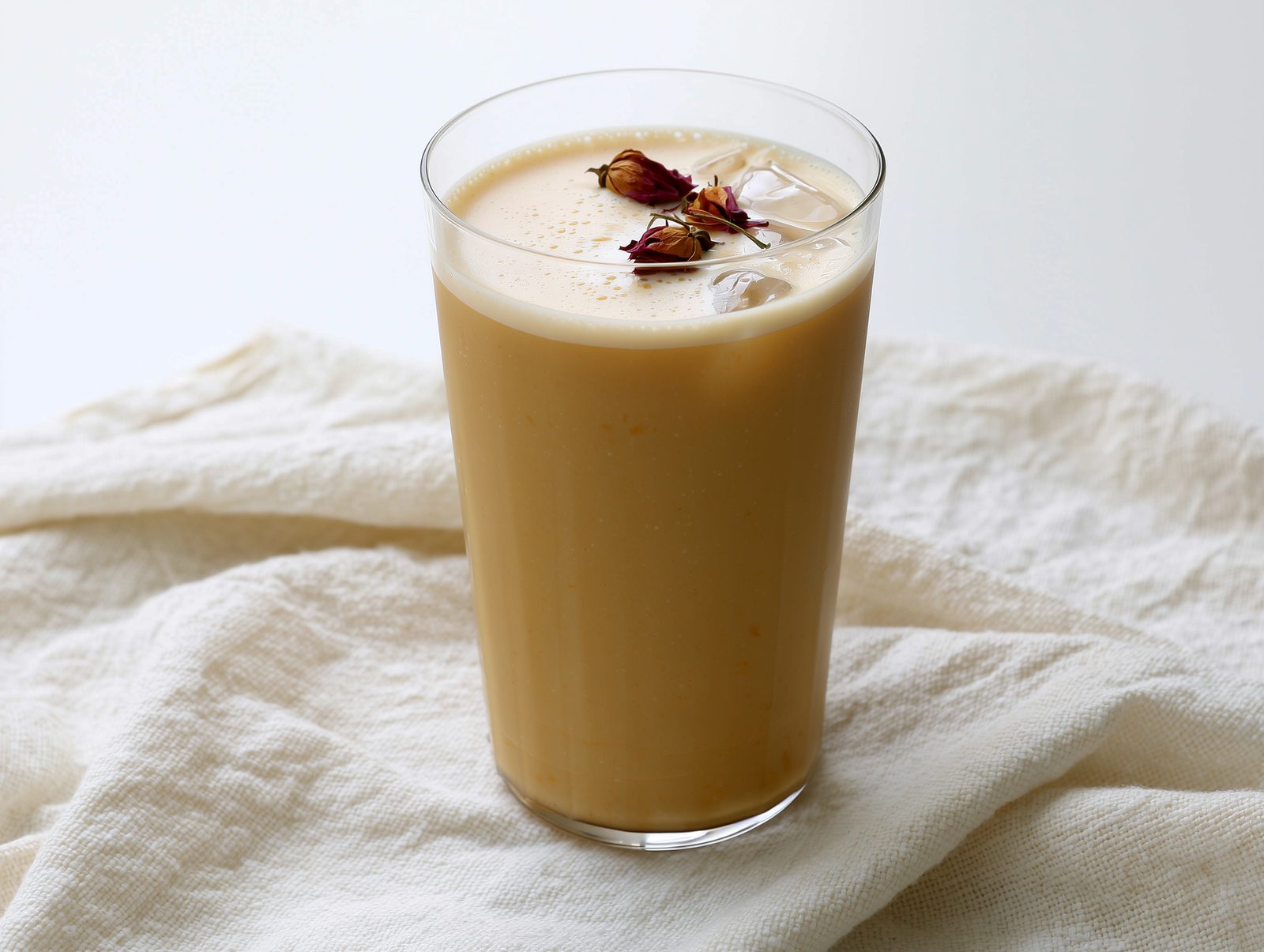
Khajoor ka Sharbat
Khajoor ka sharbat: Khairpur dates blended into cold milk with cardamom — the date-milk drink anchored to Sindh’s famous date-growing district on the Indus.
-
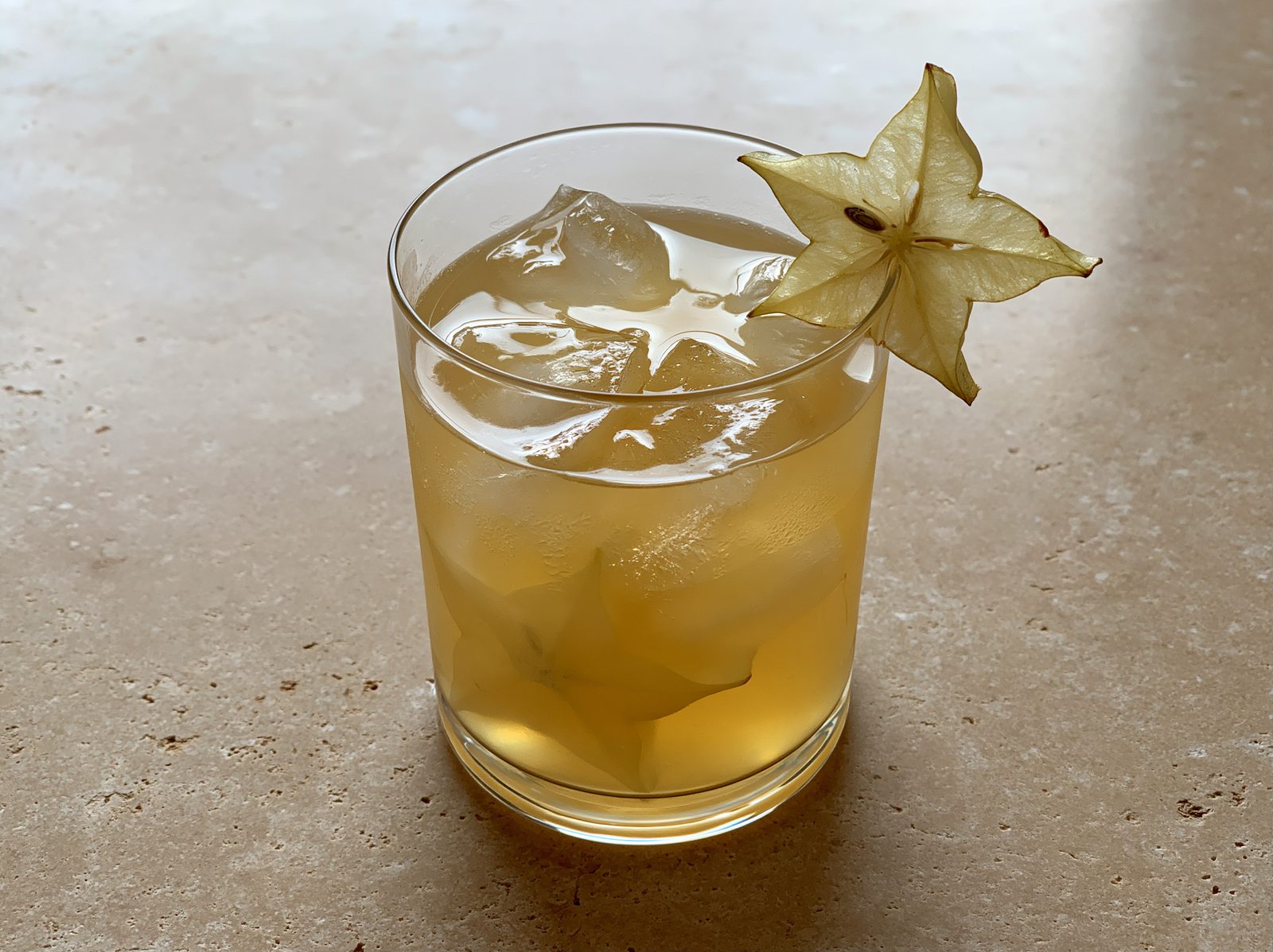
Kamrak Sharbat
Kamrak sharbat: fresh star fruit juiced with black salt, sugar and chilled water — the regional Sindhi drink from the trees of lower Sindh, sharp and fragrant.
-
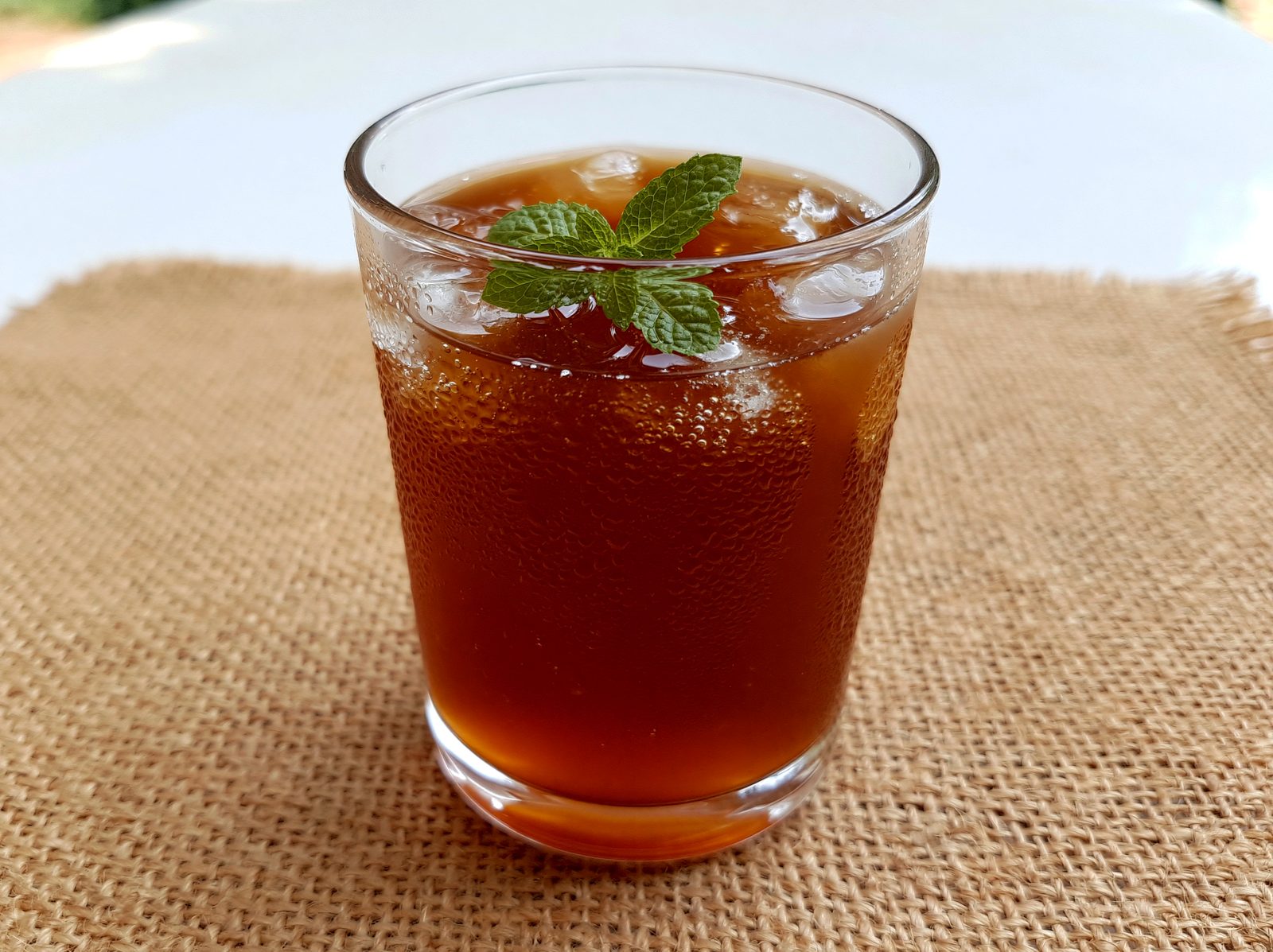
Imli ka Sharbat
Imli ka sharbat: tamarind sherbet sweetened with jaggery, seasoned with dried ginger, black salt and roasted cumin — the Karachi street cart drink of the bazaars.
-
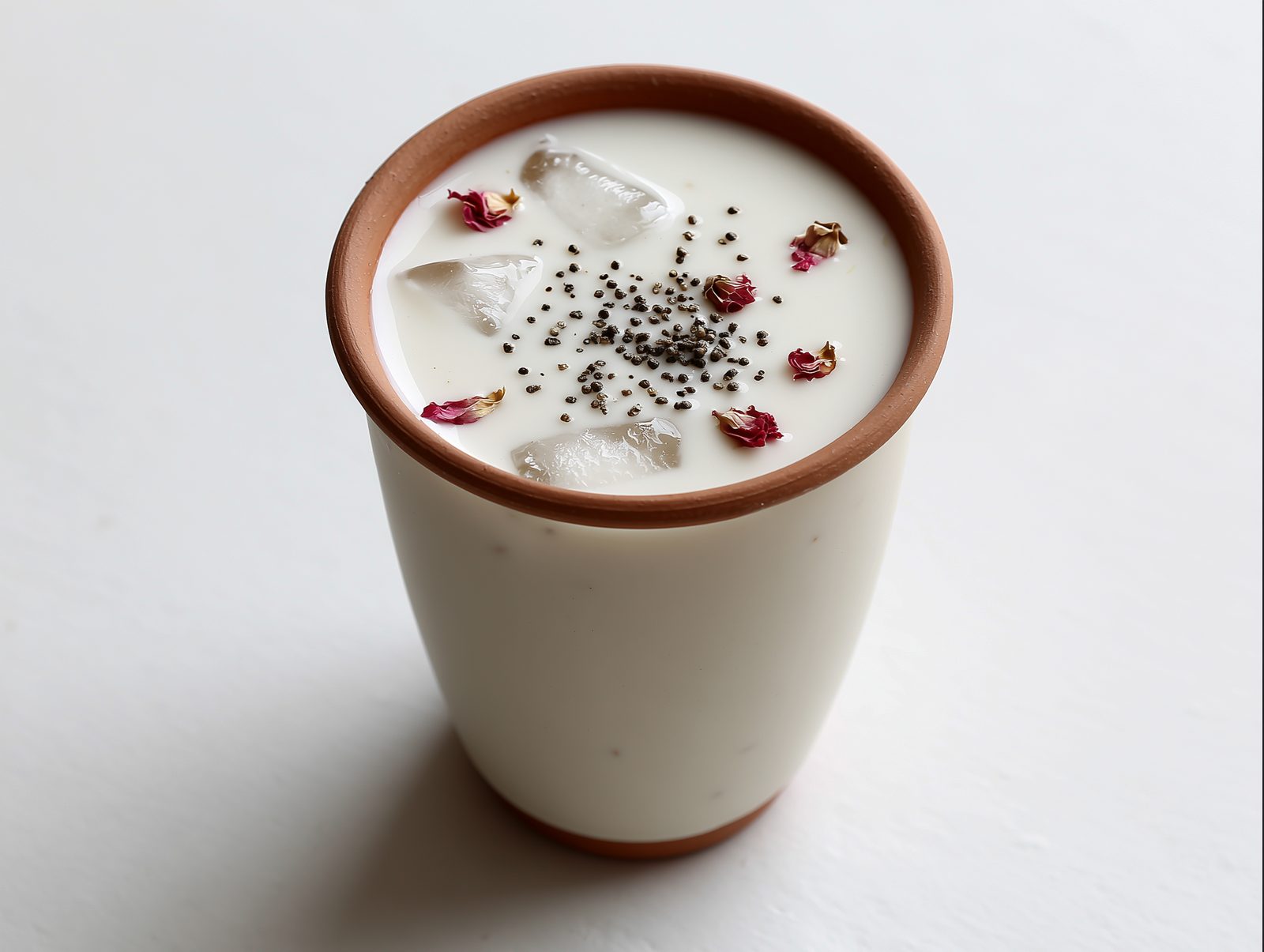
Thadal
Thadal: melon seeds, poppy seeds, almonds, fennel and rose water blended and chilled — the definitive Sindhi summer and Eid drink, almost unknown in English.
Every dish in this atlas was found somewhere — a blog, a cookbook, a family. If there is a version that lives in your kitchen and nowhere else, it belongs here. Or if you think we are missing a dish that belongs, drop us a note using the link below.
Contribute →