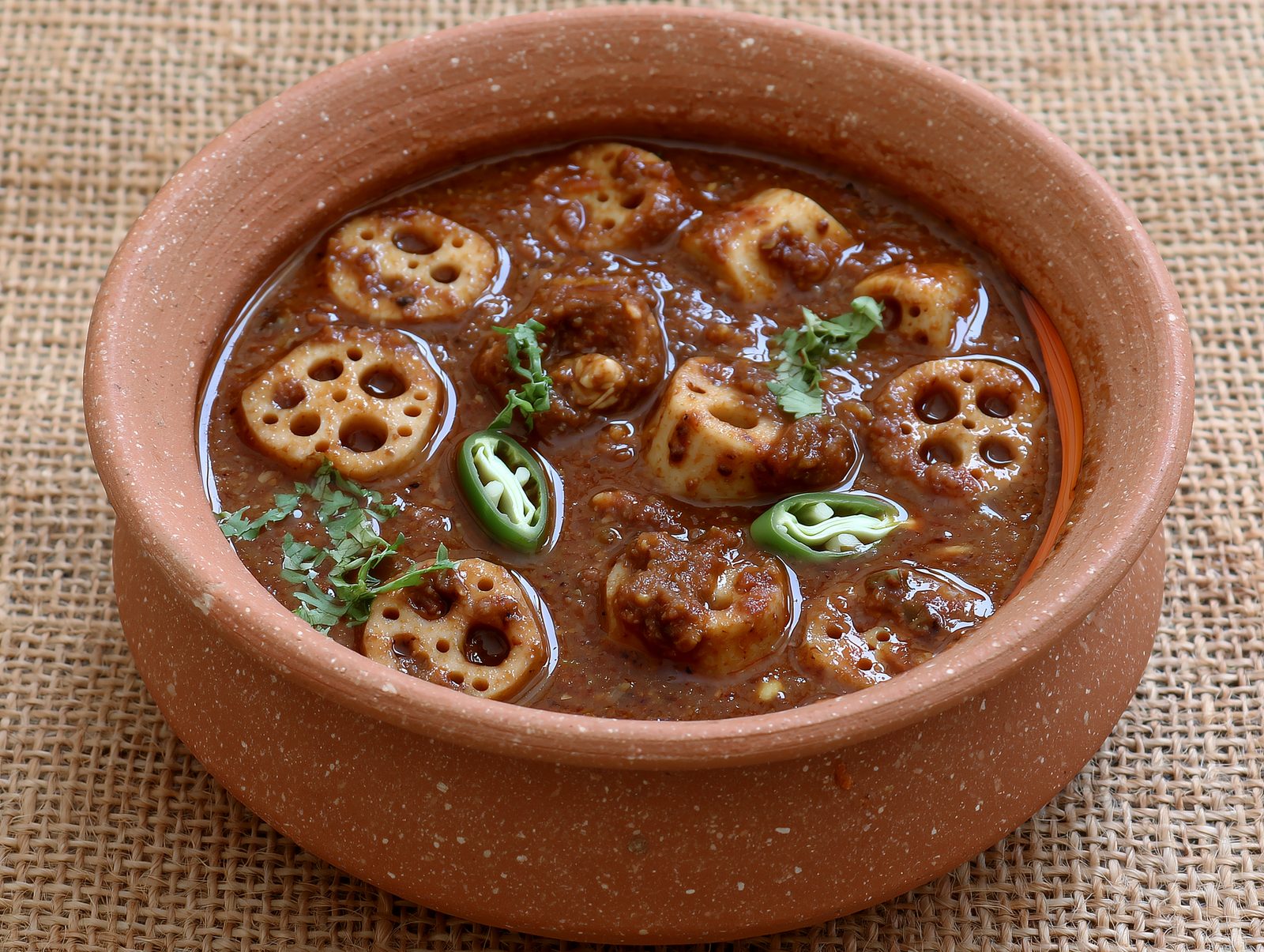
Bhee — lotus root — is the ingredient that gives Sindhi cuisine one of its most distinctive chapters. The lotus was sacred to the Indus Valley civilisation; its cultivation runs through the Sindhi calendar from the monsoon to late autumn. At the table it becomes bhee jo salan: lotus root cross-sections simmered in a tamarind-soured curry, the vegetable holding its crunchy, lacy texture even after a long cook, refusing to turn soft in the way that most roots do. No other regional cuisine in the North Indian Arc uses lotus root so consistently or so lovingly — it is the zone’s vegetarian signature, and a clear editorial distinction on the atlas map.
Zone: Indus Plains
SOURCE: Sindhi community cookbook, Khairpur, printed 1989, recipe transcribed 2021
LOCAL NAME: بھی جو سالن
INGREDIENTS
- 400 g lotus root (peeled and sliced into 5mm rounds (fresh, frozen or tinned))
- 2 medium onions (finely sliced)
- 1 tbsp ginger paste
- 1 tsp garlic paste
- ¼ tsp asafoetida (hing)
- 2 medium tomatoes (chopped)
- 2 tbsp tamarind paste
- 1 tsp turmeric
- 1 tsp red chilli powder
- 1½ tsp ground coriander
- 1 tsp ground cumin
- 1½ tsp salt
- 3 tbsp neutral oil or ghee
- 2 green chillies (slit)
- 250 ml water
- chopped coriander to finish
METHOD
- If using fresh lotus root, peel and slice, then soak the slices in salted water for 10 minutes to prevent discolouration. Drain. If using frozen, thaw completely. If using tinned, drain and rinse.
- Heat the oil in a heavy pot. Add the asafoetida and let it sizzle 10 seconds. Add the onions and fry until deep golden, 10 minutes.
- Add the ginger and garlic pastes; cook 1 minute. Add the tomatoes, turmeric, red chilli, coriander, cumin and salt. Cook until the oil separates, 6–8 minutes.
- Add the tamarind paste, water and lotus root slices. Stir well.
- Bring to a boil, then cover and simmer on low heat for 25–30 minutes until the lotus root is tender but still has a distinct bite. Add the slit green chillies in the final 5 minutes.
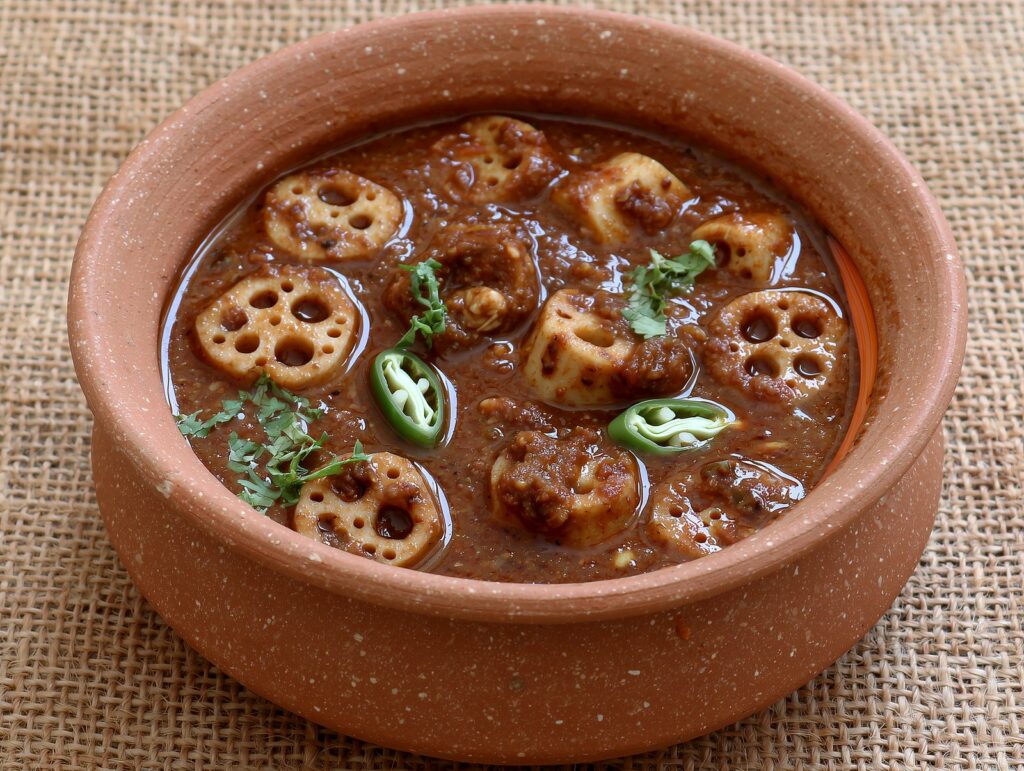
- Adjust salt and sourness. Serve over rice or with roti. The lacy cross-sections of lotus root visible in the gravy are the visual signature of the dish.
NOTES
UK adaptation: Frozen lotus root slices from Chinese, South Asian or East Asian grocery stores, where they are often labelled ‘lotus root’. Fresh lotus root from specialist South Asian or Chinese grocers. Tinned lotus root from Asian supermarkets is an acceptable substitute. Everything else widely available.
US adaptation: Frozen or tinned lotus root from H-Mart, Asian grocery stores or Amazon. Fresh lotus root from larger Asian supermarkets. Tamarind paste from Indian grocery stores. Everything else widely available.
Cook’s note: Lotus root stays pleasantly firm even after a long cook — do not expect it to go soft. The crunch is correct; it is what distinguishes this from any other root vegetable curry.
Cook this differently? Share your family’s version — or tell us what we’re missing.
Contribute