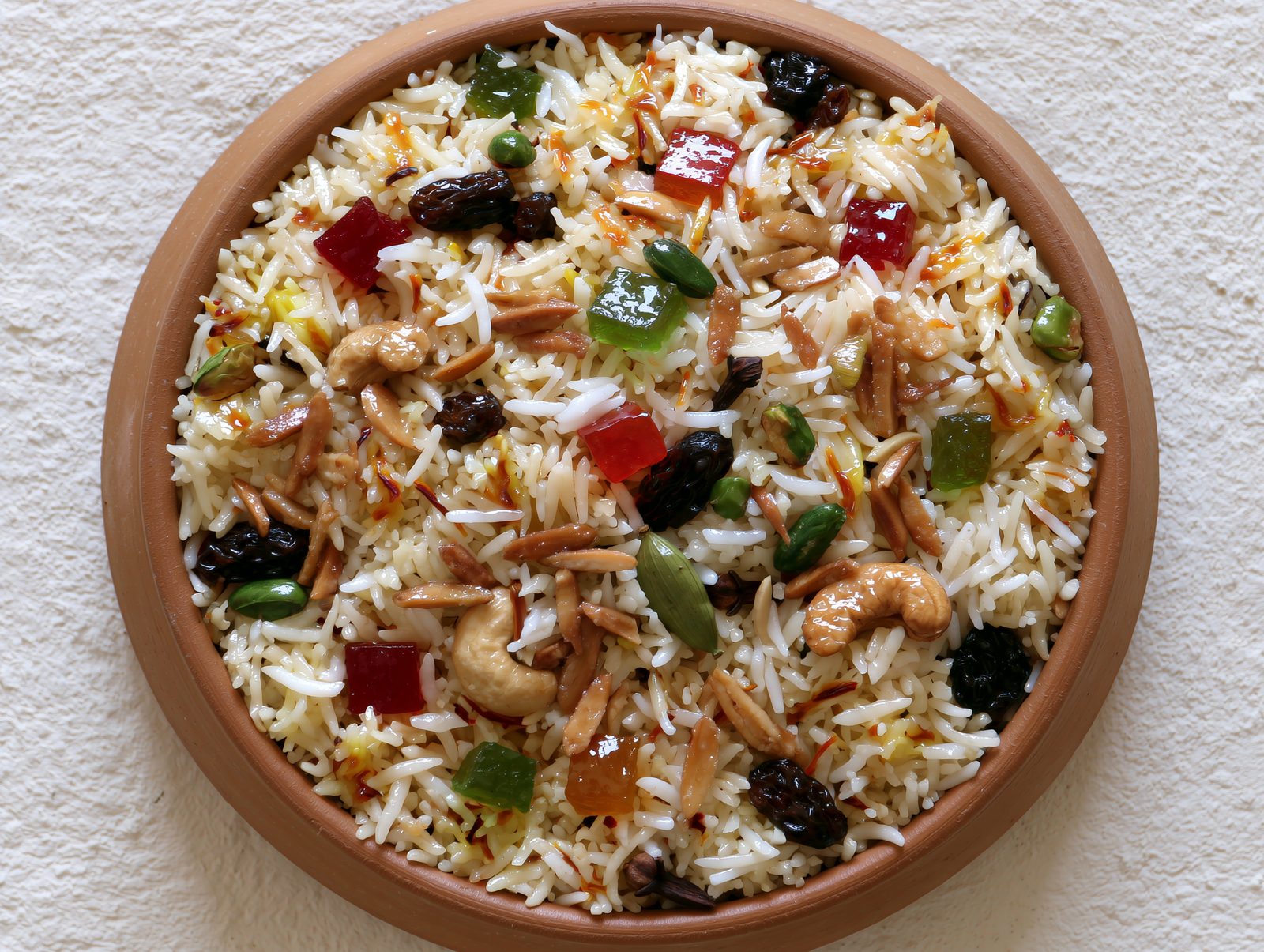
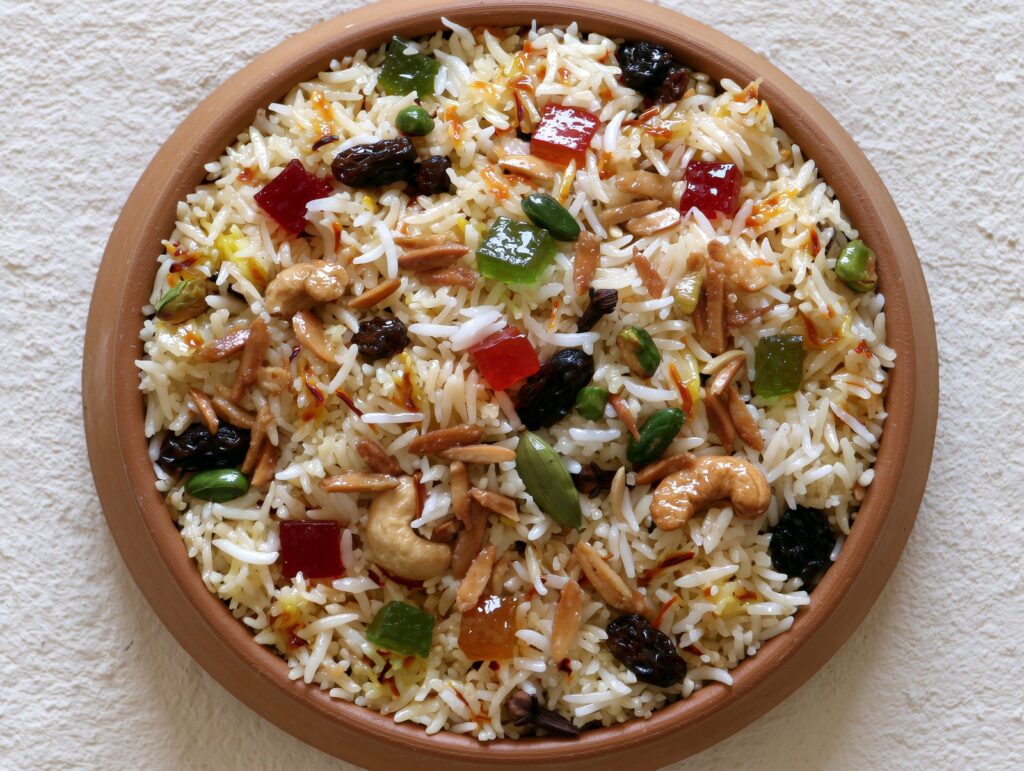
Zarda — from the Persian and Urdu for yellow — is sweet saffron rice, and its Sindhi form is distinguished by the presence of meethi saunf: sweet aniseed, which adds a cool, faintly medicinal fragrance that the Punjabi and Lucknawi versions do not carry. The rice is stained yellow with saffron, sweetened with sugar, enriched with ghee and studded with fried nuts, raisins and a specific combination of dried fruit. It is made at Eid, at nikah ceremonies and at the conclusion of a walima, carried to the table in the final moment as the signal that the feast is ending. The sweet aniseed separates this from every adjacent zarda in the atlas and marks it as specifically Sindhi.
Zone: Indus Plains
SOURCE: Pakistani food forum, urdupoint.com, Urdu recipe thread, 2020, translated from Urdu
LOCAL NAME: سندھی زردہ
INGREDIENTS
- 2 cups sella (parboiled basmati or aged basmati rice, soaked 30 minutes)
- a pinch of saffron (soaked in 3 tbsp warm milk)
- 1 cup sugar
- 4 tbsp ghee
- 4 green cardamom pods
- 4 cloves
- 1 cinnamon stick
- 1 tsp meethi saunf (sweet aniseed)
- 3 tbsp mixed almonds (cashews and pistachios, slivered and fried)
- 2 tbsp raisins (fried)
- 3 tbsp tutti-frutti (candied papaya or mixed dried fruit)
- ½ tsp ground cardamom
- khoya (mawa or clotted cream to garnish (optional))
METHOD
- Boil plenty of water with 2 cardamom pods, 2 cloves, half the cinnamon and a little salt. Add the drained rice and par-boil for 5–6 minutes until about 70% done — still firm. Drain immediately. Stir in the saffron milk so the colour runs through the grains.
- Heat the ghee in a wide, heavy-based pot. Add the remaining cardamom, cloves, cinnamon and the meethi saunf; sizzle for 30 seconds.
- Tip in the par-boiled rice gently. Scatter the sugar over in an even layer. Do not stir.
- Add half the fried nuts, raisins and tutti-frutti.
- Cover very tightly — foil under the lid helps. Set on the lowest heat possible and cook on dum for 15–18 minutes until the sugar has dissolved into the grains and each grain is separate and glossy.
- Fold through very gently with a slotted spoon so the yellow and white streaks of saffron remain visible.
- Garnish with the remaining nuts and a little khoya or clotted cream. Serve warm.
NOTES
UK adaptation: Sweet aniseed (meethi saunf) from South Asian grocers — look in the mouth freshener section as well as the spice aisle. Sella (parboiled) basmati holds its shape best in zarda. Khoya (mawa) from South Asian grocers for the garnish; condensed milk works at a pinch. Everything else widely available.
US adaptation: Meethi saunf from Indian grocery stores or online. Parboiled or aged basmati from Patel Brothers. Khoya from frozen section of Indian grocery stores. Everything else widely available.
Cook’s note: Par-boil the rice to only 70–75% — still firmly resistant when you bite a grain — before the dum. It will finish on the lowest heat and the grains must stay separate, not collapse.
Cook this differently? Share your family’s version — or tell us what we’re missing.
Contribute