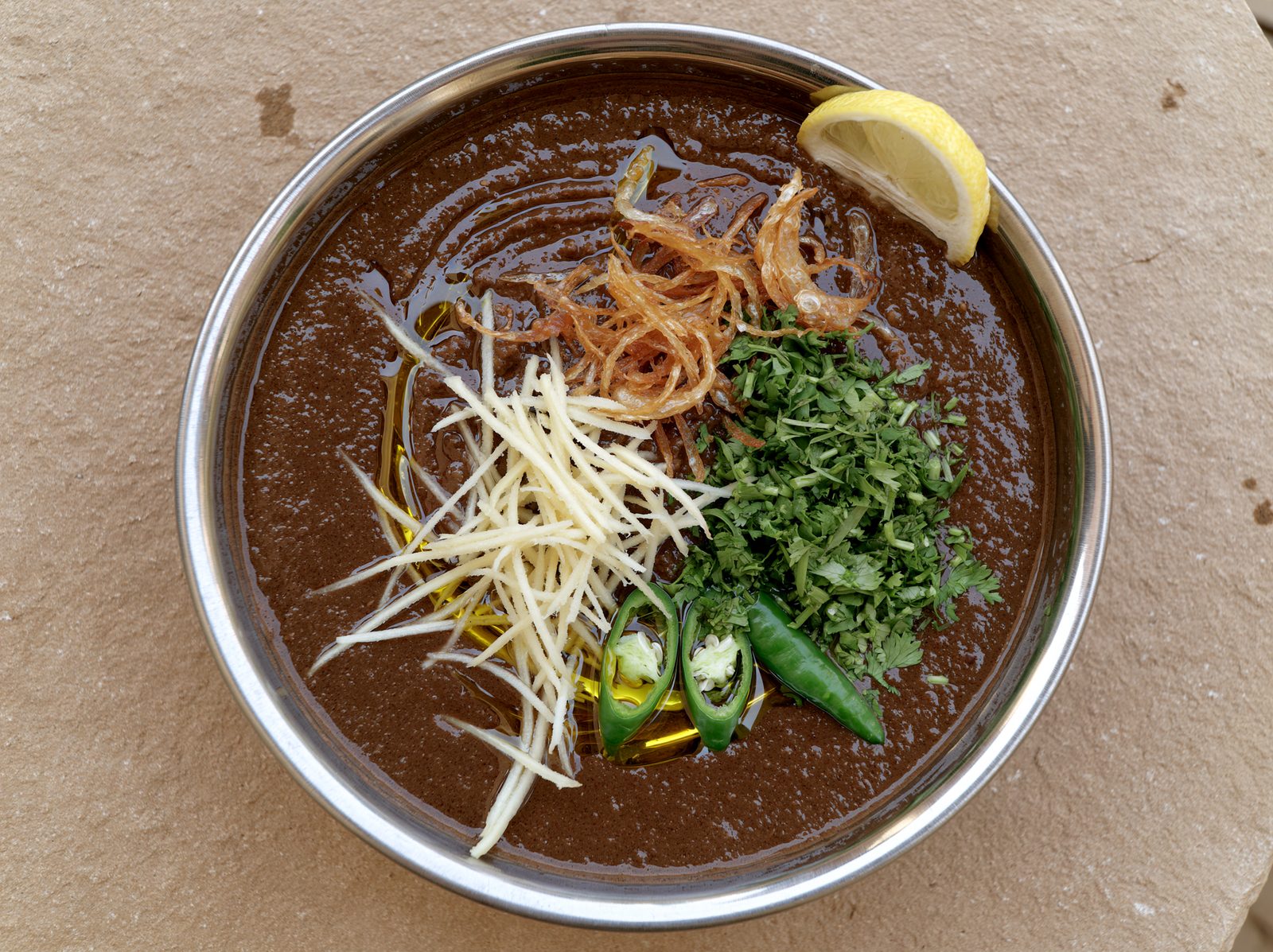
Sindhi Haleem belongs to the same lineage as all haleem — the Arab harees carried into the subcontinent and remade by each tradition it passed through — but the Sindhi version departs so sharply from the Zone 3 Mughal Corridor haleem that the two dishes do not taste like cousins. There is no cream here, no kewra, no rose water. The grain-and-lentil base is the same; the souring agent is tamarind, and asafoetida runs through the spice base with the authority it holds in all Sindhi cooking. The resulting haleem is tangier, leaner, and more assertive than the Lucknawi version, built for the Ramadan and Muharram tables of Karachi and Hyderabad, not the Nawabi court. Where Zone 3’s haleem is perfumed, this one is sour.
Zone: Indus Plains
SOURCE: Urdu-language recipe, Khana Khazana Pakistan, 2021, translated from Urdu
LOCAL NAME: سندھی حلیم
INGREDIENTS
- 500 g bone-in mutton or beef (with some bone)
- 200 g broken wheat (daliya, soaked 1 hour)
- 100 g chana dal (soaked 1 hour)
- 50 g masoor dal
- 50 g moong dal
- 1 tsp turmeric
- ¼ tsp asafoetida (hing)
- 2 large onions (finely sliced)
- 2 tbsp ginger-garlic paste
- 1½ tsp red chilli powder
- 1 tbsp ground coriander
- 1 tsp ground cumin
- 2 tsp salt
- 3 tbsp tamarind paste
- 5 tbsp neutral oil or ghee
- For the finish: 3 tbsp fried onions (birista)
- ginger juliennes (green chillies, fresh coriander and lemon wedges)
METHOD
- Cook the soaked daliya and all three dals together in a large pot with plenty of water and the turmeric. Bring to a boil and simmer for 60 minutes until everything is completely soft and collapsing. Blend or mash to a smooth, thick mass.
- In a separate pot, heat 3 tbsp of the oil. Add the asafoetida. Add the onions and fry until very deep gold. Add the ginger-garlic paste, then the meat and all the spices. Fry on high heat for 10 minutes. Add enough water to cover the meat; simmer covered for 60–75 minutes until the meat is tender and falling from the bone. Lift out the meat, shred it finely, and discard the bones.
- Combine the shredded meat, its cooking gravy and the grain-lentil mass in one large pot. Cook on low heat, stirring constantly, for 30–40 minutes until the mixture is one thick, unified, glossy mass.
- Stir in the tamarind paste and 1 tbsp of fresh oil. Cook 5 more minutes. Adjust salt.
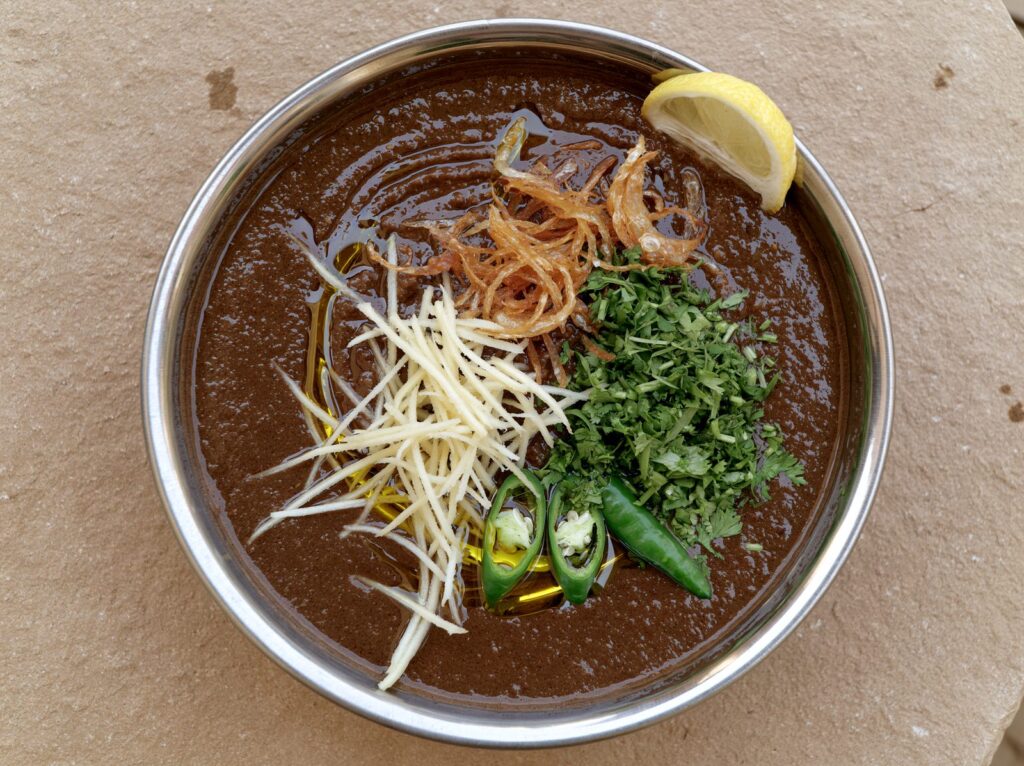
- Serve in bowls topped with fried onion, ginger, coriander and green chilli, with lemon alongside and naan or chapati.
NOTES
UK adaptation: Broken wheat (daliya) and mixed lentils from any South Asian grocer. Bone-in mutton or beef from halal butchers. A Sindhi haleem masala from South Asian grocers; otherwise build from the spice list. Tamarind paste from any supermarket. Everything else widely available.
US adaptation: Cracked wheat and mixed lentils from Patel Brothers or H-Mart. Bone-in lamb or beef from halal butchers. Tamarind paste from South Asian grocers. Everything else widely available.
Cook’s note: Add the tamarind in the final stage, after the grain and meat are fully cooked and unified — adding it earlier can prevent the lentils from softening properly. Taste before serving; the sourness should be noticeable but not aggressive.
Cook this differently? Share your family’s version — or tell us what we’re missing.
Contribute