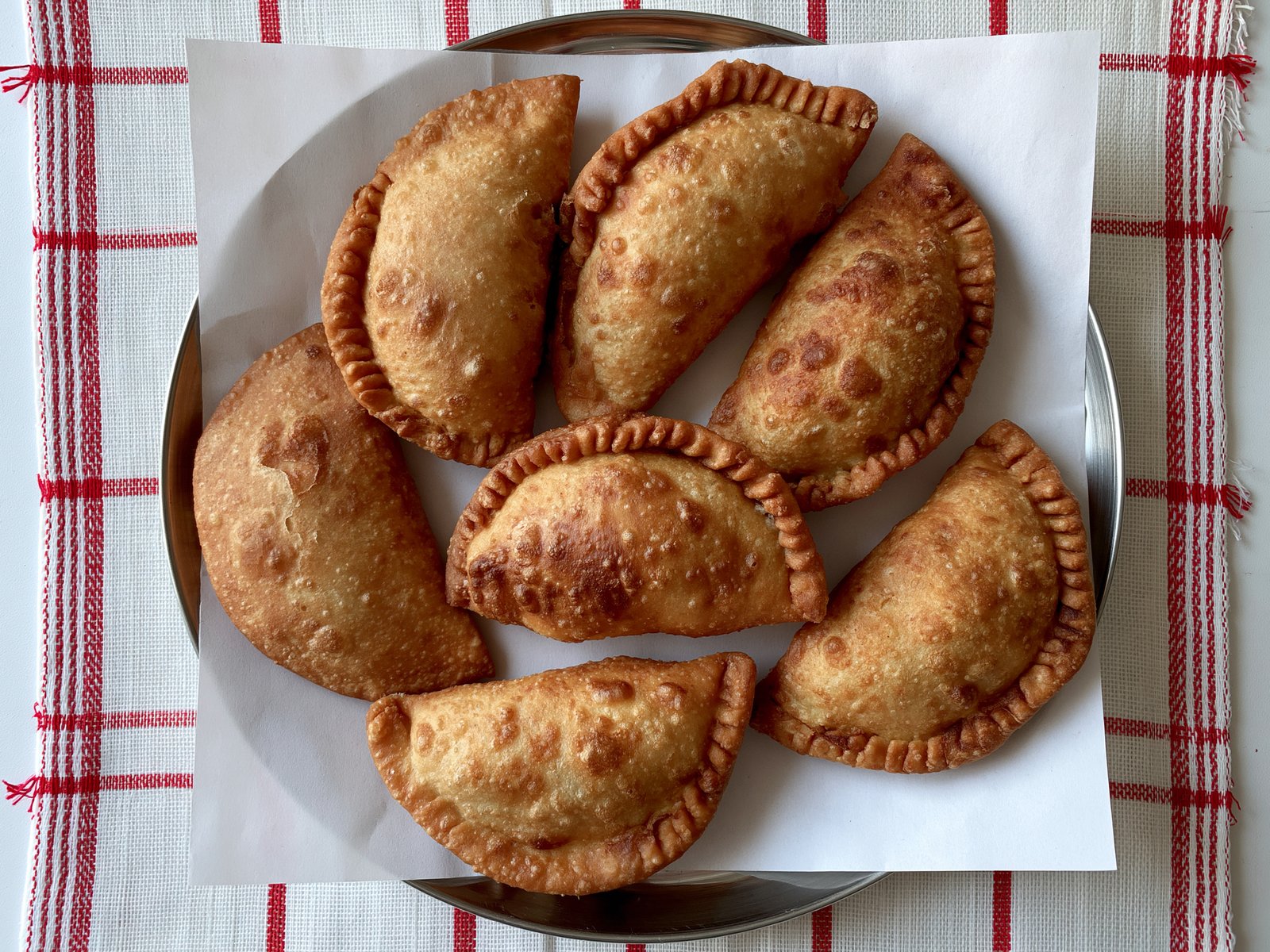
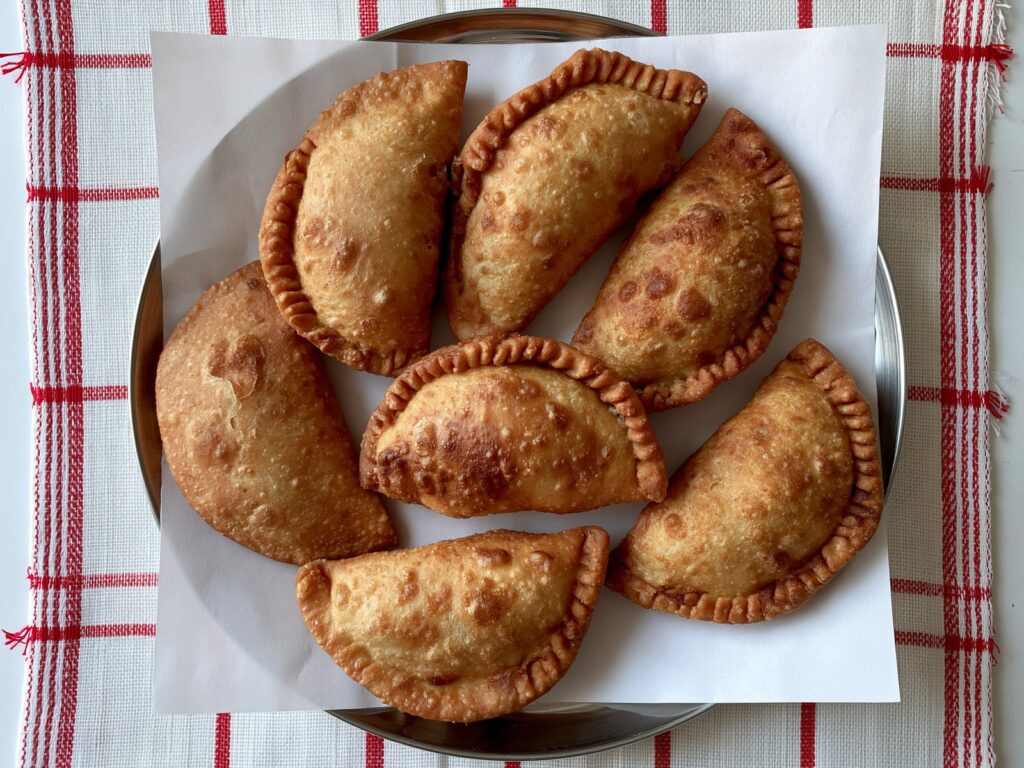
North India makes this at Holi and calls it gujiya. Bihar makes it for Teej and calls it pedakiya, and the difference in occasion is the difference in the dish. Hartalika Teej is a women’s fast — kept for a husband’s long life, broken the following morning — and pedakiya is what is made in the days before it, in quantity, by the women who will be fasting. Two fillings run in Bihar: semolina roasted in ghee with sugar and nuts, or pure khoya crumbled with sugar and coconut, and the khoya version is the one that gets made for an occasion. The pastry is folded into a half-moon and the rim is either twisted by hand into a rope of pleats or pressed in a hinged mould. Bihar also frequently leaves off the sugar syrup that the northern gujiya is dipped in, which is why a pedakiya tastes drier, less sweet, and more of the khoya inside it.
INGREDIENTS
METHOD
- Rub the 4 tbsp ghee and the salt into the flour until it resembles breadcrumbs and holds together when pressed in a fist.
- Knead with a little water at a time into a firm, smooth dough — firmer than a chapati dough. Cover and rest 30 minutes.
- Heat the 1 tbsp ghee in a pan and fry the raisins until they puff, then the coconut until it smells toasted.
- Crumble in the khoya and fry for five minutes until it is uniform and just starting to catch.
- Take off the heat, stir in the icing sugar, nuts and cardamom, and cool completely. The filling should be crumbly but not dry.
- Divide the dough into twenty. Roll each into a thin round about 9cm across.
- Wet the rim with a finger dipped in water. Put a heaped teaspoon of filling on one half and fold over into a half-moon.
- Press the edge firmly, then pleat it by folding small sections back over themselves, or seal in a mould.
- Heat ghee in a deep pan to a low-moderate temperature.
- Fry five or six at a time for about 7 minutes, turning once, until pale gold and crisp. Do not raise the heat to hurry them.
- Drain on a rack and cool completely before storing. They keep a week in a tin.