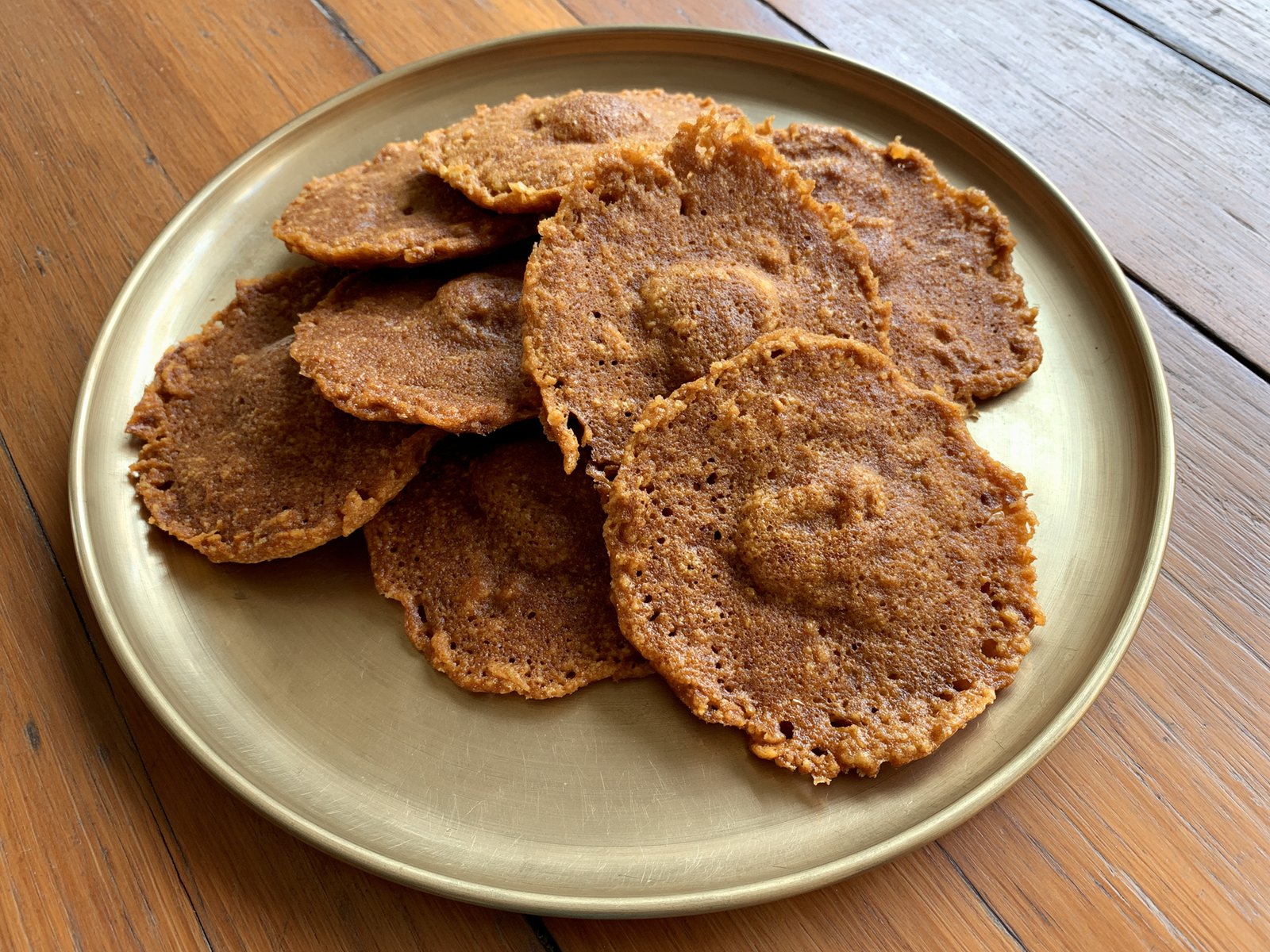
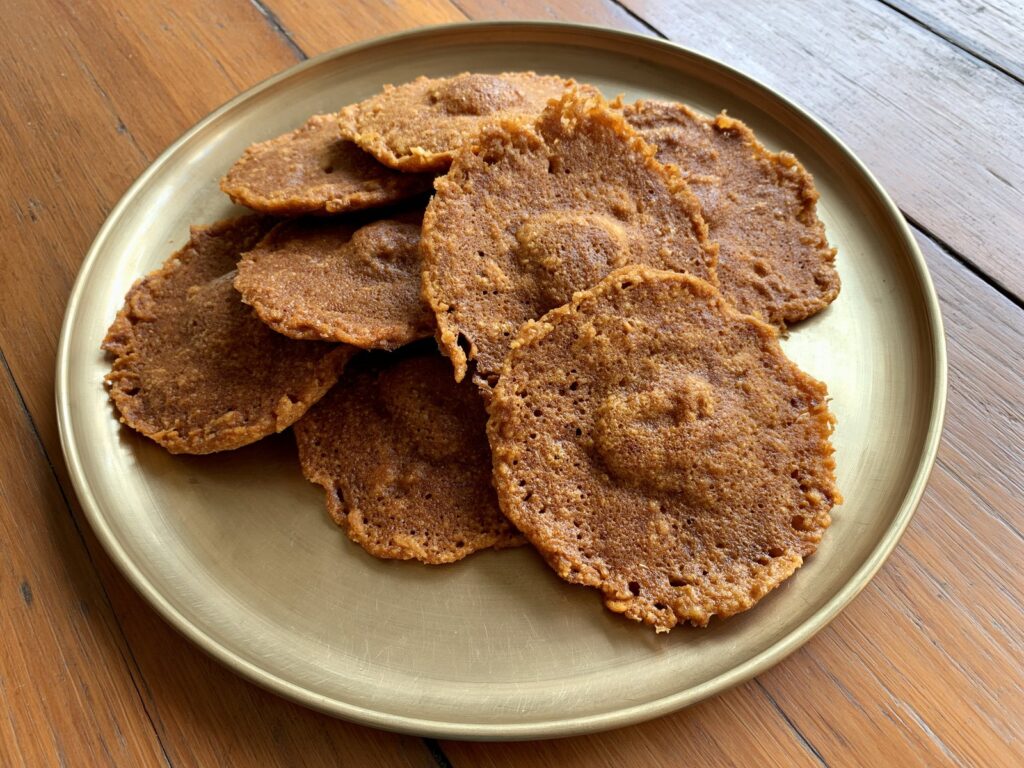
Pua is what the eastern plain makes instead of malpua, and the difference is jaggery. Where Rajasthan and Bengal build a malpua on sugar and then drown it in syrup, the pua of Bihar and eastern Uttar Pradesh has the sweetness worked into the batter as gur and goes into the pan with nothing waiting for it afterwards — no chashni, no rabri, no soak. What comes out is dark, chewy at the centre, lacy and crisp at the edge, and considerably less sweet than a syrup sweet has any right to be. It turns up at Holi in almost every household, and again in the Chhath kitchen where it sits beside the thekua. Many houses mash a very ripe banana into the batter, which softens it to the point of collapse. It is the most homemade sweet in this zone: no halwai makes it, no shop sells it well, and everyone has an opinion about the right thickness.
INGREDIENTS
- 200 g block jaggery (gur, grated)
- 250 ml water
- 250 g wholemeal wheat flour (atta)
- 2 tbsp semolina (sooji)
- 1 tsp fennel seeds (saunf, lightly crushed)
- ½ tsp ground green cardamom
- 1 very ripe banana (mashed (optional))
- ¼ tsp bicarbonate of soda
- a pinch of salt
- ghee (for shallow frying)
METHOD
- Melt the grated jaggery in the water over low heat until fully dissolved. Strain out any grit and cool to lukewarm.
- Whisk the flour, semolina, fennel, cardamom and salt together in a bowl.
- Pour in the jaggery water gradually, whisking, until you have a thick batter that falls from a ladle in a heavy ribbon rather than a stream.
- Mash in the banana now if using.
- Cover and rest for a full hour. The semolina swells and the batter thickens further.
- Whisk in the bicarbonate of soda just before frying.
- Heat ghee in a shallow pan to a medium heat, deep enough for the puas to float.
- Drop in a small ladleful. It should sink, then rise and puff at the edges within a few seconds.
- Fry two or three at a time for about 90 seconds a side, spooning ghee over the tops, until deep brown and lacy at the rim.
- Drain on a rack rather than paper so the edges stay crisp.
- Serve warm. They are at their best within the hour and keep two days.