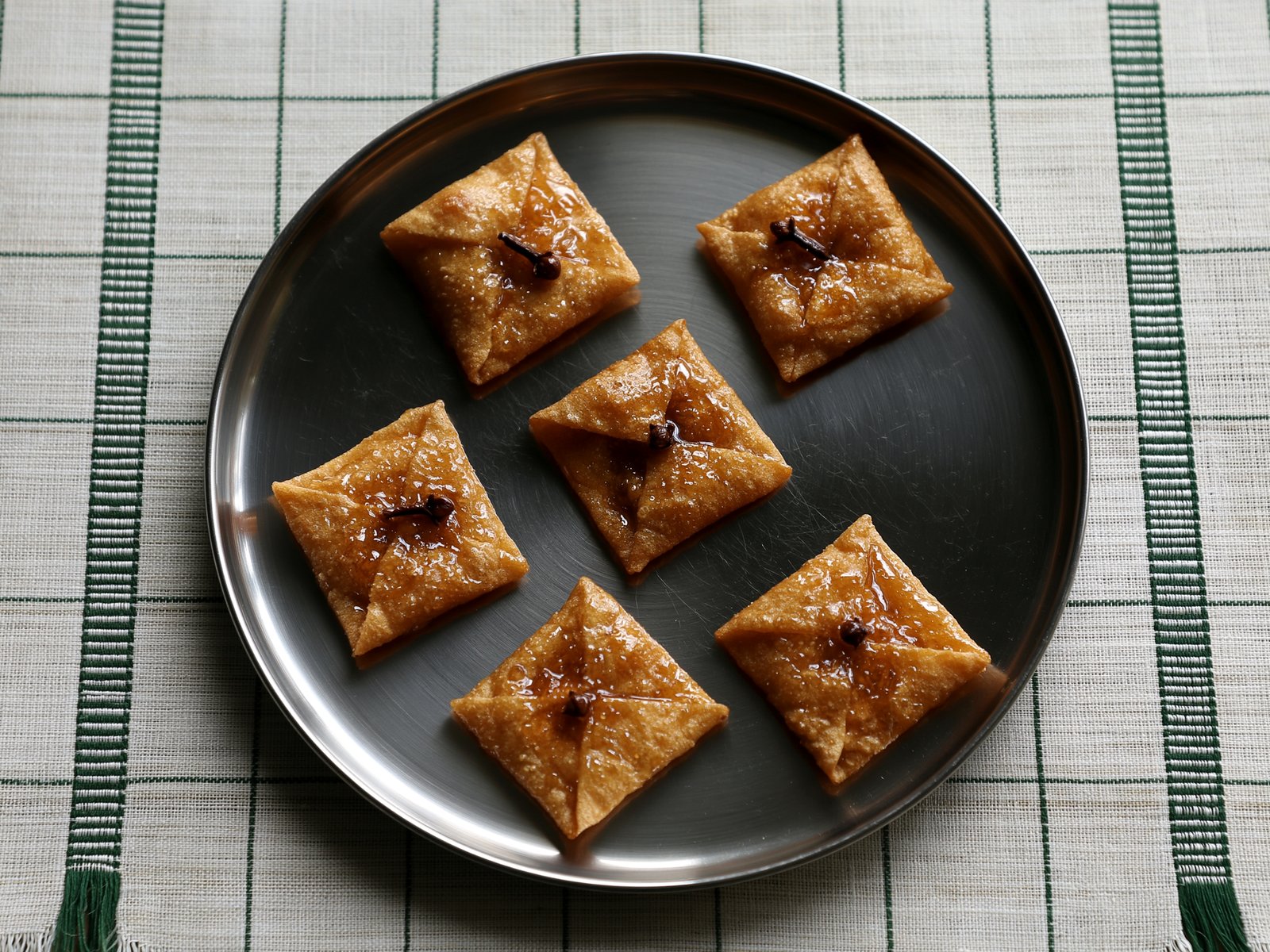
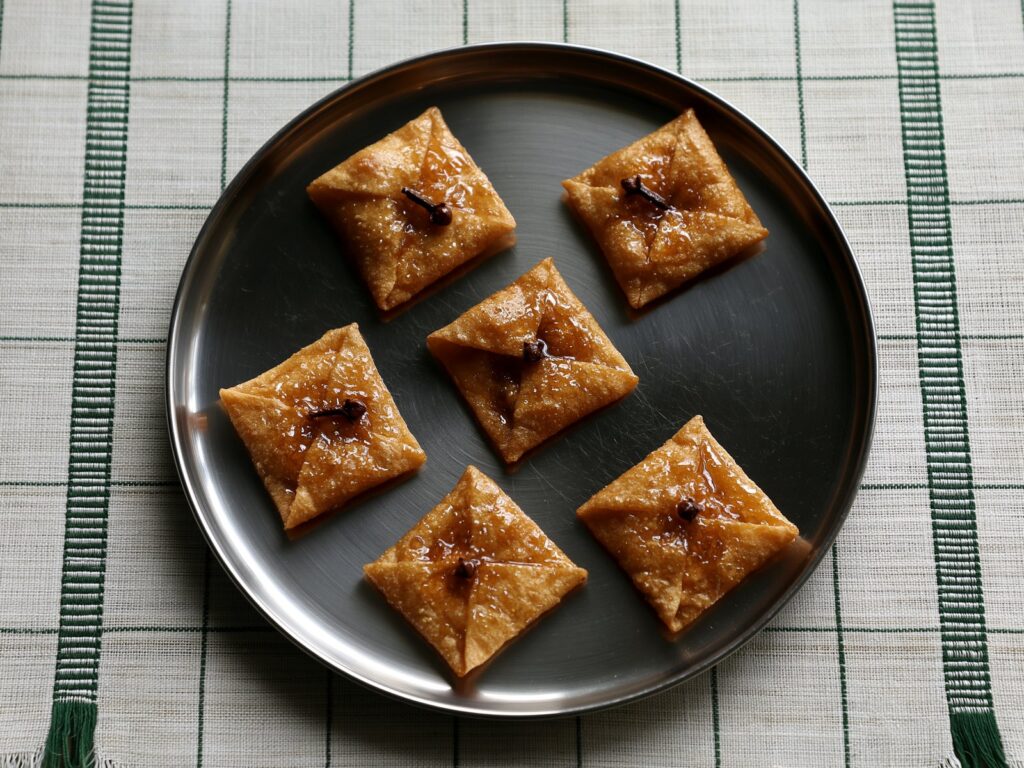
The clove is not a garnish, it is a fastening. A square of thin flour dough is filled with khoya and chopped dry fruit, folded into a small parcel, and a whole clove is pushed through the overlapping flaps like a pin to hold it shut — laung is the clove, and the name follows the mechanism. It then goes into hot ghee, where the clove sits directly in the frying fat and releases into the pastry around it, which is why a launglata tastes faintly medicinal in a way no other syrup sweet does. Out of the pan it goes into syrup, and the result is crisp outside and soft within for a day or two. That shelf life is the reason it became the thing people carry out of Banaras: it survives a train journey, which malaiyo emphatically does not.
Zone: Gangetic Heartland
SOURCE: Adapted from Restaurant India’s guide to Bihar and Banaras food, January 2026 — launglata as made in the Banaras sweet shops, khoya-filled parcels pinned shut with a whole clove before frying (English-language trade publication)
LOCAL NAME: लौंगलता
INGREDIENTS
- 300 g plain flour
- 3 tbsp ghee (for the dough)
- ¼ tsp salt
- water (to knead)
- 200 g khoya (mawa, crumbled)
- 50 g caster sugar
- ½ tsp ground green cardamom
- 3 tbsp chopped almonds and pistachios
- 2 tbsp desiccated coconut
- 16 whole cloves
- ghee (for deep frying)
- 350 g sugar (for the syrup)
- 200 ml water (for the syrup)
- a few strands of saffron
METHOD
- Rub the 3 tbsp ghee and the salt into the flour, then knead with water into a firm dough. Cover and rest 30 minutes.
- Dry-fry the crumbled khoya in a pan for five minutes until it smells nutty, then cool and mix with the caster sugar, cardamom, nuts and coconut.
- Boil the syrup sugar with the water and saffron for six minutes until slightly tacky. Keep it warm.
- Divide the dough into sixteen. Roll each into a thin square about 10cm across.
- Put a spoonful of filling in the centre. Fold two opposite sides over it, then the other two, into a small overlapping parcel.
- Push a clove down through the folded flaps and into the dough underneath so the parcel is pinned shut. Press the base flat.
- Heat ghee in a deep pan to a low-moderate temperature.
- Fry four or five at a time for about 8 minutes, turning once, until pale gold and cooked through. Do not rush the heat.
- Lift out and drop straight into the warm syrup for one minute.
- Remove to a rack and leave to set for an hour before eating. They keep two days.
NOTES
UK adaptation: Plain white flour for the dough. Khoya is sold frozen at South Asian grocers as khoya or mawa; failing that, ricotta dried out in a dry pan until it crumbles, or full-fat milk powder bound with a little warm milk and ghee, both work. Whole cloves from any supermarket. Everything else widely available.
US adaptation: All-purpose flour. Frozen khoya or mawa from Patel Brothers or an Indian grocery; dried ricotta as a substitute. Everything else widely available.
Cook’s note: Push the clove all the way through both folded flaps and into the dough beneath, so it locks the parcel rather than sitting on top of it — a clove resting on the surface falls out in the pan and the filling escapes into the ghee. Fry on a low heat so the pastry cooks through before it colours.
Cook this differently? Share your family’s version — or tell us what we’re missing.
Contribute