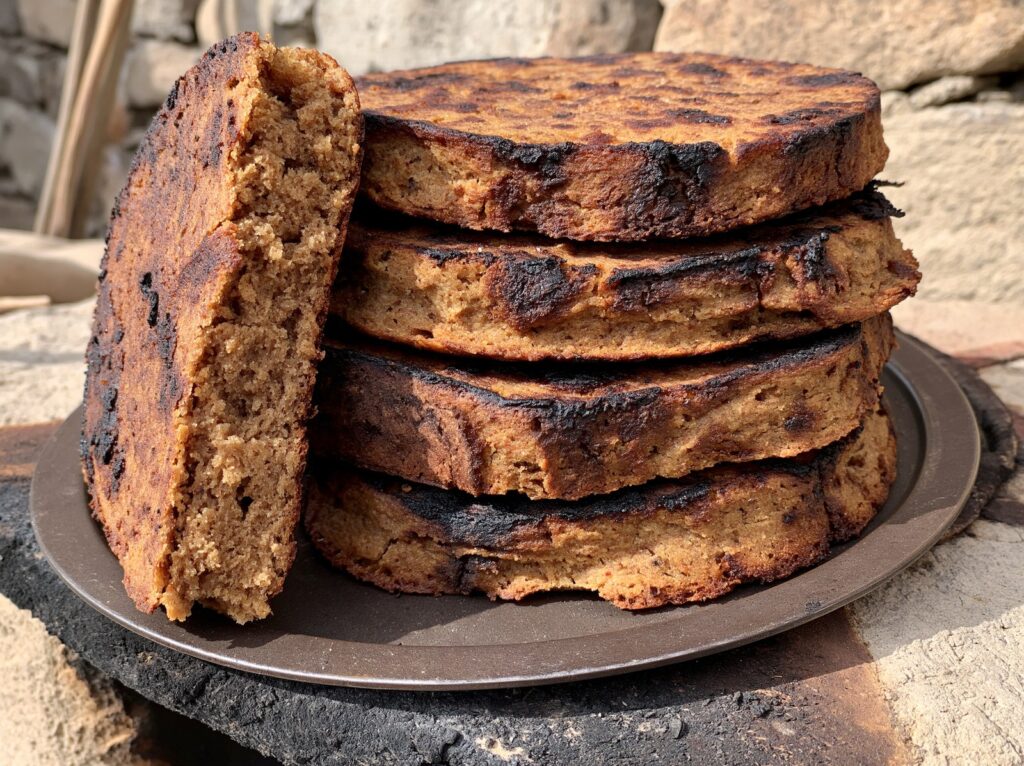
Khambir is the bread the Ladakhi breakfast table is built on. Wholemeal dough is left to ferment overnight, then pressed out between the palms into a thick disc rather than rolled, which is a slap-slap-slap in the hands of anyone who has done it a thousand times and produces a loaf full of bubbles. It cooks on a thap, the multi-pot clay or stone stove that heats the room as well as the food, and is often finished straight on hot coals for a browned, faintly smoky crust. The inside stays soft and tastes distinctly of the ferment, nutty and slightly sour. It goes with butter and with Ladakhi apricot jam, and it is just as good cold with a bowl of gur gur cha later in the day. Barley grows better than wheat at this altitude, and khambir is one of the places wheat still won.
INGREDIENTS
- 500 g wholemeal flour
- 7 g instant yeast
- 1 tsp sugar
- 1.5 tsp salt
- 350 ml warm water
- 1 tbsp oil (for the pan)
METHOD
- Mix the flour, yeast, sugar and salt in a large bowl. Add the water and bring together into a soft dough.
- Knead for 10 minutes until smooth, then cover and leave in a cool place overnight, or for at least 8 hours, until risen and smelling faintly sour.
- Knock back gently and divide into four pieces, handling the dough lightly.
- Press each piece out between your palms into a disc about 15cm across and 2cm thick. Do not use a rolling pin.
- Heat a heavy dry pan over a medium to low heat and brush it with a little oil.
- Lay in a disc, cover the pan, and cook for 8 minutes, until the underside is firm and browned in patches and the bread has puffed.
- Turn and cook the second side, covered, for another 6 to 8 minutes.
- For the char, hold the cooked loaf briefly over a gas flame with tongs, or put it under a hot grill for a minute a side.
- Repeat with the rest and serve warm with butter and apricot jam, or cold with butter tea.