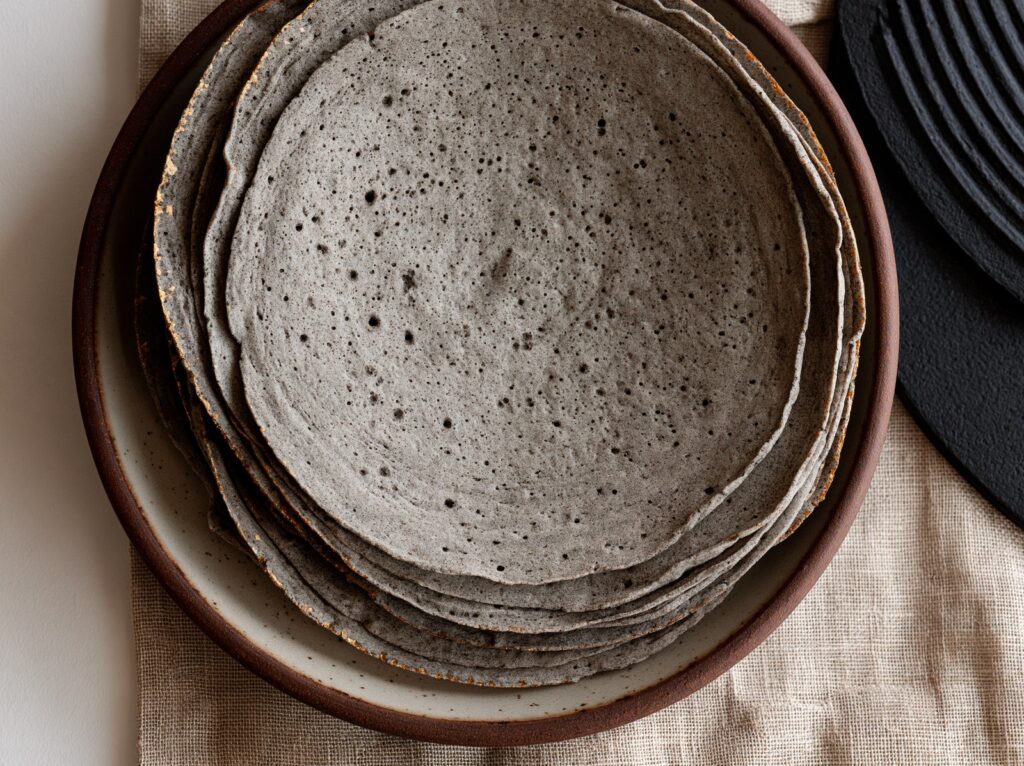
Phapar ko roti is buckwheat, and the Thakali of Thak Khola call it ghoken. Buckwheat is not a grain at all but the seed of a broadleaved plant, and it will crop on thin poor soil at altitudes where wheat and rice simply refuse, which is the entire reason this bread exists. For a long time it carried the reputation of a poor household, cheaper than rice and eaten because nothing better would grow. That has gone into reverse, and the flour now sells at a premium for being gluten free and high in protein. The batter is loose enough to pour, and the roti comes out earthy with a faint citrus note behind it, crisp at the rim and soft through the middle. It is eaten at any hour with dal, a curry or an achar, and buying good flour matters more than technique: it should be pale grey and smell nutty rather than dusty.
INGREDIENTS
- 250 g buckwheat flour
- 400 ml water
- 1 tsp salt
- 3 tbsp ghee or vegetable oil (for the pan)
METHOD
- Put the buckwheat flour and salt in a large bowl.
- Add the water a little at a time, whisking as you go, until you have a smooth batter thin enough to pour. It should coat the back of a spoon and run off freely.
- Whisk it hard for a minute to knock out any lumps, then leave it to rest for 10 minutes.
- Heat a non-stick or well-seasoned frying pan over a medium heat for a couple of minutes, then brush it with a little ghee.
- Pour in a ladleful of batter and tilt the pan to spread it thin and even.
- Cook for 2 to 3 minutes, until the surface has set and the edge is lifting and browning.
- Slide a spatula under and turn it, then cook the second side for a further minute or two until flecked with gold.
- Stack them under a cloth as you go and serve warm with dal, a curry or an achar.