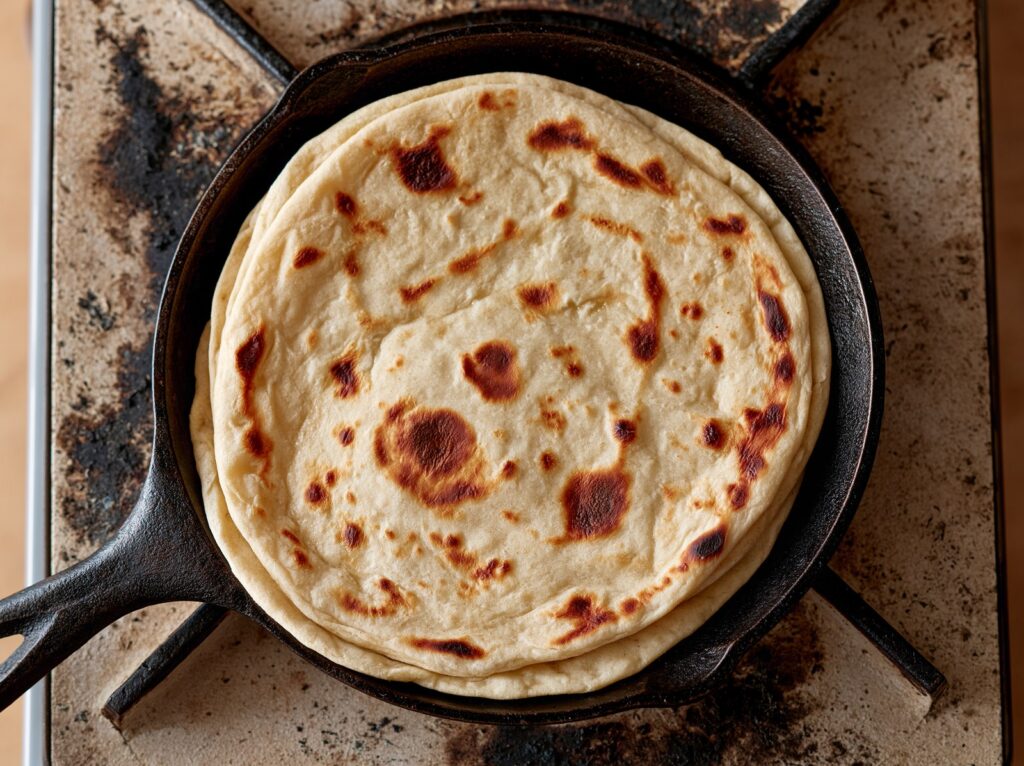
Balep korkun is the bread of central Tibet and it is made without an oven, which is the point. Flour, water and baking powder, kneaded smooth, pressed flat and cooked in a skillet over a flame, which suits a kitchen with a single burner and a culture that spent a long time moving. Monasteries turn it out every morning and most households eat it at breakfast. In thickness it sits somewhere between a tortilla and an English muffin, soft and slightly chewy, and it goes with butter, with jam, or torn into butter tea. In Lhasa it is sold plain or sweet, the sweet ones marked with a small red dot and made with purang, a dark concentrated sugar not far off Indian jaggery. It was once wheat or barley and is now mostly white flour, which is what milling machinery does to a bread everywhere it arrives.
INGREDIENTS
- 250 g plain or wholemeal flour
- 1 tbsp baking powder
- ½ tsp salt
- 180 ml water (plus a little more if needed)
- 1 tbsp vegetable oil (for the pan)
METHOD
- Mix the flour, baking powder and salt in a bowl.
- Add the water a little at a time, working it in by hand, until you have a smooth soft dough that is not sticky.
- Knead for 5 minutes until it feels flexible, then cover and rest for 15 minutes.
- Divide into four pieces and press or roll each into a round about 15cm across and just under 1cm thick.
- Heat a heavy pan over a medium to low heat and brush with a little oil.
- Lay in a round, cover the pan, and cook for 5 minutes, until the underside is browned in patches and the top has set and lost its shine.
- Turn and cook the second side, covered, for another 4 to 5 minutes.
- Repeat with the rest and serve warm, with butter and jam, or torn into butter tea.