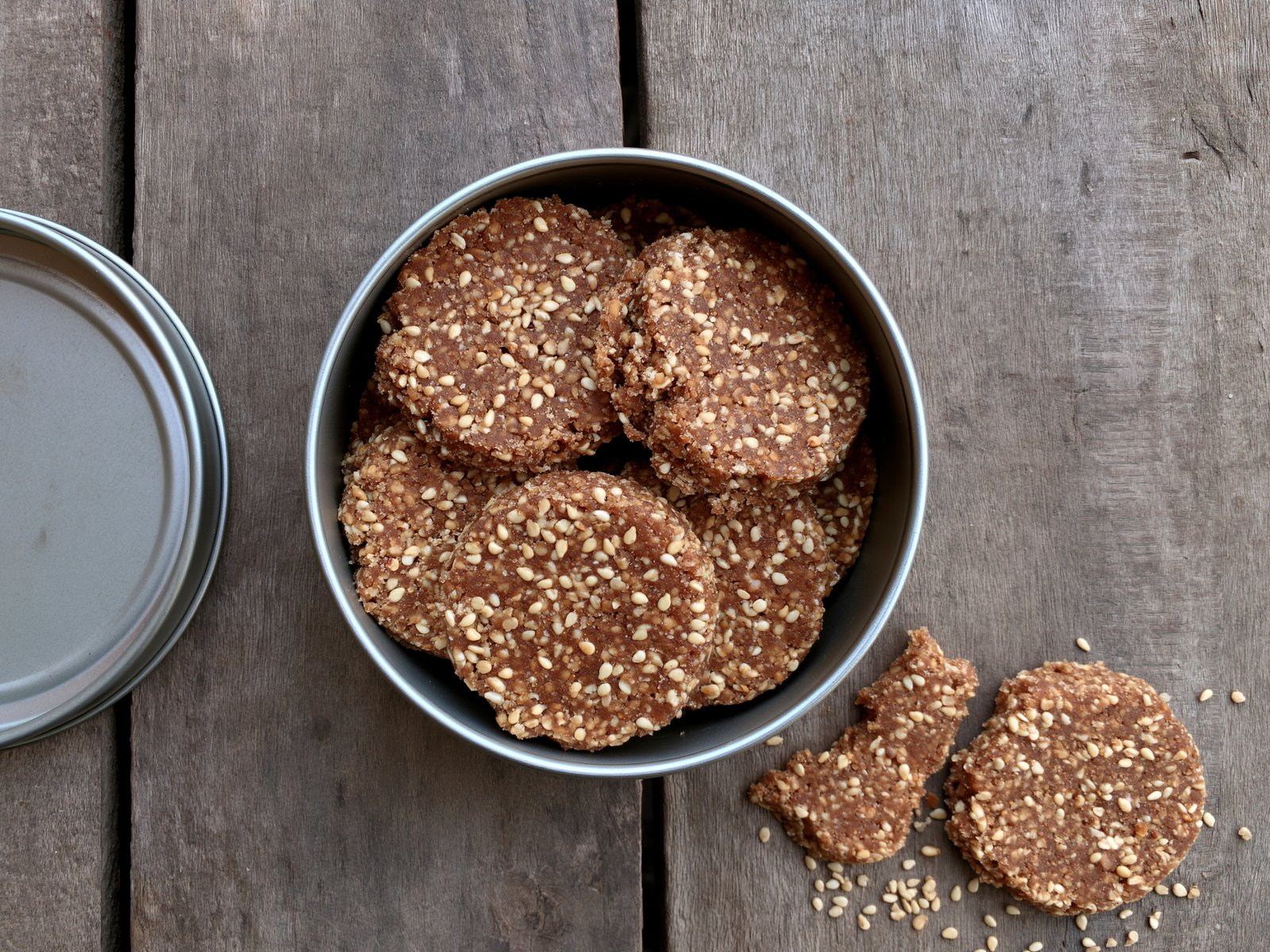
Tilkut is made by hitting it. Sesame is roasted until it jumps, jaggery is cooked to a firm thread and rolled into small balls, the two are folded together, and then the mass goes onto a wooden block where men with mallets beat it in rotation — kut means pounded, and the name is a description of the process rather than the result. In Gaya, where the best of it is made and has been for something like a hundred and fifty years, the sound of the winter workshops carries down the street. It is a Makar Sankranti sweet: it appears in December, fills the steel tins in every Bihari house through January, and is gone by spring. What the pounding does is break the sesame open so its oil binds the jaggery without any water going in, which is why a good tilkut shatters dryly rather than chewing, and why it keeps for months.
INGREDIENTS
- 300 g white sesame seeds
- 250 g block jaggery (gur, grated)
- 3 tbsp water
- 1 tbsp ghee (plus more for the hands)
- ½ tsp ground green cardamom
METHOD
- Dry-roast the sesame seeds in a wide pan over medium-low heat, stirring constantly, until they turn pale gold and start jumping in the pan. Tip them out at once and cool completely.
- Pound about two-thirds of the cooled sesame coarsely — in a mortar, or in very short pulses in a processor. It should be broken and oily, never a paste. Keep the remaining third whole.
- Melt the jaggery with the water and the ghee in a heavy pan over low heat.
- Cook until it reaches a firm thread stage — a drop into cold water should form a firm ball you can roll between your fingers. This takes about ten minutes and is the point the whole thing turns on.
- Take it off the heat and stir in the cardamom.
- Working immediately, fold in both the pounded and whole sesame with a wooden spoon until evenly mixed.
- Tip onto a greased board. Grease your palms with ghee.
- While it is still hot enough to handle, pull off small pieces, roll them into balls, and flatten each into a disc about 5cm across, pressing firmly so the sesame binds.
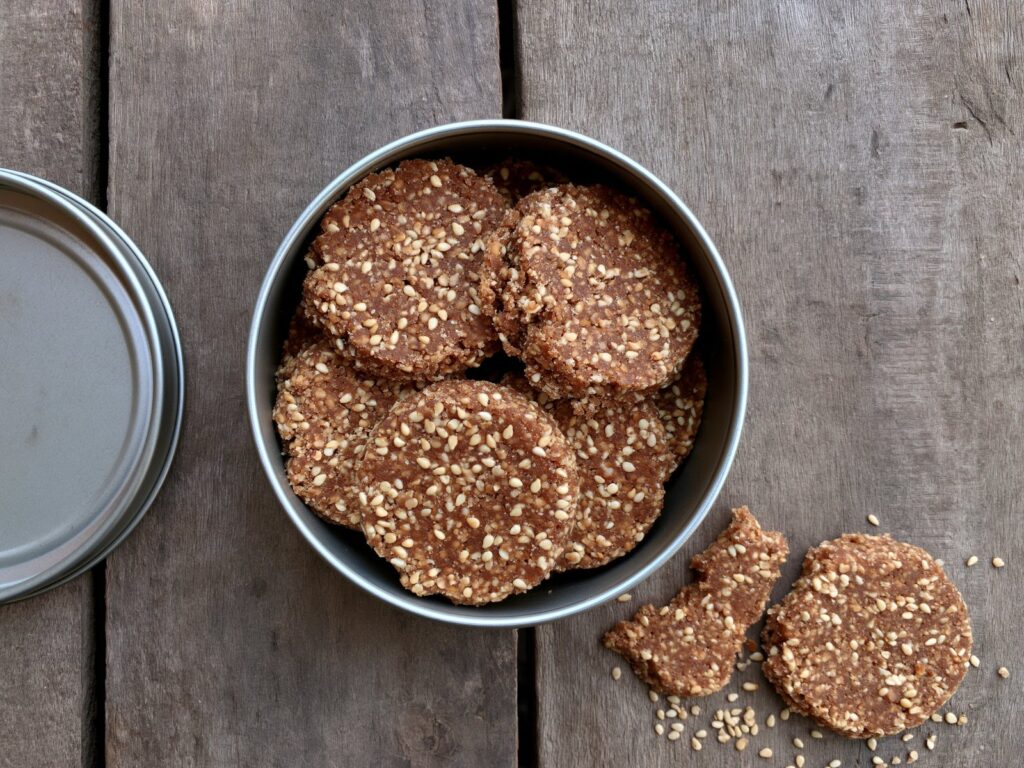
- Cool completely on a rack. They should snap dryly when broken.
- Store in an airtight tin; they keep for a couple of months.