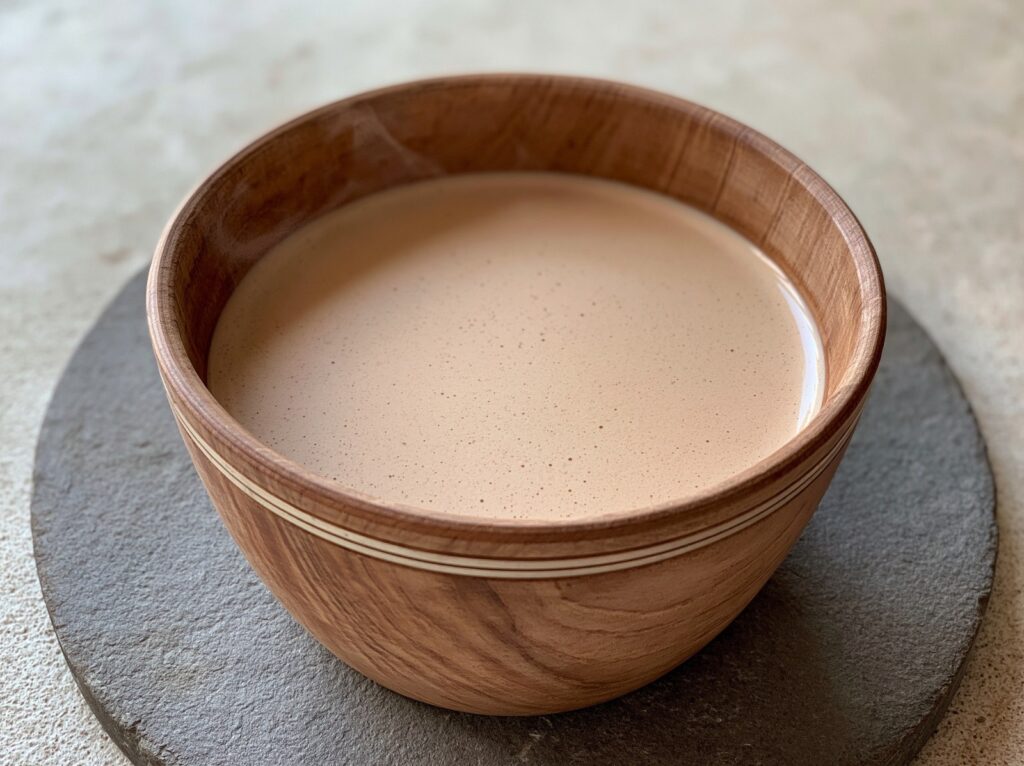
Butter tea is not really tea and it helps to stop expecting it to be. Think of it as a thin savoury soup and the salt stops being a shock. Brick tea, the dark smoky kind that came up the Tea Horse Road from China, is crumbled and boiled for hours into a concentrate called chaku, which keeps for days and supplies dozens of cups. A ladle of it goes into a tall wooden churn called a chandong with a lump of butter and salt, and is worked until the fat emulsifies and the whole thing turns opaque and almost purple, with no slick floating on top. Done properly it is smooth rather than greasy. It has a different name in every valley: po cha in Tibet, suja in Bhutan, gur gur cha in Ladakh after the sound the churn makes. Tibetans drink it through the day, every day, for the warmth and the calories, and in the coldest places it is made saltiest of all.
INGREDIENTS
- 1 litre water
- 2 tbsp loose pu-erh (dark brick tea or lapsang souchong)
- ½ tsp salt (plus more to taste)
- 60 g unsalted butter
- 150 ml whole milk
METHOD
- Bring the water to a boil and add the tea.
- Simmer for 20 to 30 minutes, until the brew is very dark and strong. Longer is better and the concentrate keeps for a couple of days in the fridge.
- Strain out the leaves and stir in the salt.
- Add the milk and take the pan off the heat.
- Pour into a blender with the butter, or into a jar with a tight lid.
- Blend or shake hard for 2 to 3 minutes. It should turn opaque, pale and slightly frothy, with no visible fat on the surface.
- Taste and add more salt if it needs it, then serve very hot in small cups. Puffed rice alongside is the Bhutanese way.