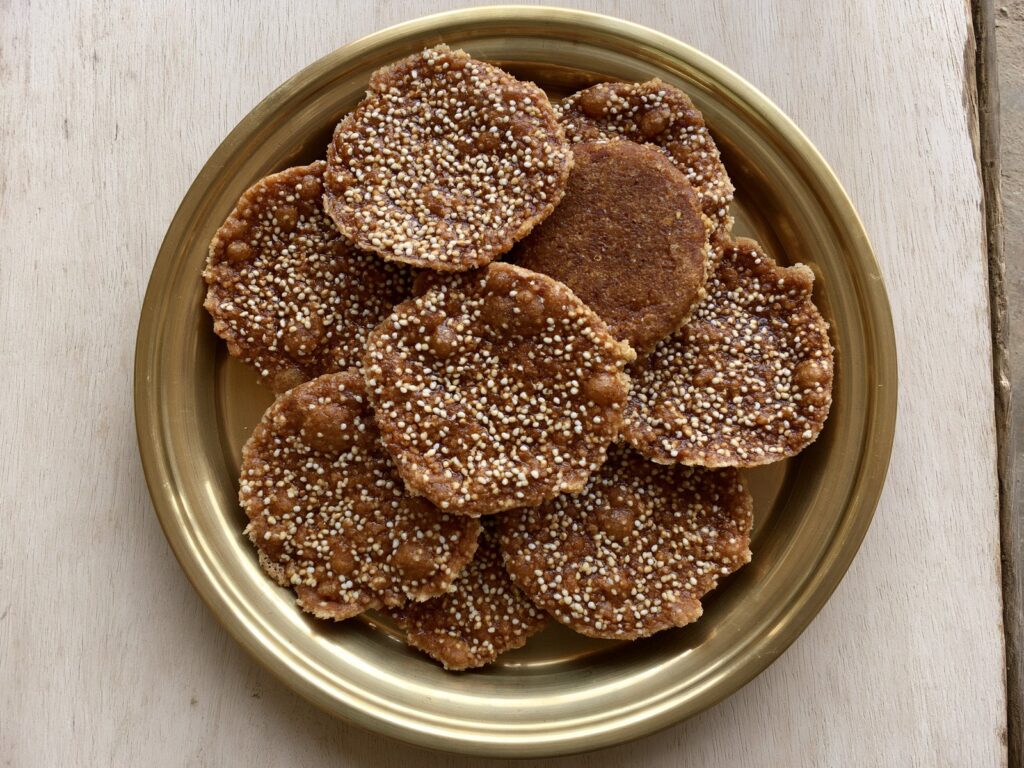
Anarsa
Anarsa: rice soaked three days and ground, worked with jaggery and rested until it ferments, then fried seed-side down in ghee. Bihar’s Diwali sweet.
Recipes from eastern Uttar Pradesh, Bihar, and Jharkhand. An austere vegetarian tradition built on mustard oil, roasted gram flour, and sun-dried lentil cakes – earthy, pungent, and largely unknown outside the region.
Anarsa: rice soaked three days and ground, worked with jaggery and rested until it ferments, then fried seed-side down in ghee. Bihar’s Diwali sweet.
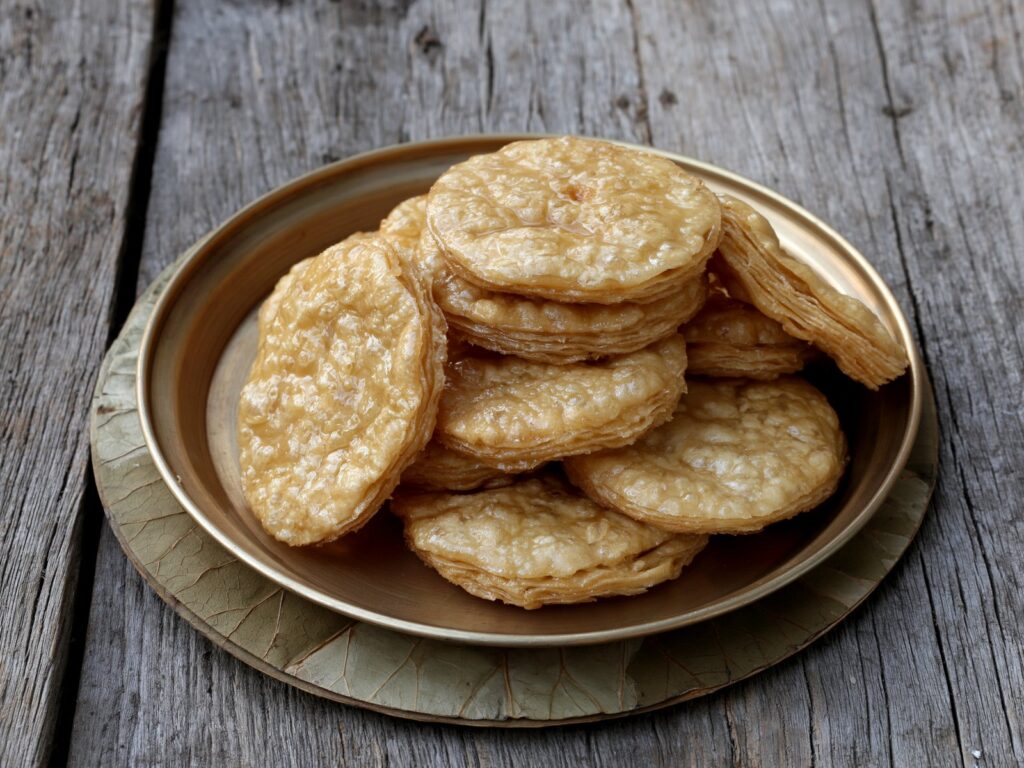
Silao khaja: sixteen paper-thin sheets of dough stacked with ghee paste, rolled, cut and fried so the layers lift, then dipped in syrup. Bihar’s travel sweet.
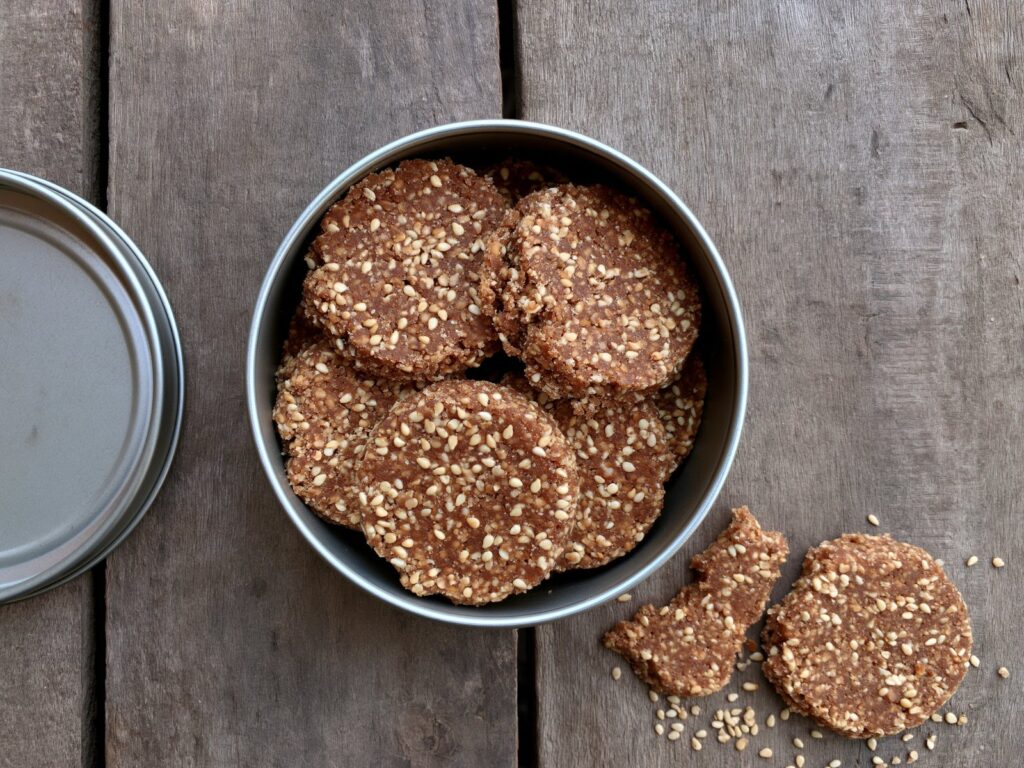
Tilkut: sesame roasted until it jumps, then pounded into cooked jaggery until the seeds break and bind it. Bihar’s Makar Sankranti sweet, from Gaya.
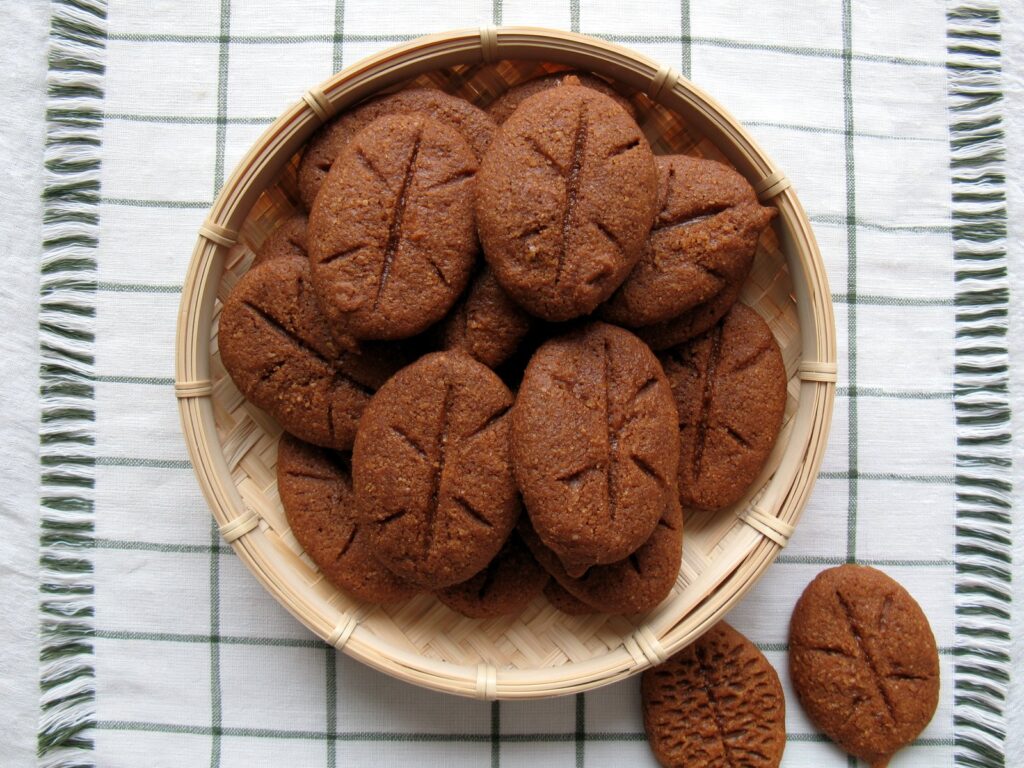
Thekua: wheat flour worked with jaggery syrup, fennel and coconut, pressed in a carved wooden mould and fried slowly in ghee. Bihar’s Chhath sweet.
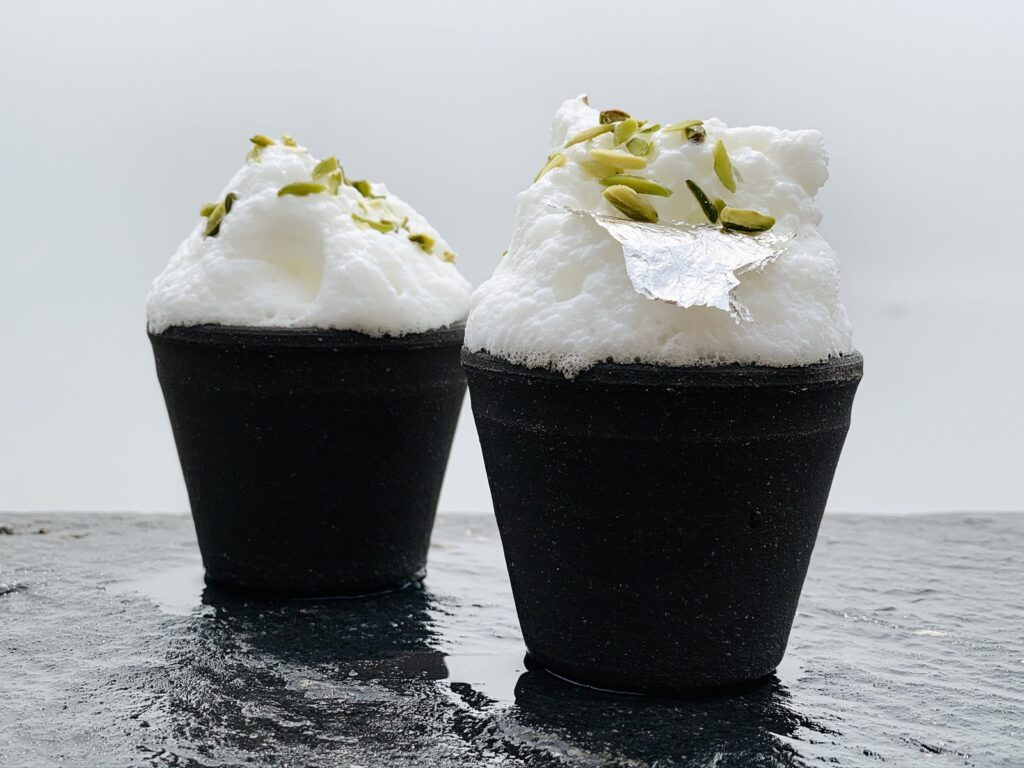
Malaiyo: saffron milk left under a cold night sky until it froths, churned before dawn and skimmed into clay cups. Banaras’s winter-only sweet, gone by eleven.
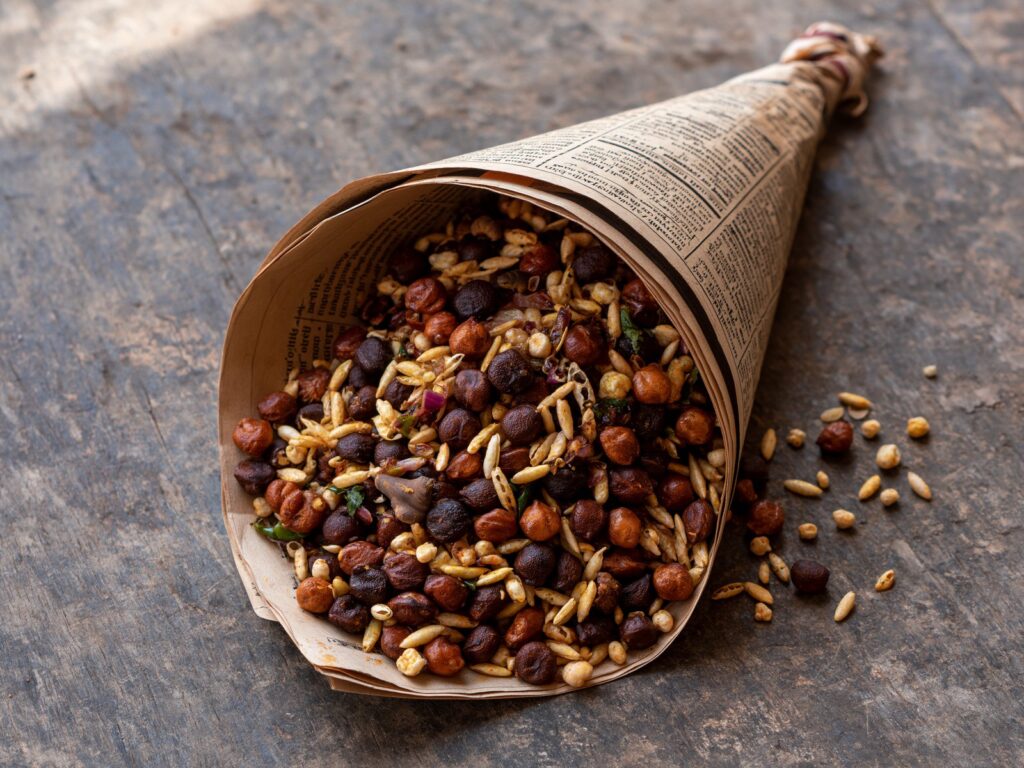
Chana bhuja: black chickpeas roasted in hot sand with the skins on until dry and nutty, then tossed with mustard oil, onion and green chilli.
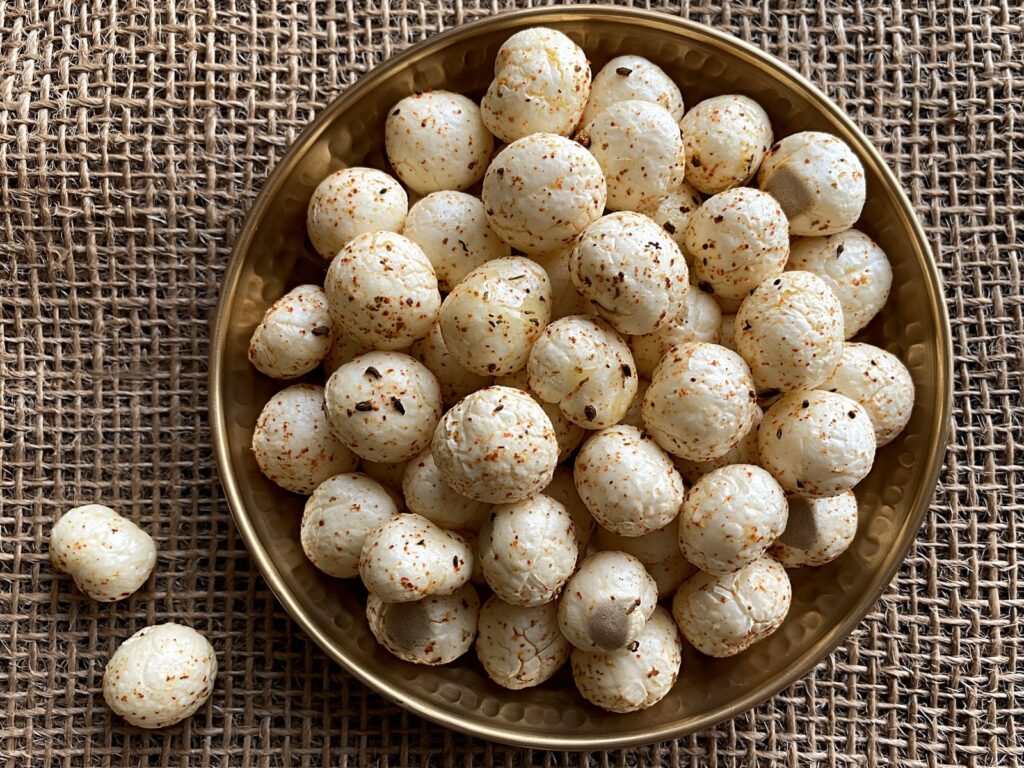
Bhuna makhana: fox nuts from the ponds of Mithila, dry-roasted in ghee until they crackle and tossed with salt, chilli and chaat masala.
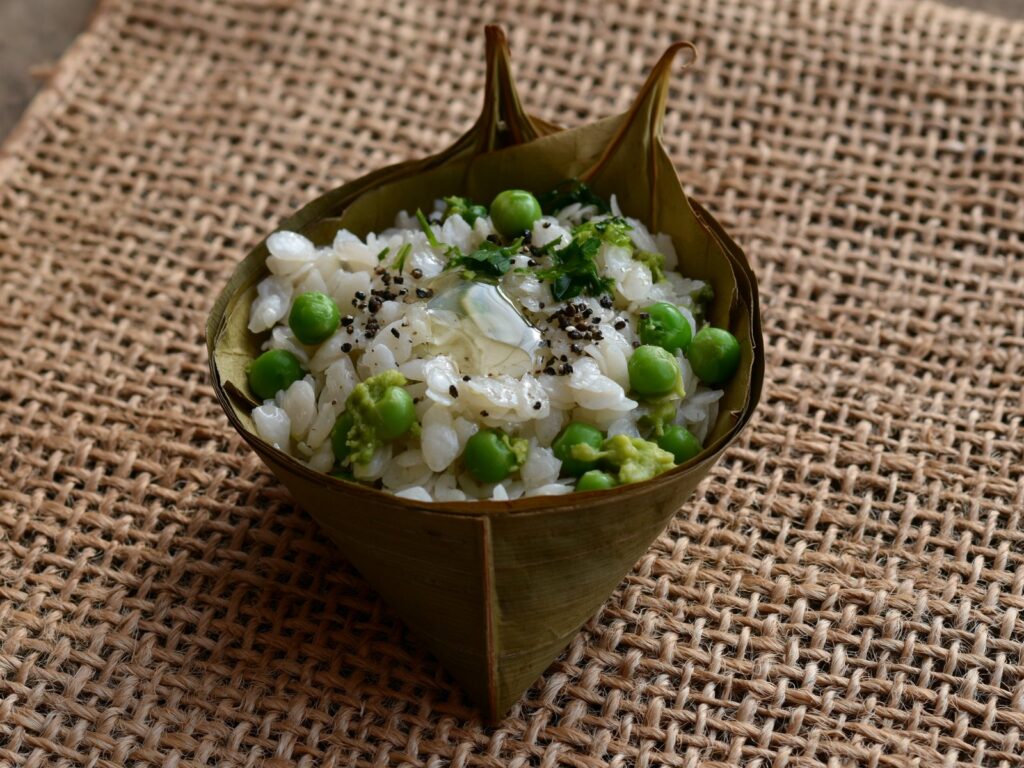
Chura matar: flattened rice cooked slowly in ghee with sweet winter peas and finished with malai. A Banarasi stall dish that exists only while the peas last.
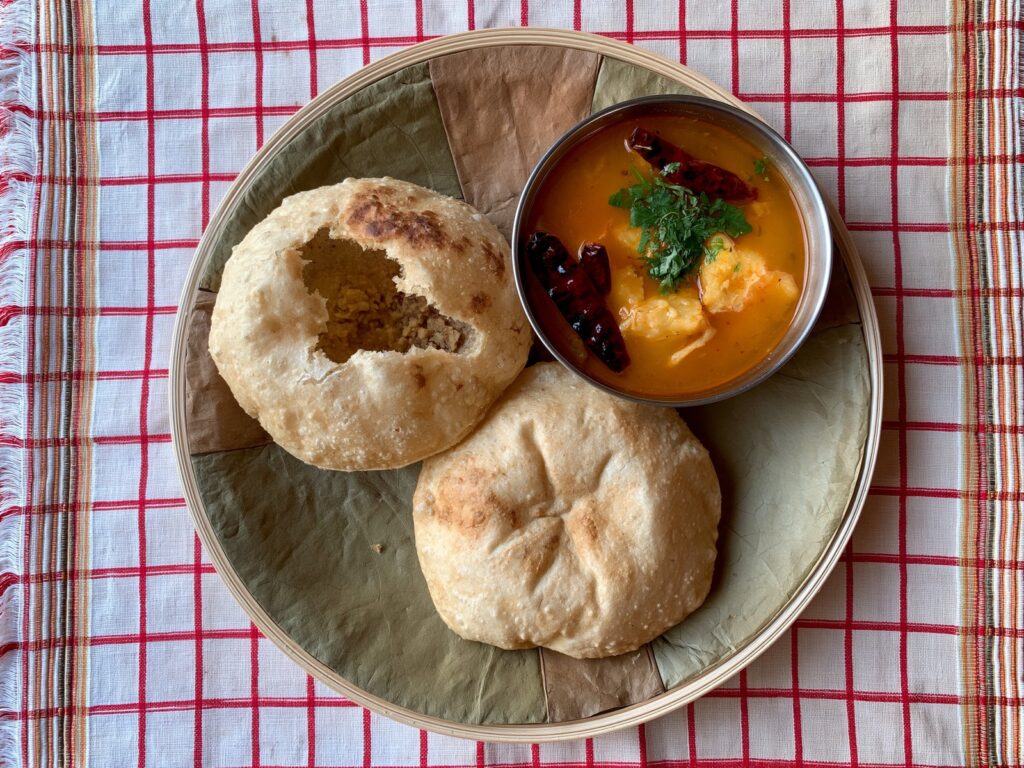
Kachori sabzi: urad dal-stuffed kachoris fried crisp and served with a thin sour potato and pumpkin curry. Banaras’s dawn breakfast, sold out by mid-morning.