Sha is meat and kam is dried, and shakam is the answer to a Himalayan winter with no fresh meat in it. Beef is cut into strips and hung to dry, though not to the point of jerky: it stays thicker and holds some give, which is why it needs soaking before it will cook and why it keeps a chew that the dish is built around. Paa means the meat is cooked dry, without broth, so what goes in the pan is shakam, a fistful of dried red chillies and sliced radish, and very little else. The radish goes sweet and translucent as it takes on the fat, and the drying concentrates the beef into something far more savoury than the fresh cut ever was. It appears through the year but belongs to the festive season, when it turns up at gatherings alongside red rice, and Bhutanese writers tend to put it near the centre of what their food actually is.
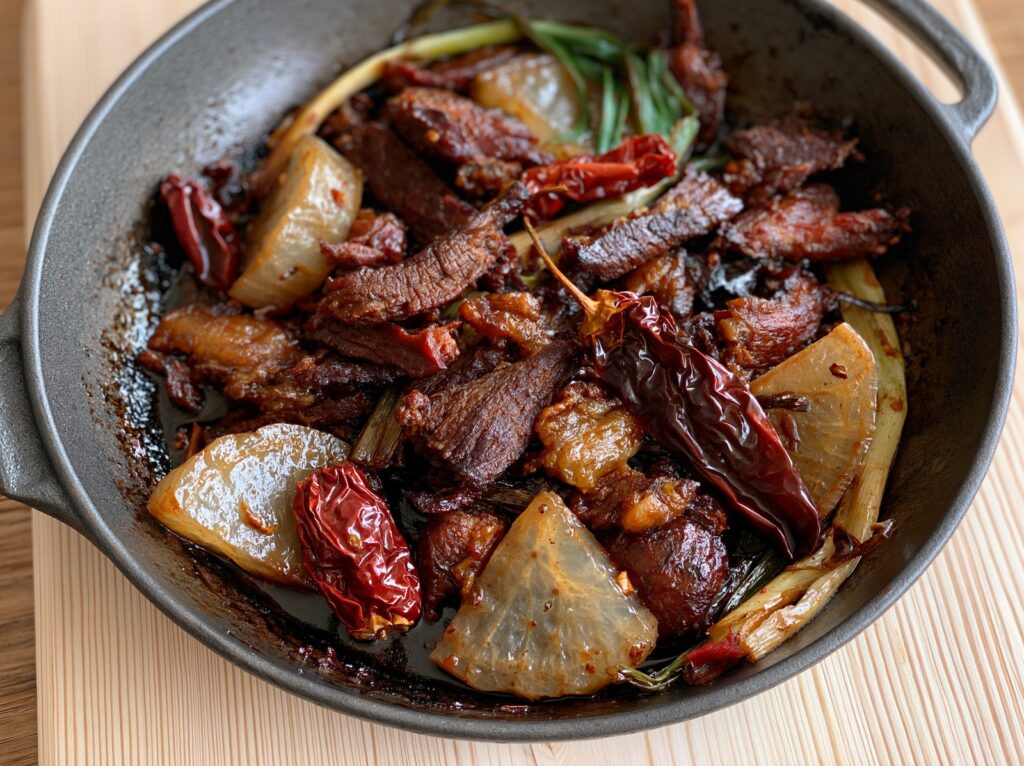
INGREDIENTS
- 250 g dried beef (biltong or buff sukuti)
- 1 large daikon radish (about 400g, cut into thick half-moons)
- 10 whole dried red chillies
- 1 medium onion (sliced)
- 5 garlic cloves (sliced)
- 3 cm ginger (cut into matchsticks)
- ½ tsp turmeric
- 2 tbsp vegetable oil
- 1 tsp salt
- 400 ml water
- 3 spring onions (cut into lengths)
METHOD
- Soak the dried beef in warm water for at least an hour, until the strips give when pressed. Drain and slice them into bite-sized pieces across the grain.
- Heat the oil in a heavy pan and cook the onion, garlic and ginger over a medium heat for 5 minutes until soft.
- Stir in the turmeric, then add the beef and fry for 3 to 4 minutes, turning, until the edges darken.
- Add the dried chillies whole, the salt and the water. Bring to a boil, then cover and simmer for 20 minutes.
- Add the radish and cook for a further 15 minutes, until the pieces have turned faintly translucent and take a knife easily.
- Uncover and raise the heat for the last 5 minutes, until almost no liquid remains and what is left clings to the meat.
- Stir the spring onions through and serve with red rice.