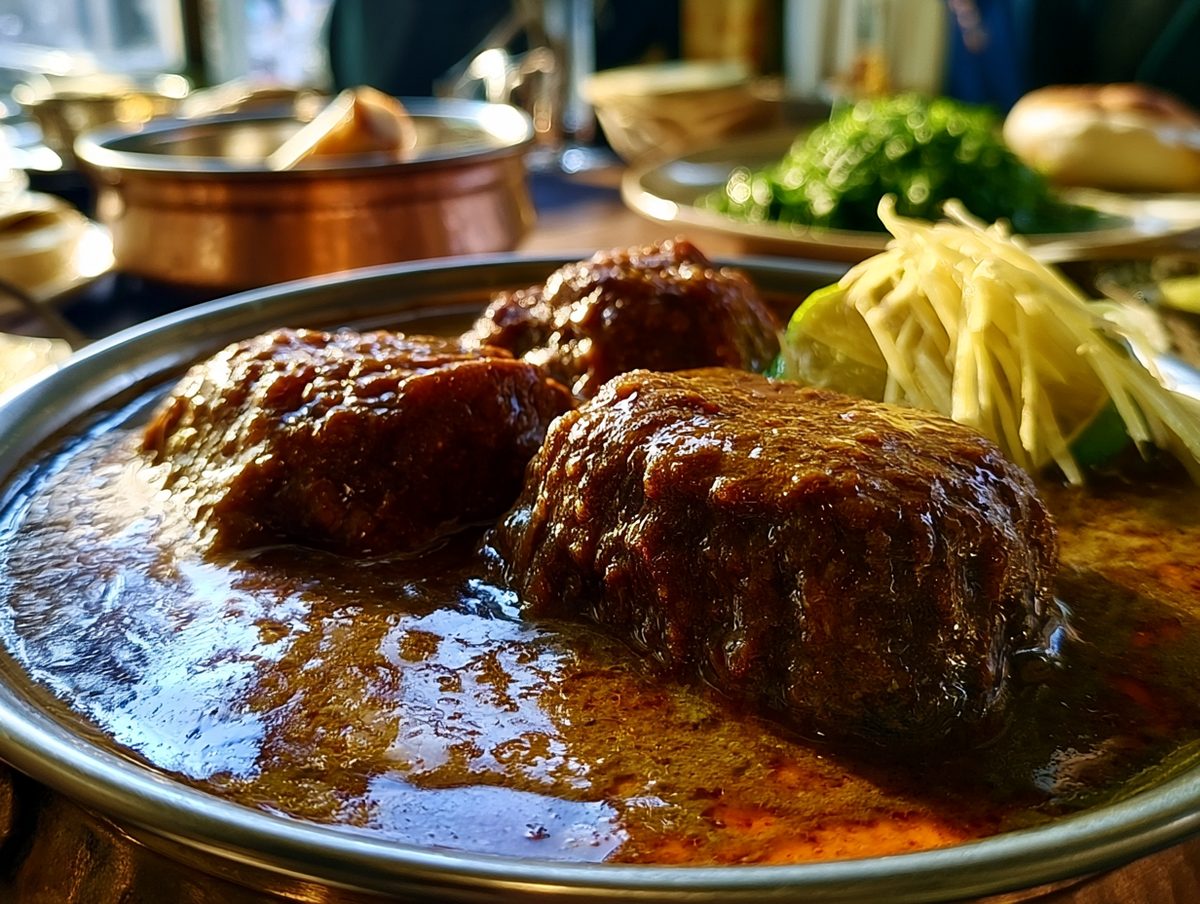
Nihari is dawn food. Its name comes from the Arabic nahar, morning, and it began in Shahjahanabad — Old Delhi — as the meal eaten after the fajr prayer: a stew of shank and marrow bones (nalli) set over dying coals to cook through the night and ladled out at first light to labourers and noblemen alike. The defining trick is the taar — a few ladles of yesterday’s pot stirred into today’s, a living thread some Old Delhi degs claim to have kept unbroken for over a century, the way a bakery keeps a sourdough mother. After the fall of the Mughal court in 1857, and again at Partition, displaced cooks carried nihari out of Delhi to Lucknow and across the new border to Lahore and Karachi, where it became so beloved it is now half-claimed as a national dish. The pot is sealed with dough and left on the lowest heat for hours; the gravy is thickened with a little atta and finished with slivered ginger, fried onion, green chilli and lemon, eaten with khameeri roti or naan. This version follows the Pakistani food writer Izzah Cheema, whose Tea for Turmeric sets down a home nihari with its own ground masala — an English-language record of a dish that crossed the border in living memory.
INGREDIENTS
- 1 kg bone-in beef or mutton shank (cut into large pieces)
- 2 –3 marrow bones (nalli)
- 4 tbsp ghee
- 3 tbsp neutral oil
- 2 large onions (finely sliced)
- 2 tbsp ginger-garlic paste
- 3 tbsp nihari masala (shop-bought or homemade)
- 1 tsp Kashmiri red chilli powder
- 1 tsp red chilli powder
- 1 tsp turmeric
- 1 tbsp ground coriander
- 1½ tsp salt (plus more to taste)
- 1.5 litres water
- 4 tbsp atta (chapati flour)
- 2 inches ginger (julienned, to finish)
- 3 tbsp fried onions (birista, to finish)
- 2 green chillies (slit, to finish)
- chopped coriander and lemon wedges (to serve)
METHOD
- Warm the ghee and oil in a heavy pot and fry the onions until deep golden, 12–15 minutes.
- Add the ginger-garlic paste and cook for a minute, then add the shank and marrow bones and fry until the meat is sealed, 6–8 minutes.
- Stir in the nihari masala, Kashmiri chilli, red chilli, turmeric, coriander and salt, and fry for 2–3 minutes until fragrant.
- Pour in the water, bring to a boil, then lower to the gentlest simmer, cover (or seal the lid with dough), and cook for 3–4 hours until the meat is falling off the bone.
- Whisk the atta into about 150ml cold water until completely smooth, then stir it slowly into the simmering gravy to avoid lumps.
- Simmer another 20–30 minutes, stirring often, until the gravy thickens and a film of spiced oil rises to the top.
- Check the salt and rest off the heat for a few minutes.
- Serve in bowls topped with julienned ginger, fried onions, green chilli and coriander, with lemon to squeeze over and khameeri roti or naan alongside.