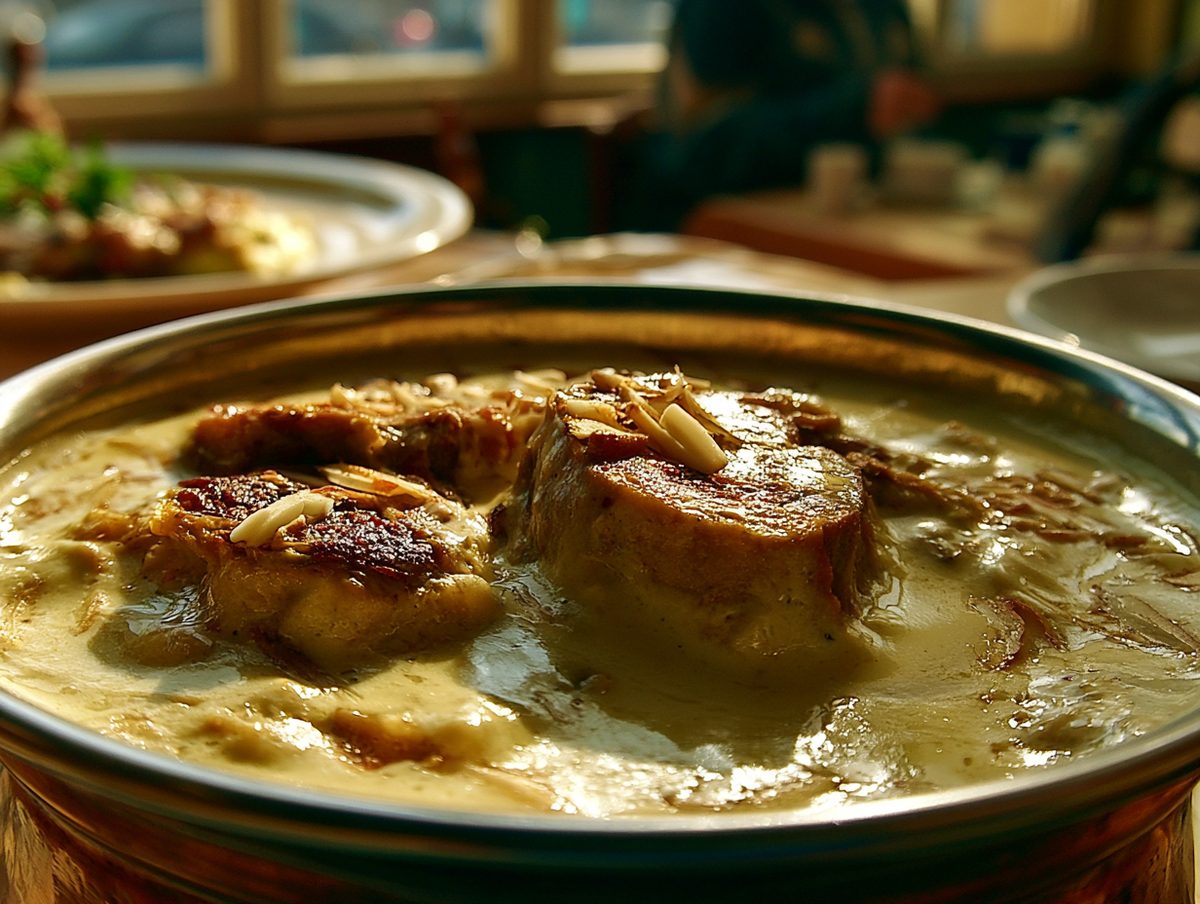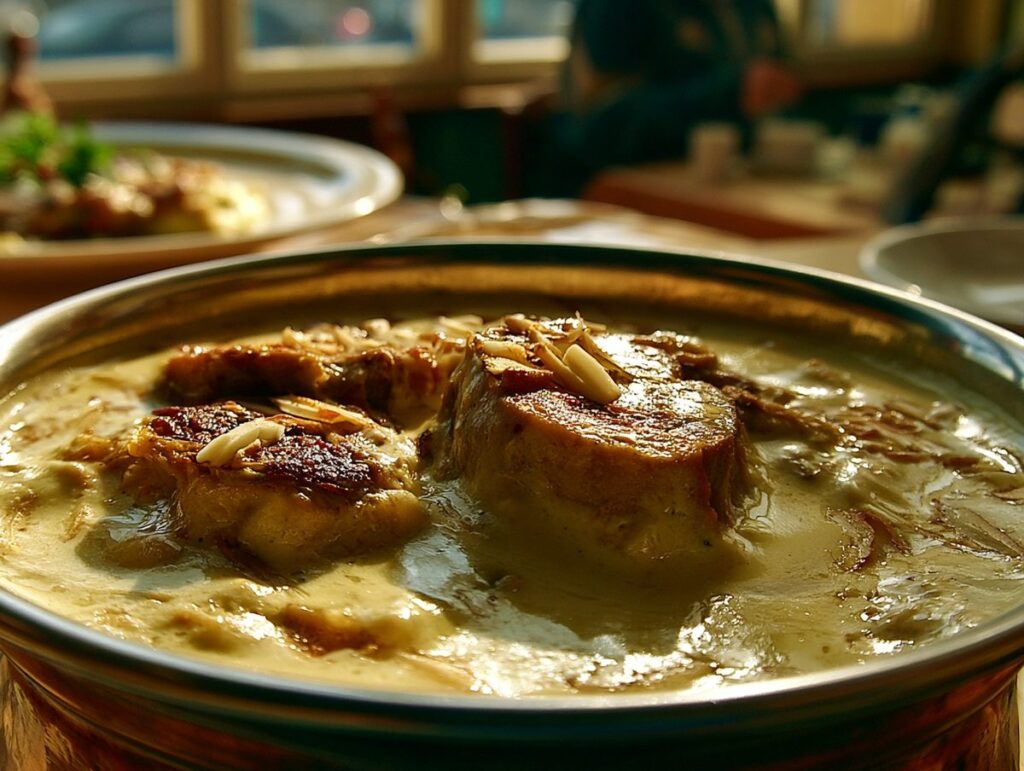
Pasanda takes its name from pasand — favourite — and originally meant the prized cut: leg of lamb or goat sliced into broad thin strips and flattened, a butcher’s skill now almost lost outside a few hands in Old Delhi. It belongs to the Kayasthas of Shahjahanabad, the Hindu scribes and administrators who served the Mughal court and cooked a syncretic Ganga-Jamuni food, Hindu and Muslim at once; pasanda is one of its set pieces. The strips are scored, tenderised — classically with kachri, a wild Rajasthani melon-berry, rather than the papaya many now use — and marinated in yogurt with browned onion and a paste of almond, cashew, melon and poppy seeds, then cooked slowly in an open pot until the gravy is as thick as a korma’s, finished with a drop of kewra. There is no tomato in it. A version of the technique appears as far back as the twelfth-century Manasollasa. This version follows Nani Ki Virasat, which preserves the Old Delhi Kayastha method down to the kachri — an English-language record of a heritage recipe.
INGREDIENTS
- 500 g leg of mutton or goat (cut into thin pasanda strips and flattened)
- 1 tbsp kachri powder (or 1 tbsp raw papaya paste)
- 4 tbsp plain yogurt (whisked)
- 3 large onions (finely sliced and fried (birista))
- 2 tbsp ginger-garlic paste
- 12 almonds
- 8 cashews
- 1 tbsp melon seeds (magaz)
- 1 tbsp poppy seeds (khus khus)
- 6 tbsp ghee
- 4 green cardamom pods
- 2 black cardamom pods
- 1 cinnamon stick
- 6 cloves
- 1 tsp Kashmiri red chilli powder
- 1 tbsp ground coriander
- ½ tsp turmeric
- 1 tsp garam masala
- 1½ tsp salt (plus more to taste)
- 1 tsp kewra water
- chopped coriander (to serve)
METHOD
- Score the flattened pasanda strips lightly, rub with the kachri powder (or papaya paste) and a little salt, and set aside for 30–60 minutes.
- Soak the almonds, cashews, melon and poppy seeds in warm water, then grind to a smooth paste.
- Marinate the strips in half the yogurt with half the fried onions (ground), the ginger-garlic paste, Kashmiri chilli, coriander, turmeric and half the nut paste for at least an hour.
- Warm the ghee in a wide pan with the cardamoms, cinnamon and cloves, then add the marinated strips and their marinade and cook gently, stirring with a light hand.
- Add the remaining yogurt and nut paste and about 300ml hot water, and simmer uncovered on low — not pressure-cooked — until the meat is tender, about 60 minutes, adding water if it tightens.
- Stir in the garam masala and the remaining ground fried onions, and check the salt.
- Finish with the kewra water and rest off the heat.
- Scatter with coriander and serve with naan, rumali roti or chapati.