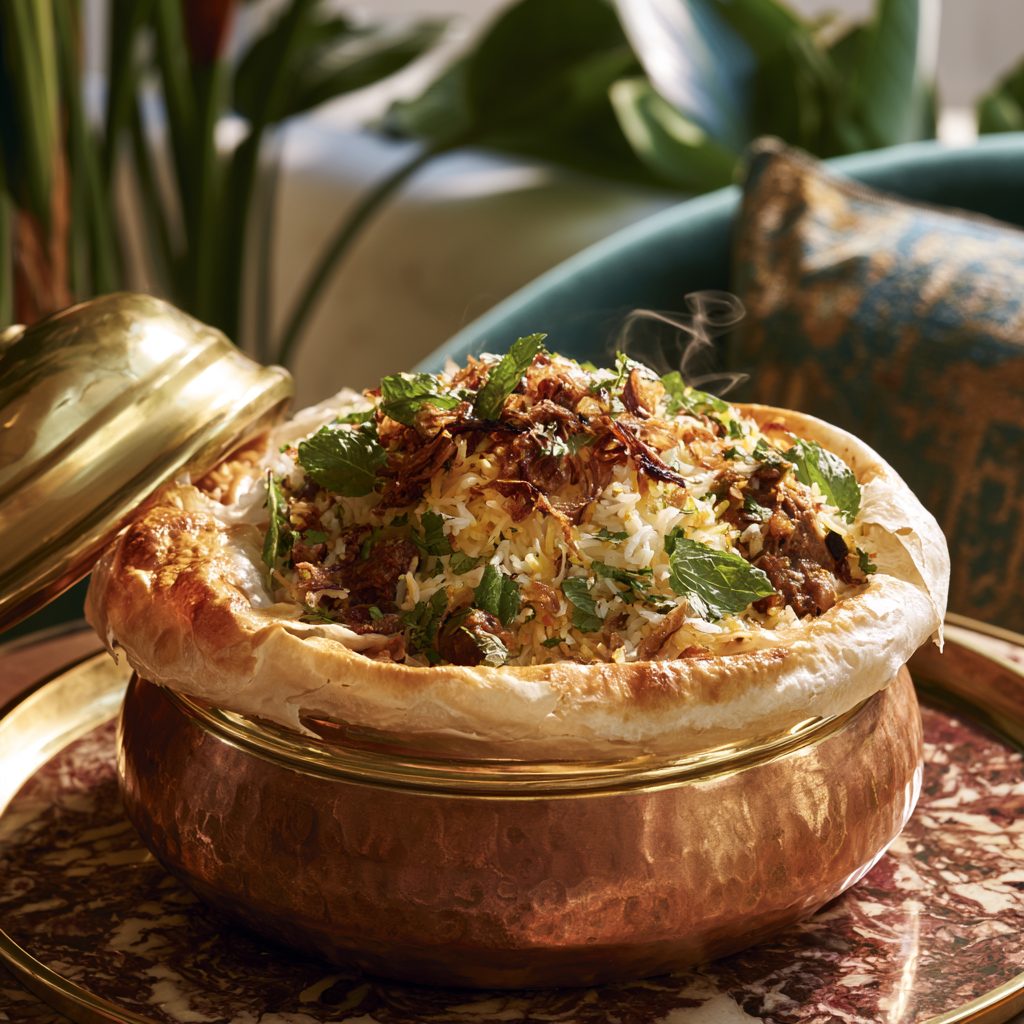
Lucknawi biryani is what the Mughal kitchen became after it left Delhi. As the empire frayed in the eighteenth century its royal cooks drifted east to the court of the Nawabs of Awadh, and in Lucknow they refined the robust Mughal pulao into something deliberately delicate — the pakki biryani, where meat and rice are each cooked partway on their own, then layered in a copper degh with saffron milk, kewra, rose water and a breath of ittar, the lid sealed with dough so the whole finishes on dum, the rice taking up the meat’s perfume without turning to mush. It is fragrant rather than fiery, carries no tomato and often no mint, and stands apart from the spicier kacchi biryani of Hyderabad. When the last Nawab, Wajid Ali Shah, was exiled to Metiabruz near Calcutta in 1856, his kitchen went with him, and Lucknawi biryani became the direct parent of Kolkata biryani. This version comes by a genuinely found route: the cook behind Haala’s Dastarkhaan reconstructed it from old Urdu accounts of how the Nawabi khansamas marinated and layered their meat — an English recipe built back up from the original language.
INGREDIENTS
- 800 g bone-in mutton or goat (cut into pieces)
- 500 g aged basmati rice
- 4 tbsp plain yogurt
- 2 tbsp ginger-garlic paste
- 3 large onions (finely sliced)
- 6 tbsp ghee
- 4 tbsp neutral oil
- 4 green cardamom pods
- 2 black cardamom pods
- 6 cloves
- 1 cinnamon stick
- 2 bay leaves
- 1 tsp shahi jeera (caraway)
- 1 tsp white pepper (ground)
- 1 tsp ground mace
- 2 tsp salt (plus more for the rice water)
- a pinch of saffron (soaked in 3 tbsp warm milk)
- 1 tbsp kewra water
- 1 tbsp rose water
- 2 –3 drops meetha attar (edible perfume, optional)
- chopped coriander (to finish)
METHOD
- Fry the sliced onions in the ghee and oil until deep golden, then lift out half to drain as birista for layering.
- To the remaining onions add the ginger-garlic paste, then the meat, yogurt, white pepper, mace and 1 tsp salt, and cook until the meat is about 90% tender and the masala is thick, 45–60 minutes; this is the cooked (pakki) meat.
- Meanwhile soak the rice 30 minutes, then boil in well-salted water with the cardamoms, cloves, cinnamon, bay leaves and shahi jeera until about 80% done, and drain.
- Layer half the par-boiled rice over the cooked meat, scatter with birista, then add the rest of the rice.
- Drizzle over the saffron milk, kewra water, rose water and the attar if using, and dot with a little ghee.
- Seal the lid with a rope of dough (or foil and a tight lid), set on the lowest heat over a tawa, and cook on dum for 20–25 minutes.
- Rest, sealed, for 10 minutes, then open at the table and lift through gently with a flat spoon so the grains stay whole.
- Finish with coriander and serve with a cooling raita.