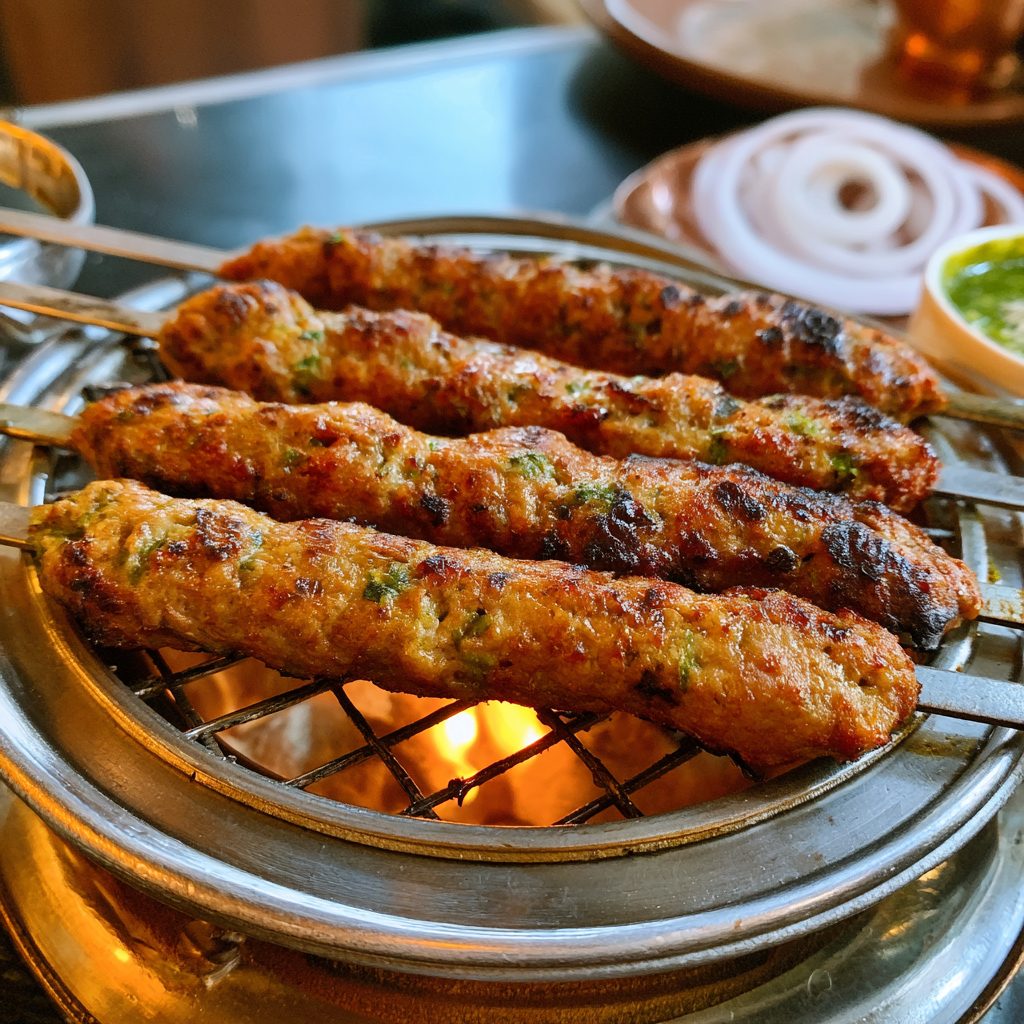
Kakori is a small town outside Lucknow, in the mango country of Malihabad, and the kebab that carries its name was born of an insult. The story, retold at every Lucknawi table, has the Nawab of Kakori — Syed Mohammad Haider Kazmi — serving seekh kebabs to a visiting British Resident, who pronounced them coarse; the affronted nawab set his rakabdars to making something finer, and what they produced was the kakori. It is the most exacting of the kebabs: the meat is the fine mince of raan-ki-machhli, a particular tendon from the leg, the animal fat swapped for khoya and cashew, black pepper for white, the whole tenderised with raw papaya, bound with roasted gram, smoked with a coal under a lid (the dhungar), then smeared around a skewer in a thin sheath and grilled over charcoal until it barely holds together. The Lucknawi-trained chef Ranveer Brar dates it later than its rival the galouti, which came from older Faizabad; the two are cousins in texture but not in method. This version follows Alpana’s Kitchen, whose Awadh kakori keeps to the classical raan-ki-machhli method — pointedly without the coconut or cream that newer recipes add but the Lucknawi original never knew.
INGREDIENTS
- 500 g lean mutton or goat leg (minced twice (very fine))
- 50 g khoya (mawa, grated)
- 2 tbsp cashew paste
- 1 tbsp raw (green papaya paste, with skin)
- 1 tbsp ginger-garlic paste
- 1 small onion (very finely grated and squeezed dry)
- 2 tbsp roasted gram flour (besan)
- 1 tsp white pepper (ground)
- ½ tsp ground green cardamom
- ½ tsp ground mace
- ¼ tsp grated nutmeg
- 1 tsp garam masala
- 1½ tsp salt
- 3 tbsp ghee (plus more for basting)
- 1 piece lump charcoal (for the dhungar)
- sliced onion (lemon and green chutney, to serve)
METHOD
- Mix the fine mince with the khoya, cashew paste, papaya paste, ginger-garlic paste, grated onion, white pepper, cardamom, mace, nutmeg, garam masala and salt, working it just until smooth and bound.
- Rest a small steel bowl on the surface of the mince, drop in a glowing coal, spoon over a little ghee, cover for 3–4 minutes to smoke it (the dhungar), then remove the bowl.
- Work in the roasted gram flour, then cover and chill the mixture for at least an hour so it firms up.
- With wet or oiled hands, smear portions of the mince around metal skewers into long, even kebabs.
- Grill over charcoal (or under a hot oven grill on a tray), turning and basting with ghee, until golden and just set, 10–15 minutes — they should stay tender, not dry out.
- Slide the kebabs off the skewers with a cloth.
- Serve hot with sliced onion, lemon and green chutney.