Momo came south out of Tibet and settled so completely into Nepal that most people no longer think of it as arriving from anywhere. Pathak, who grew up in Kathmandu, says plainly that the origin is uncertain and rustic, which is more honest than the tidy stories told elsewhere. In the Valley it is also called momocha. The filling is buffalo at the street carts of Asan and Patan and chicken at dinner tables, and the rule that governs both is fat: lean meat gives a dry momo, and Nepali cooks choose fatty mince deliberately for the juice it throws inside the wrapper. Spicing stays light for the same reason, since a heavy hand buries the meat it is meant to lift. The tomato and sesame achar is not a condiment but part of the structure, the timur numbing the mouth between one dumpling and the next while the sourness cuts the fat. Making them is a group job, one person rolling, one pleating, one watching the steamer, which is why momo weekends are how Nepali families abroad keep hold of each other.
INGREDIENTS
- 400 g plain flour
- 240 ml water
- ½ tsp salt
- 500 g minced beef or lamb (at least 20 percent fat)
- 1 medium onion (very finely chopped)
- 4 spring onions (finely sliced)
- 150 g white cabbage (very finely shredded)
- a large handful of coriander (chopped)
- 3 cm ginger (minced)
- 4 garlic cloves (minced)
- 2 tbsp vegetable oil
- 1 tsp ground cumin
- 1 tsp ground coriander
- ½ tsp turmeric
- ½ tsp cayenne
- ½ tsp ground Sichuan peppercorns
- 1.5 tsp salt
- 4 tomatoes
- 3 tbsp sesame seeds
- 4 dried red chillies
- 4 garlic cloves (unpeeled)
- 1 tbsp vegetable oil (for the achar)
- ½ tsp salt (for the achar)
METHOD
- Mix the flour, salt and water into a firm dough and knead for 8 minutes until smooth. Cover and rest for 30 minutes.
- Combine the mince, onion, spring onions, cabbage, coriander, ginger, garlic, oil, cumin, ground coriander, turmeric, cayenne, ground peppercorns and salt. Mix with your hands for a few minutes, then leave for 10 minutes for the flavours to settle.
- Make the achar. Char the tomatoes and the unpeeled garlic in a dry pan over a high heat until blackened in patches. Toast the sesame seeds and dried chillies separately for a minute.
- Peel the garlic and blend everything with the oil and salt to a loose, nutty sauce. Loosen with a little water if it is too thick to pour.
- Divide the dough into pieces the size of a large marble. Roll each into a circle about 8cm across, keeping the centre noticeably thicker than the edge.
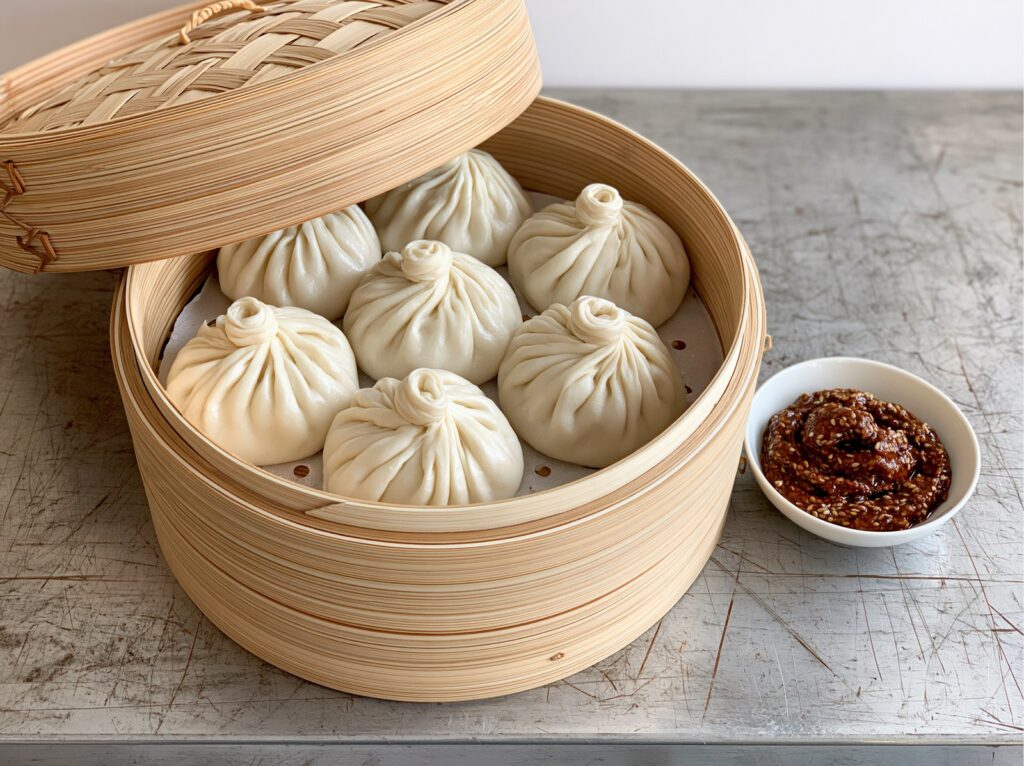
- Put a heaped teaspoon of filling in the middle. Pleat the edge with your thumb and forefinger, turning as you go, and pinch the crown closed.
- Line a steamer and oil it lightly. Arrange the momo with space between them so they do not fuse.
- Steam over boiling water for 10 to 12 minutes, until the wrappers turn glossy and slightly translucent.
- Serve immediately with the achar. They stiffen within minutes of leaving the steamer.