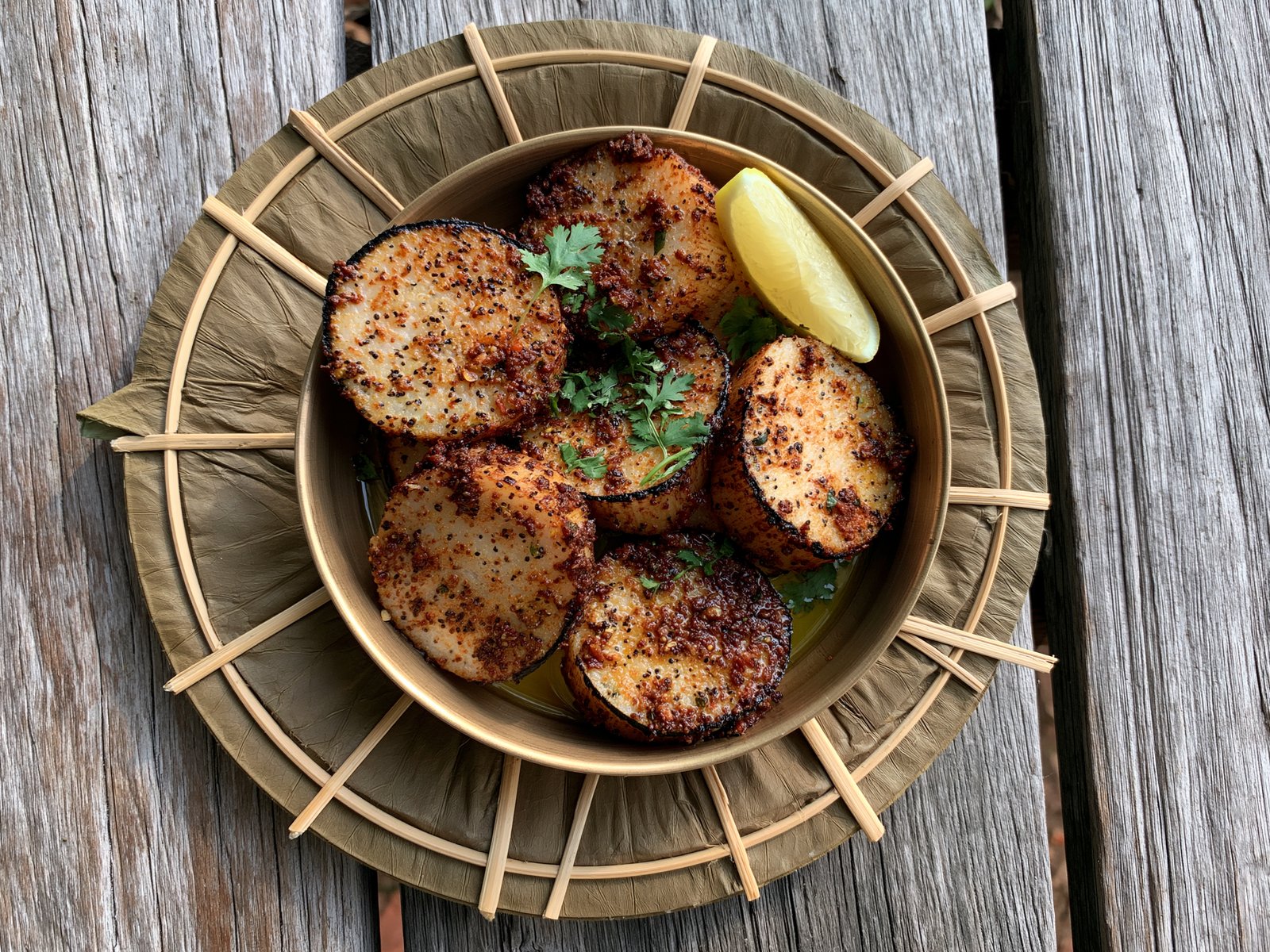
Ol is required at Diwali in Bihar, and the reason is in the plant. Elephant foot yam grows back from what is left in the ground — cut it, and it returns bigger the next season — so it stands for a household that does not diminish, and it is eaten on the night the year is asked to go well. Because it is a festival dish it is cooked satvik, with no onion and no garlic at all; the flavour has to come from a masala dry-ground on the spot, mustard seed and coriander and carom and black pepper, and from mustard oil taken to smoking point. The yam itself is dense and faintly nutty, closer to a chestnut than a potato. It is also the vegetable most likely to make your hands itch, which is why every Bihari cook has a rule about it and why the lemon in this recipe is not decoration.
INGREDIENTS
- 600 g elephant foot yam (suran, peeled and cut into thick slices)
- 1 tbsp lemon juice (for boiling)
- 1 tsp salt (for boiling)
- 1 tbsp coriander seeds
- 1 tsp yellow mustard seeds
- ½ tsp carom seeds (ajwain)
- 12 black peppercorns
- 2 cm ginger
- 3 green chillies
- 1 medium tomato (chopped)
- 4 tbsp mustard oil
- ½ tsp cumin seeds
- ¼ tsp asafoetida
- ½ tsp turmeric
- 1 tsp salt
- 200 ml water
- 1 tbsp lemon juice (to finish)
- a handful of coriander leaves (chopped)
METHOD
- Wearing gloves or with oiled hands, peel the yam and cut it into slices about 1.5cm thick.
- Boil the slices in salted water with 1 tbsp lemon juice until a knife goes in easily, about 12 minutes. Drain well.
- Dry-grind the coriander seeds, mustard seeds, carom and peppercorns to a coarse powder.
- Add the ginger, green chillies and tomato with a splash of water and grind again to a rough paste.
- Heat the mustard oil until it smokes, then take it off the heat for a moment to soften its edge.
- Return to medium-high heat and fry the boiled yam slices until browned on both faces. Lift out and set aside.
- Add the cumin and asafoetida to the same oil, then the ground paste, turmeric and salt.
- Fry the masala until it darkens and the oil separates at the edges, about 6 minutes.
- Return the yam, add the water, and simmer uncovered for 8 minutes until the masala clings to each piece.
- Finish with the second tablespoon of lemon juice and the coriander. Serve with poori or rice.