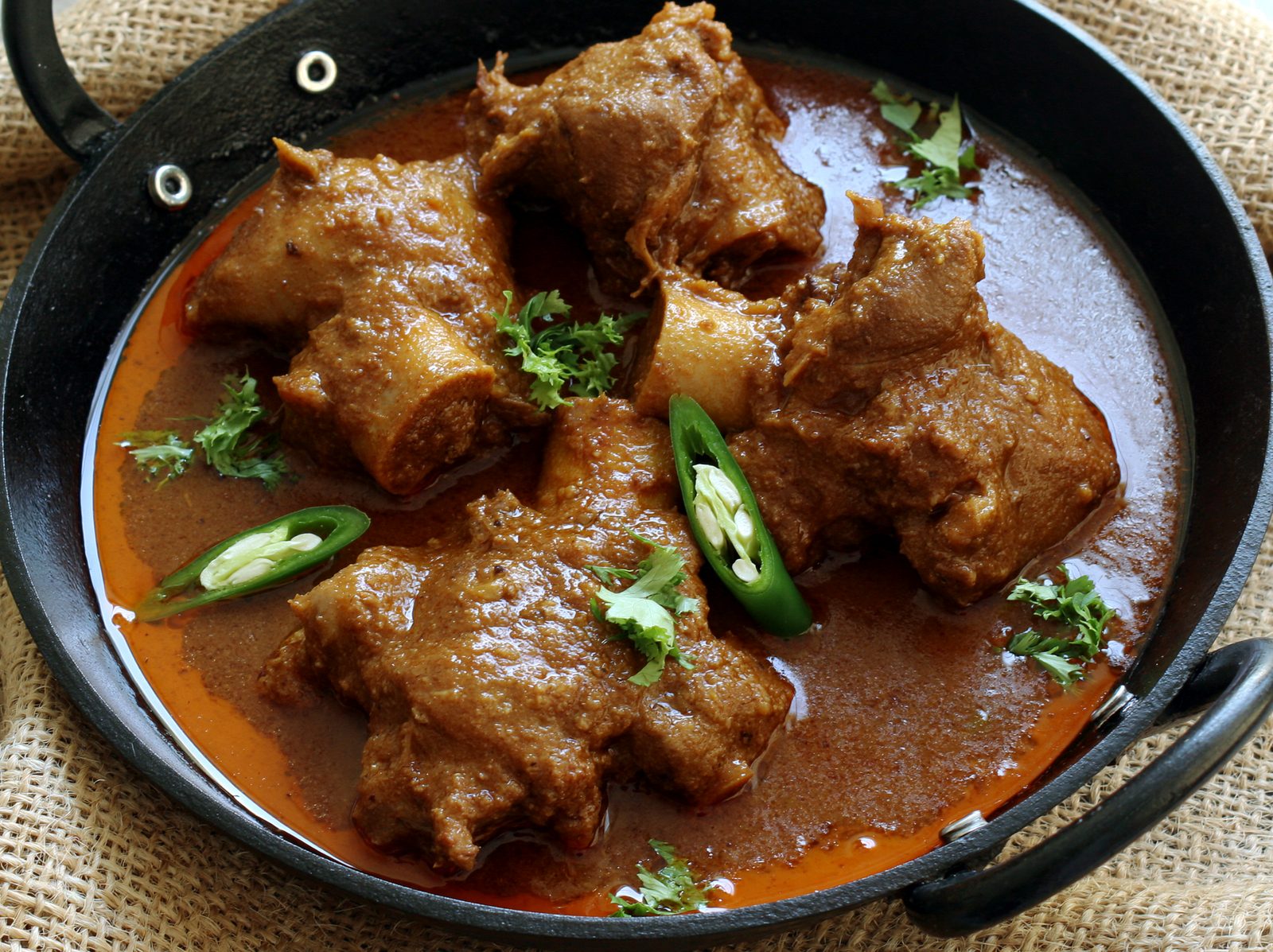
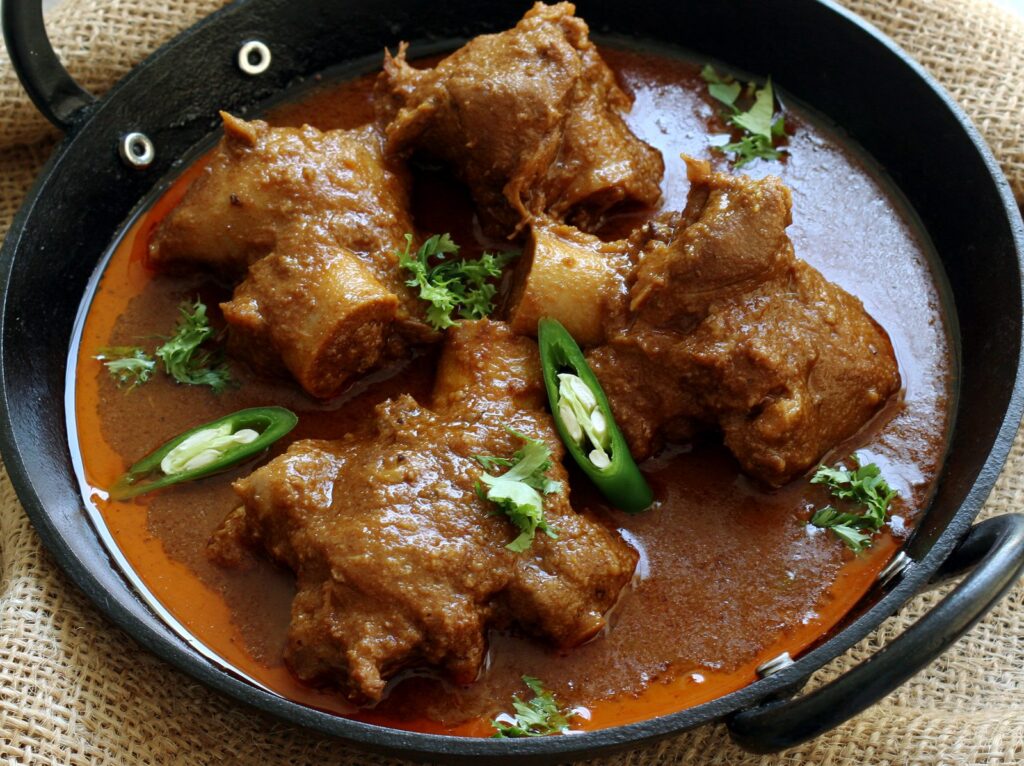
Teevan means sour in Sindhi, and this is the dish in which sourness is not background but structure. Lamb is cooked in a curry sharpened with dried kokum or whole raw mango pieces — the souring agent chosen by what the season offers — and the tartness that results is aggressive, present, not apologetic. In Punjab this would be called achar gosht and the sourness would be managed; in Teevan it is the point of the dish. It is everyday food in Sindh, eaten with roti, most at home on a winter table when the mango pieces are dried and the kokum has been sitting in the pantry since summer.
Zone: Indus Plains
SOURCE: Oral recipe, grandmother of a Sindhi home cook, Larkana, recorded 2022
LOCAL NAME: ٹیوان
INGREDIENTS
- 700 g bone-in lamb (cut into pieces)
- 3 tbsp dried kokum (or 3 slices raw green mango, or 1½ tsp amchur)
- 2 large onions (finely sliced)
- 1 tbsp ginger paste
- 1 tbsp garlic paste
- ¼ tsp asafoetida (hing)
- 3 medium tomatoes (chopped)
- 1 tsp turmeric
- 1 tsp red chilli powder
- 1½ tsp ground coriander
- 1 tsp ground cumin
- 1½ tsp salt
- 4 tbsp neutral oil or ghee
- 2 green chillies (slit)
- 200 ml water
- chopped coriander to finish
METHOD
- Heat the oil in a heavy pot. Add the asafoetida and let it sizzle 10 seconds. Add the onions and fry until deep golden, 10–12 minutes.
- Add the ginger and garlic pastes and cook for a minute. Add the lamb and fry on high heat until sealed, 5–6 minutes.
- Add the turmeric, chilli, coriander, cumin and salt. Fry the masala down with the meat, stirring, for 5 minutes. Add the tomatoes and cook until they break down and the oil separates.
- Add the kokum (or raw mango slices or amchur) and the water. Bring to a boil.
- Cover and simmer on low heat for 50–60 minutes until the lamb is completely tender.
- Add the slit green chillies and simmer uncovered for 5 minutes to thicken the gravy. Taste and adjust sourness and salt.
- Finish with fresh coriander. Serve with chapati or roti.
NOTES
UK adaptation: Dried kokum from South Asian grocers and online spice retailers. Raw mango (kachha aam) from South Asian grocers in season; amchur (dry mango powder) as the reliable out-of-season substitute. Bone-in lamb from any halal butcher. Everything else widely available.
US adaptation: Kokum from Patel Brothers or Indian online retailers. Raw green mango from South Asian or Latin American grocery stores when in season; amchur from Patel Brothers as substitute. Bone-in lamb from halal butchers. Everything else widely available.
Cook’s note: Add the souring agent after the initial bhunai, not at the start. Kokum and raw mango both need time in the gravy to release their acidity — taste near the end and add more if you want sharper.
Cook this differently? Share your family’s version — or tell us what we’re missing.
Contribute