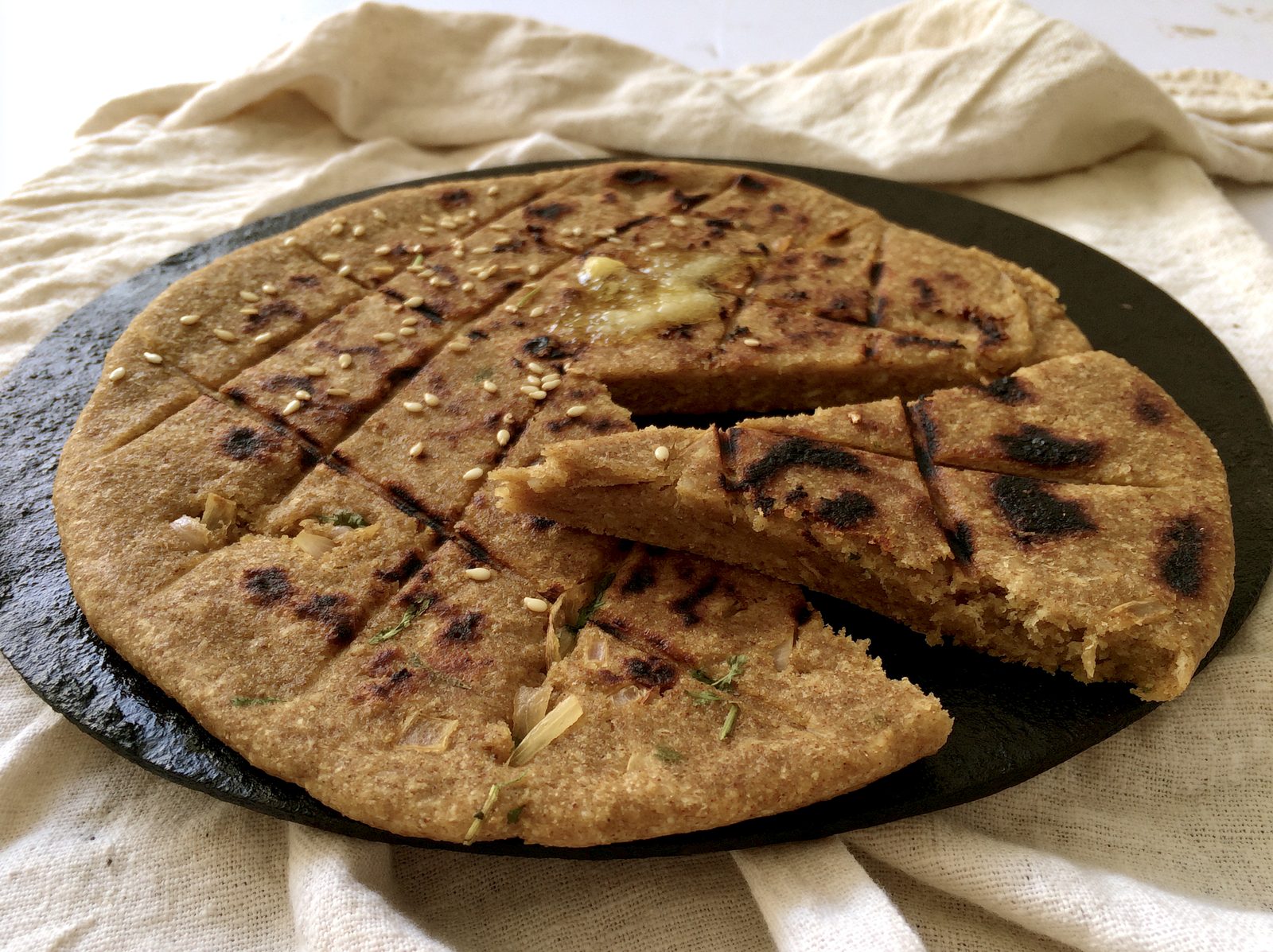
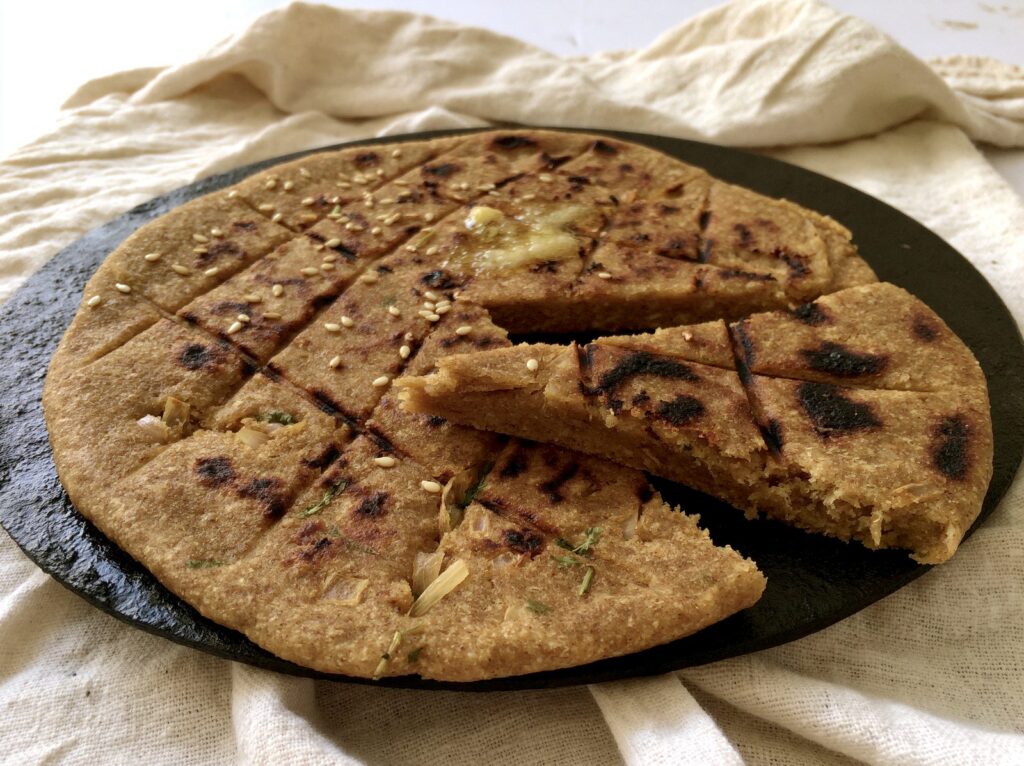
Koki is a Sindhi breakfast bread and only a breakfast bread — it is not made for lunch, not offered to guests at dinner, and not found anywhere outside Sindhi kitchens. Whole wheat flour is mixed with finely chopped onion, coriander, green chilli, crushed cumin and sesame seeds, worked to a deliberately dry dough, and pressed thick on a heavy pan by hand rather than rolled. It is cooked twice: once on a tawa until barely done, then broken, re-pressed and returned to the heat until the outside chars in hard, speckled spots. The texture — thick, crumbly, almost like a biscuit — has no equivalent in the flatbread traditions of neighbouring regions, and it is the measure of a Sindhi morning.
Zone: Indus Plains
SOURCE: Sindhi home cook, Sukkur, oral recipe transcribed from Sindhi-language community video, 2021
LOCAL NAME: کوکی
INGREDIENTS
- 300 g whole wheat flour (atta)
- 1 medium onion (very finely chopped)
- 2 green chillies (finely chopped)
- 3 tbsp fresh coriander (finely chopped)
- 2 tbsp sesame seeds (til)
- 1 tsp cumin seeds (lightly crushed)
- ½ tsp red chilli powder
- 1 tsp salt
- 2 tbsp ghee (plus more for serving)
- water (added sparingly (2–3 tbsp only))
METHOD
- Mix the flour, onion, green chilli, coriander, sesame seeds, cumin, chilli powder and salt in a bowl.
- Rub in the ghee until the mixture resembles coarse breadcrumbs.
- Add water one tablespoon at a time, just enough to bring the dough together into a stiff, crumbly mass. It should be drier than roti dough — do not make it soft.
- Divide into 6 portions. Press each one out on a lightly floured surface into a disc about 1cm thick using your palms, not a rolling pin.
- Heat a heavy tawa or cast-iron pan over medium heat. Cook each koki dry for 5–6 minutes, turning once, until the surface looks matte and dry but not yet charred.
- Break the koki in half, press the two halves back together and flatten again to the original thickness. Return to the tawa and cook 4–5 minutes more until charred in firm dark spots and completely dry throughout.
- Smear with ghee and serve immediately with lassi or chai. Koki hardens as it cools — eat it hot.
NOTES
UK adaptation: Whole wheat flour (atta) from any supermarket or South Asian grocer. Sesame seeds and ajwain widely available. Everything else widely available.
US adaptation: Atta or chapati flour from Patel Brothers or H-Mart. Sesame seeds from any grocery store. Everything else widely available.
Cook’s note: The dough is deliberately dry — resist adding more water. Press the koki thick with your palm, not thin with a rolling pin; its crumbly texture depends on the thickness.
Cook this differently? Share your family’s version — or tell us what we’re missing.
Contribute