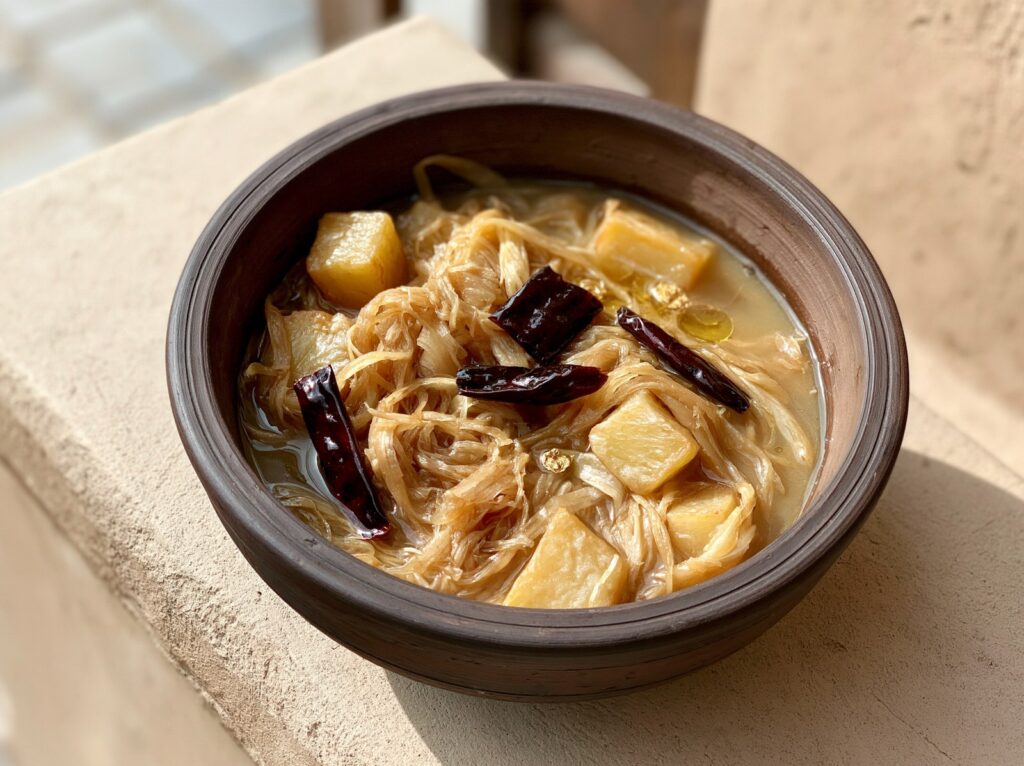
Sinki is radish taproot turned sour without a grain of salt. The roots are wilted in the sun for a few days, shredded, then rammed into a pit lined with bamboo and straw, warmed first with a small fire, and sealed under vegetation, boards, stones and finally mud until no air can reach them. Twenty to thirty days of wild lactic fermentation later they come out and go into the sun to dry hard, and they will then keep for a year or more without refrigeration. That saltless method is what separates sinki from every brined pickle and it is the same logic that produces gundruk from the leaves of the same plant, so a single radish crop yields two different preserves from two different parts. Radishes are at their best after the cool post-monsoon harvest, which makes sinki a late-autumn job, packing sourness away against the cold. The broth it makes is thin, fiercely tangy and eaten with rice and a spoon of ghee.
INGREDIENTS
- 60 g dried sinki
- 2 medium potatoes (cut into 2cm cubes)
- 3 tbsp mustard oil
- ½ tsp fenugreek seeds
- 3 dried red chillies
- 5 garlic cloves (chopped)
- 2 cm ginger (chopped)
- 1 medium tomato (chopped)
- ½ tsp turmeric
- ½ tsp Sichuan peppercorns (ground)
- 1 tsp salt
- 1.2 litres water
- 1 tbsp ghee (to serve)
METHOD
- Soak the dried sinki in cold water for 10 minutes, then drain it, squeeze it dry with your hands and chop it roughly. Discard the soaking water.
- Heat the mustard oil in a pot until it smokes, take it off the heat for a moment, then return it to a medium heat and add the fenugreek seeds and dried chillies. They should darken within 15 seconds.
- Add the garlic and ginger and cook for a minute, then stir in the sinki and fry it for 2 minutes until it smells sharp and toasted.
- Add the tomato, turmeric and salt and cook for 3 minutes, pressing the tomato down until it breaks up.
- Add the potatoes and the water. Bring to a boil, then simmer uncovered for 20 minutes, until the potatoes are soft and the broth has gone cloudy and sour.
- Stir the ground peppercorns in and cook for a final minute.
- Ladle into bowls, float the ghee on top and serve with rice.