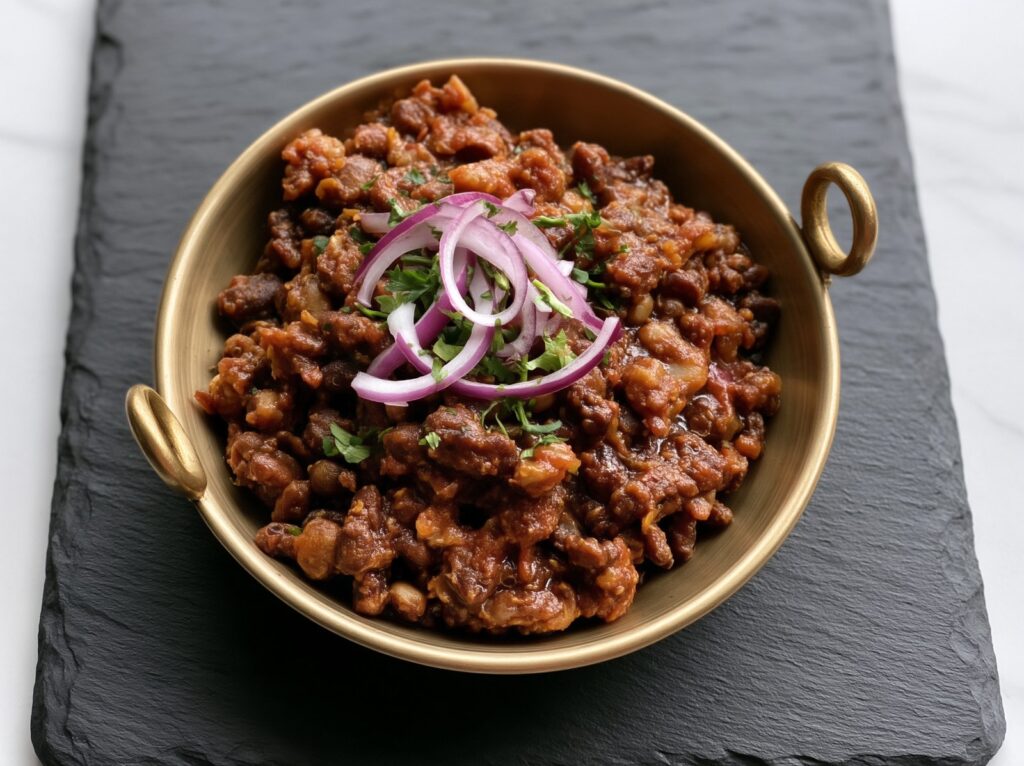
Kinema belongs to the Kirati peoples of eastern Nepal, the Rai and the Limbu, and the name itself comes from Limbu: ki for fermented, nambaa for flavour. Soybeans are boiled, pounded lightly and left wrapped in leaves in a warm place until a sticky grey-tan thread forms between them and the smell turns sharp and savoury. It is the same fermentation the Japanese arrive at with natto, reached independently in the hills of Limbuwan, the old kingdom that ran across what are now Taplejung, Panchthar, Ilam, Dhankuta and Terhathum. The flavour is not gentle and nobody pretends otherwise. Cooking it down with tomato is how eastern households make it welcoming: the sweetness and acidity cut the pungency, sesame rounds it, and what was an acquired taste becomes something eaten by the spoonful beside rice.
INGREDIENTS
- 150 g dried kinema (fermented soybeans, soaked 15 minutes)
- 2 medium tomatoes (diced)
- ½ red onion (diced)
- 5 garlic cloves (minced)
- 4 green chillies (chopped)
- 1 tsp turmeric
- 1 tsp ground coriander
- 1 tbsp toasted sesame powder
- ½ tsp ground Sichuan peppercorns
- 4 tbsp vegetable oil
- ½ tsp salt
- 1 tbsp finely sliced onion (to finish)
- 1 tbsp chopped coriander leaves (to finish)
METHOD
- Soak the dried kinema in cold water for 15 minutes until softened, then drain well.
- Heat the oil in a frying pan over a medium heat and cook the garlic and diced onion for 3 to 4 minutes, until the onion is just turning gold at the edges.
- Add the drained kinema and fry for a full minute, stirring, until the smell shifts from sharp to toasted.
- Stir in the turmeric, ground coriander and chillies and turn everything over so the beans are coated.
- Add the tomatoes and the salt, cover, and cook for 10 minutes, stirring now and then and scraping the base so nothing catches.
- Uncover and cook for a further 5 minutes until the tomato has broken down into a thick chutney around the beans.
- Stir in the sesame powder and the ground peppercorns, taste for salt, and scatter the sliced onion and coriander over. Serve warm beside rice.