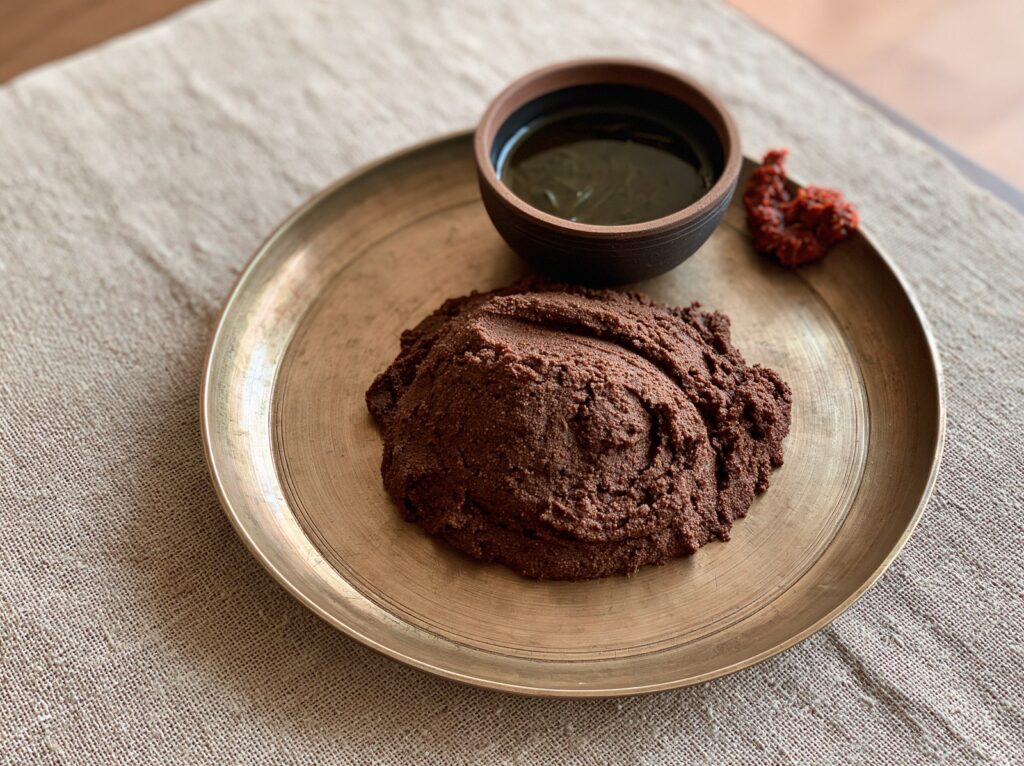
Dhido is older than rice in these hills and it is not a porridge. Finger millet or maize flour is beaten into boiling water with a firke, a wooden whisk turned between the palms, and worked hard against the side of the pan until it stops being a batter and becomes a single stiff, glossy mass that pulls away clean. It is served as a mound and eaten in pinched pieces pressed into whatever soup is on the table, swallowed rather than chewed. For a long time it carried the same stigma as gundruk, the food of a house with no rice, and both have since been reclaimed and now appear on Kathmandu menus at prices that would astonish the grandmothers who cooked them out of necessity. Finger millet grows where paddy will not, which is the entire reason the hills eat this and the plains do not.
INGREDIENTS
- 150 g finger millet flour (ragi)
- 100 g fine maize flour
- 900 ml water
- ½ tsp salt
- 1 tsp ghee (for the serving spoon)
METHOD
- Bring the water and salt to a rolling boil in a heavy pan.
- Sprinkle in a small handful of the mixed flours and let it cook for a minute without stirring, which stops the rest from sticking to the base.
- Add a third of the remaining flour and beat hard with a wooden spoon or firke, pressing the mixture against the side of the pan and turning it over itself, until no dry flour is visible.
- Repeat with the second and third portions. The mass will go from loose and sticky to firm and glossy, and after about 12 minutes of beating it will pull away from the sides of the pan in one piece.
- Lower the heat, cover and leave for 3 minutes.
- Wet a serving spoon with the ghee, scoop the dhido out in a single mound and serve at once with gundruk ko jhol or sisnu. It stiffens as it cools, so it does not wait.