Gundruk is what a hill household does with a glut of greens and no refrigeration. Mustard, rayo and radish leaves are picked when they have gone slightly coarse, wilted in the sun for a day or two, crushed, then rammed hard into a bamboo dhungro or an earthen pot and sealed against air. Ten to twelve days later they have gone sour, and they come out to dry in the sun until brittle enough to keep for a year. The soup made from them was once a marker of a lean house, eaten in place of dal because there was no dal, and it has since travelled upward into restaurant menus in Kathmandu without changing much. Soaked soybeans go in where a household can spare them. It is eaten with rice, and more often with dhido, the two so closely paired in the hills that mentioning one is taken as asking for the other.
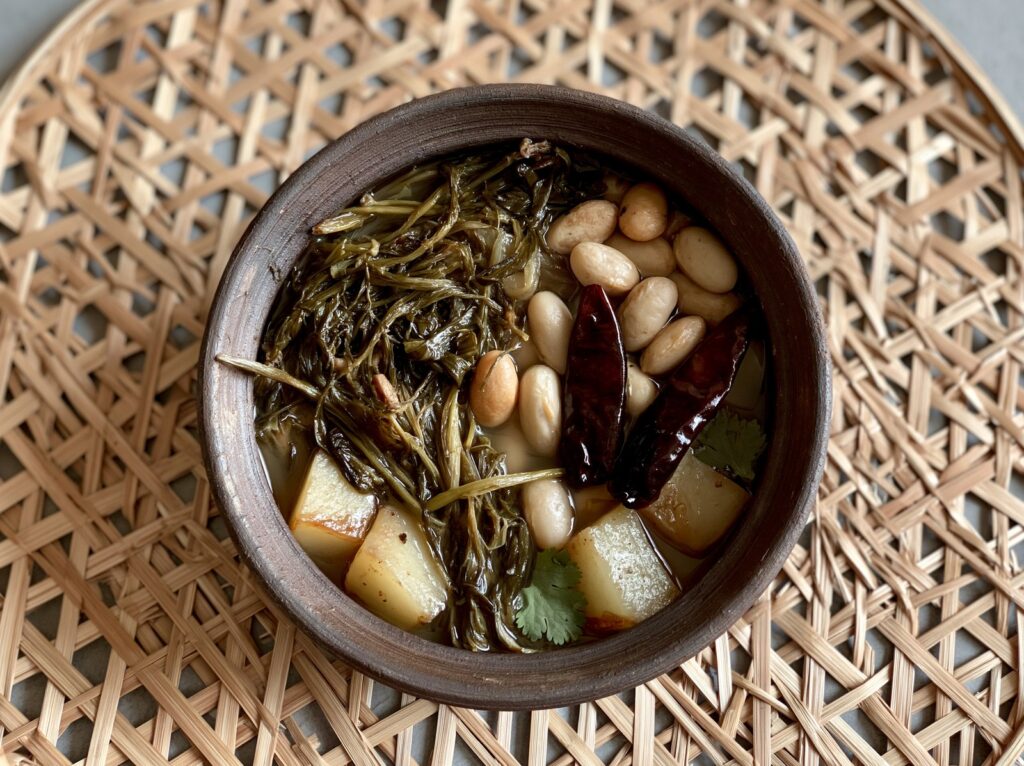
INGREDIENTS
- 60 g dried gundruk
- 80 g dried soybeans (soaked overnight)
- 2 medium potatoes (cut into 2cm cubes)
- 3 tbsp mustard oil
- 1 tsp fenugreek seeds
- 1 medium onion (chopped)
- 4 garlic cloves (chopped)
- 2 cm ginger (chopped)
- 2 dried red chillies
- ½ tsp turmeric
- ½ tsp Sichuan peppercorns (crushed)
- 1 tsp salt
- 1.2 litres water
- a few coriander leaves
METHOD
- Rinse the gundruk in cold water, squeeze it dry and chop it roughly. Drain the soaked soybeans.
- Heat a dry pan and toast the gundruk for 30 seconds, moving it constantly, until it smells sharp and nutty. Tip it out and set aside.
- Heat the mustard oil in a pot until it smokes, take it off the heat for a moment, then return it to a medium heat and add the fenugreek seeds and dried chillies. They should darken in about 15 seconds.
- Add the onion, garlic and ginger and cook for 5 minutes until soft. Stir in the turmeric.
- Add the soybeans, potatoes, gundruk, salt and water. Bring to a boil, then simmer covered for 25 minutes, until the soybeans are tender and the broth has gone cloudy and sour.
- Crush the peppercorns in and cook for a final minute. Scatter over the coriander and serve with dhido or rice.