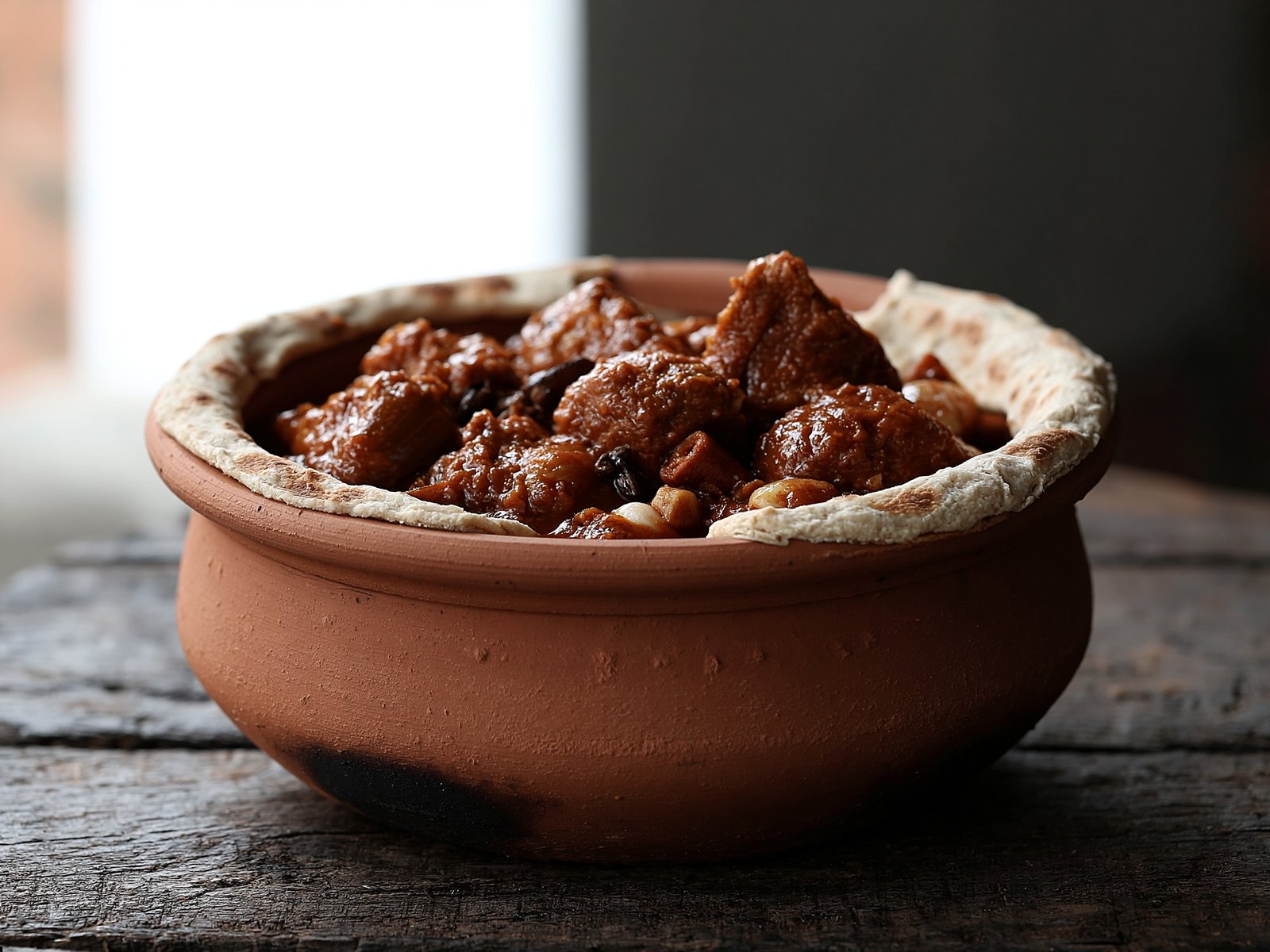
Ahuna is the local word for the earthen pot, and the pot is the recipe. Two or three centuries ago in Champaran, in the north-west corner of Bihar around Motihari, labourers put mutton into a handi with onions, whole garlic in its skin, mustard oil and whatever whole spices the house had, sealed the lid down with a rope of wheat dough, set it over a low wood fire and left for the fields. There was no water in it and no one watching it. Hours later they came back to meat that had cooked in nothing but its own juices, and the technique that produced it — no pastes, no stirring, no liquid, everything whole — is why the dish tastes the way it does. It goes by ahuna, handi meat, batlohi and matka gosht depending on which part of Champaran you are in. The seal is still broken at the table rather than in the kitchen, because the point at which the dough cracks and the pot opens is the whole event.
INGREDIENTS
- 1.2 kg bone-in mutton or goat (shoulder and neck)
- 6 tbsp mustard oil
- 8 medium onions (roughly sliced)
- 2 whole garlic bulbs (cloves separated and left in their skins)
- 4 cm ginger (roughly chopped)
- 6 green chillies (slit)
- 4 dried red chillies
- 4 bay leaves
- 1 tbsp cumin seeds
- 1 tsp carom seeds (ajwain)
- 1 tsp fennel seeds (saunf)
- 1 tbsp black peppercorns (cracked)
- 6 green cardamom pods
- 2 black cardamom pods
- 7 cloves
- 1 stick cinnamon (broken)
- 3 tbsp coriander powder
- 1 tbsp cumin powder
- 1 tbsp turmeric
- 1 tbsp red chilli powder
- 1 tbsp garam masala
- 100 g full-fat yoghurt
- 2 tbsp ghee
- 2 tsp salt
- 200 g chapati flour (for the seal)
- 1 small piece of charcoal (for smoking)
- 1 tsp ghee (for smoking)
METHOD
- Put the mutton in a large bowl with 4 tbsp of the mustard oil, the yoghurt, all the whole spices, all the ground spices, the ginger, green chillies and salt. Work it through with your hands for a full five minutes so the juices start to run.
- Cover and leave to marinate for at least an hour, or overnight in the fridge.
- Grease the inside of a clay handi or heavy casserole with the remaining mustard oil.
- Put the onions and the whole unpeeled garlic cloves in the base, then tip the marinated meat and everything with it on top. Do not add water.
- Knead the chapati flour with water into a firm dough and roll it into a long rope.
- Put the lid on and press the dough rope around the join, sealing it all the way round.
- Set the pot over the lowest heat and cook for 45 minutes. Every 15 minutes, lift the whole pot by its rim and shake it so nothing catches, but do not break the seal.
- Raise the heat slightly and cook for a further 20 minutes.
- Break the seal and check. The meat should pull from the bone and the onions should have collapsed into a thick, dark gravy. If the onions are still holding shape, mash them into the gravy and cook uncovered for five minutes.
- To smoke it, heat the charcoal until it glows, sit it in a small steel bowl in the middle of the pot, pour over the teaspoon of ghee, and clap the lid on for two minutes. Remove the bowl.
- Carry the pot to the table sealed if you can manage a second seal, and open it in front of everyone. Serve with rice or roti.