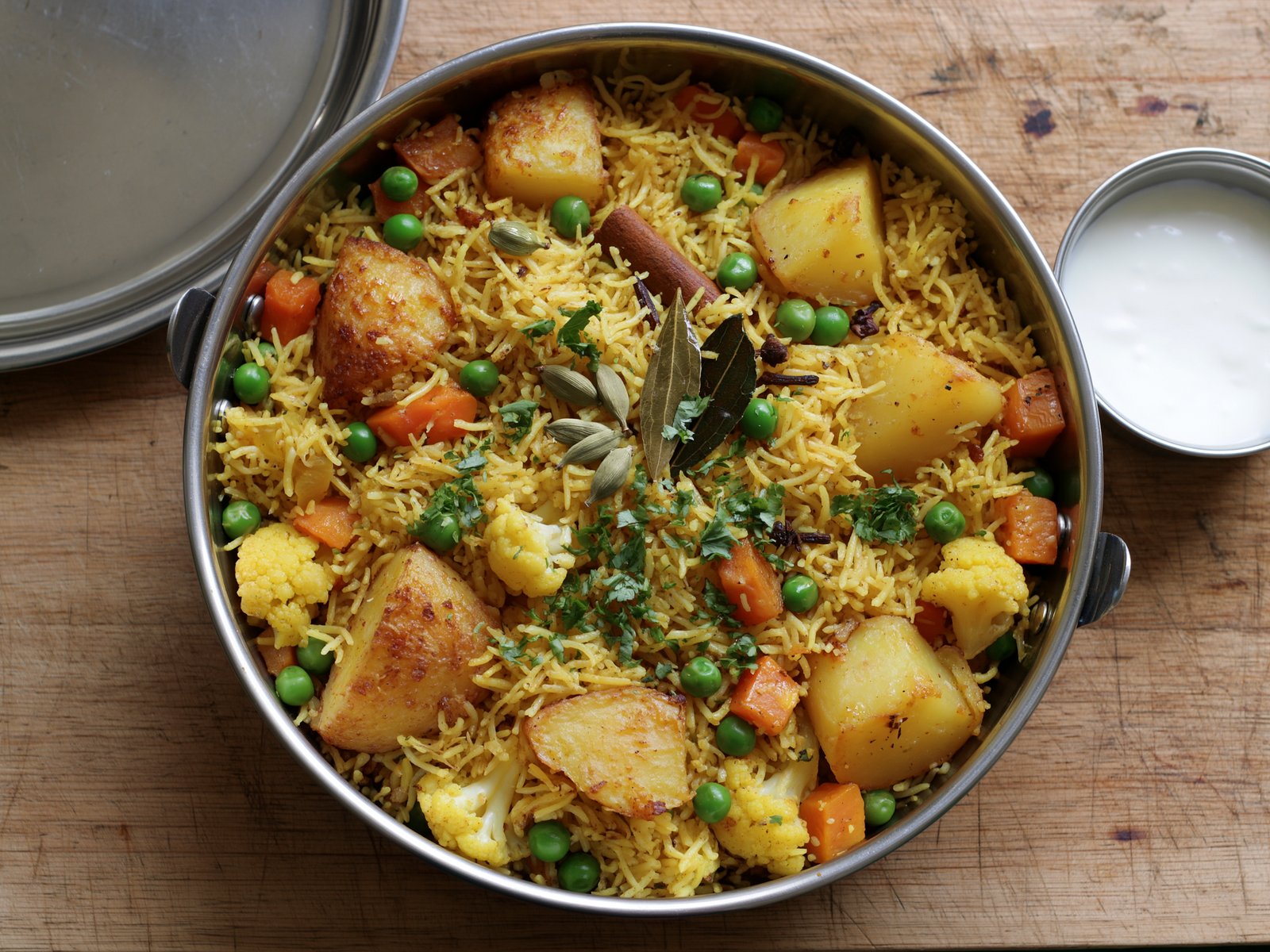
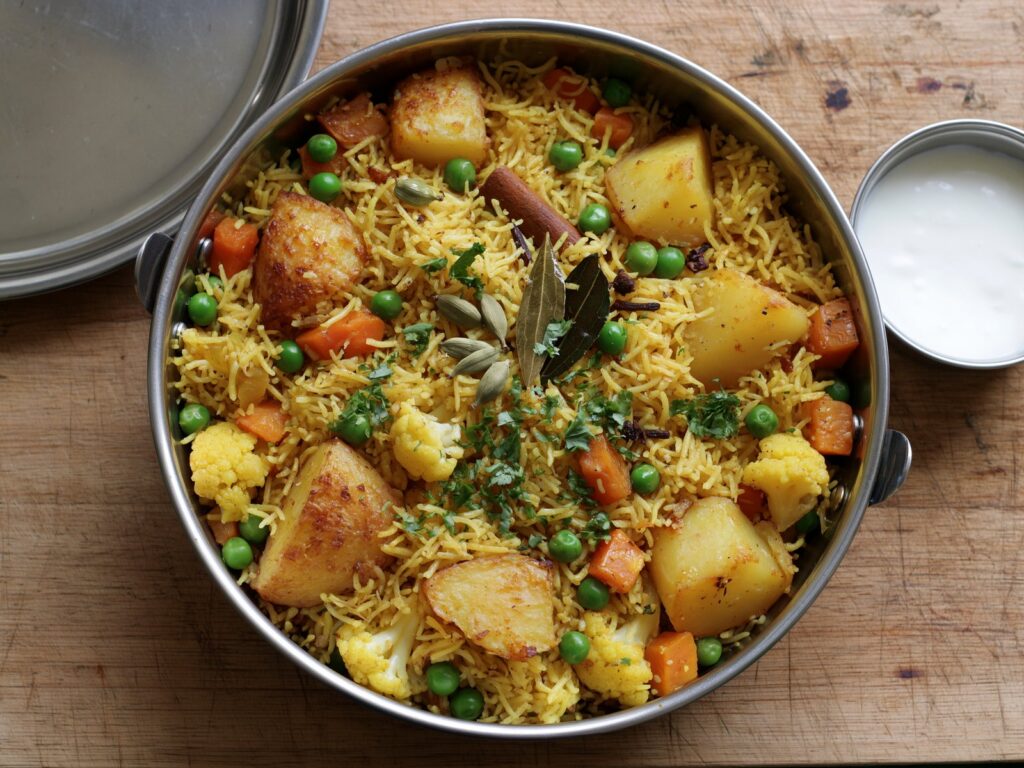
Tehri is what the eastern plain cooks when it wants a whole meal out of one pot and has no meat in the house. Rice, potatoes and whatever winter vegetables are in — peas, carrots, cauliflower — go in together with whole spices and turmeric and cook as one thing, which is precisely what separates it from a biryani, where rice and filling are cooked apart and layered. The potato is not optional; a tehri without it is a pulao. Its origins are Awadhi rather than Bihari, and the story usually attached to it is that it was devised as the meatless version for Hindu clerks working in Muslim households, with the potato standing in for the mutton — a claim repeated more often than it is evidenced. What is not in doubt is where it ended up. In eastern Uttar Pradesh and across Bihar it became the ordinary Sunday pot and the thing packed into a lunch tin, sitting in the same winter rotation as nimona and eaten with curd, papad and a spoon of ghee stirred through at the table.
INGREDIENTS
- 350 g aged basmati rice
- 4 tbsp mustard oil
- 3 medium potatoes (cut into large chunks)
- 1 tsp cumin seeds
- 1 tsp fennel seeds (saunf)
- 2 bay leaves
- 1 stick cinnamon
- 4 green cardamom pods
- 1 black cardamom pod
- 5 cloves
- 10 black peppercorns
- 1 large onion (sliced)
- 2 green chillies (slit)
- 3 cm ginger (grated)
- 6 garlic cloves (crushed)
- 2 medium tomatoes (chopped)
- 1 tsp turmeric
- 1 tsp coriander powder
- ½ tsp red chilli powder
- 150 g green peas
- 1 medium carrot (diced)
- 150 g cauliflower (in small florets)
- 2 tsp salt
- 650 ml hot water
- 2 tbsp ghee
- a handful of coriander leaves (chopped)
METHOD
- Rinse the rice until the water runs clear, then soak for 20 minutes and drain.
- Heat the mustard oil until it smokes, then take it off the heat for a moment.
- Return to medium-high heat and fry the potato chunks until golden on all faces. Lift out and set aside.
- Add the cumin, fennel, bay, cinnamon, both cardamoms, cloves and peppercorns and let them foam for a few seconds.
- Add the onion and fry until golden, then the green chillies, ginger and garlic for a minute more.
- Stir in the tomatoes, turmeric, coriander powder and chilli powder and cook until the oil separates.
- Add the peas, carrot and cauliflower and fry for three minutes.
- Tip in the drained rice and turn it gently through the masala for two minutes until every grain is coated and smells toasted.
- Return the potatoes, add the salt, and pour in the hot water.
- Bring to a hard boil, then cover tightly, drop the heat to its lowest, and cook undisturbed for 15 minutes.
- Take off the heat and leave the lid on for 10 minutes more without lifting it.
- Fork through the ghee and coriander, and serve with curd and papad.