Rugra ki Sabzi

Rugra surfaces for a few weeks a year, at the base of sal trees, in the first heavy rain of the monsoon — small white puffballs with a tough skin and a dark heart, pushed up out of the laterite soil. It cannot be farmed. Every rugra sold in Ranchi’s markets was found, by Munda and Oraon women who know which stands of sal to walk and when, and it is theirs to sell for the fortnight it lasts. Cooked plainly in mustard oil with onion, garlic, dried chilli and turmeric, it eats like meat, dense and chewy and deeply savoury, which is why it arrives exactly when the monsoon months keep many households vegetarian. It is getting harder to find — the rains are less reliable than they were and the sal forests are being cut — which is part of why it is prized, and why the fortnight it appears is cooked with some ceremony. The cooking itself is plain and fast, and it survives substitution better than most foraged things, because what the spicing is built around is density and savour rather than any flavour unique to the forest.
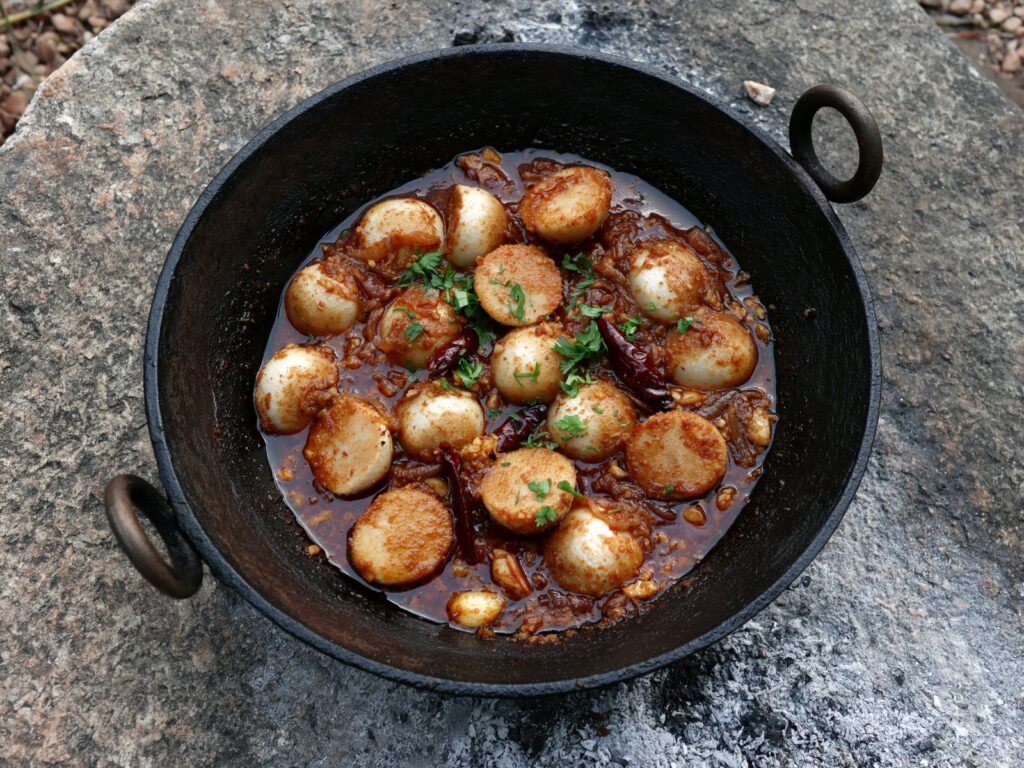
Rugra ki Sabzi
Zone: Gangetic Heartland
SOURCE: Adapted from Krishi Jagran’s field report on rugra — Ranchi market sourcing, Lycoperdon identification and the washing method, with the cooking as it is done in Munda and Oraon households (English-language agricultural journal)
LOCAL NAME: रुगड़ा की सब्ज़ी
Servings 4 people
Prep Time 25 minutes
Cook Time 25 minutes

INGREDIENTS 

METHOD 

  • If using rugra: sort them one by one, pressing each between finger and thumb, keeping the firm ones and discarding any that give. Submerge for an hour so the clay softens, then wash through several changes of water, rubbing each between your fingers until the water runs clear. Halve or quarter depending on size.
  • If using king oyster: soak the dried porcini in 250ml warm water. Cut the mushroom stems into 2cm rounds, sear them in a dry hot pan with no oil until they squeak and colour on both sides, then set aside. Chop the soaked porcini and keep the strained liquor.
  • Heat the mustard oil until it smokes, then take it off the heat for a moment to soften its raw edge.
  • Return to medium heat and add the cumin, bay leaf and dried chillies. Let them darken for a few seconds.
  • Add the onions and fry until deep golden. Add the garlic, ginger and green chillies and fry for another minute.
  • Add the tomato, turmeric, coriander powder, chilli powder and salt. Cook until the oil separates at the edges.
  • Add the rugra and fry for 5 minutes so they take colour, or return the seared king oyster and the chopped porcini and stir to coat.
  • Pour in the water — or the strained porcini liquor made up to 250ml — cover, and simmer for 12-15 minutes until the gravy thickens and clings.
  • Scatter with coriander and serve with plain rice.
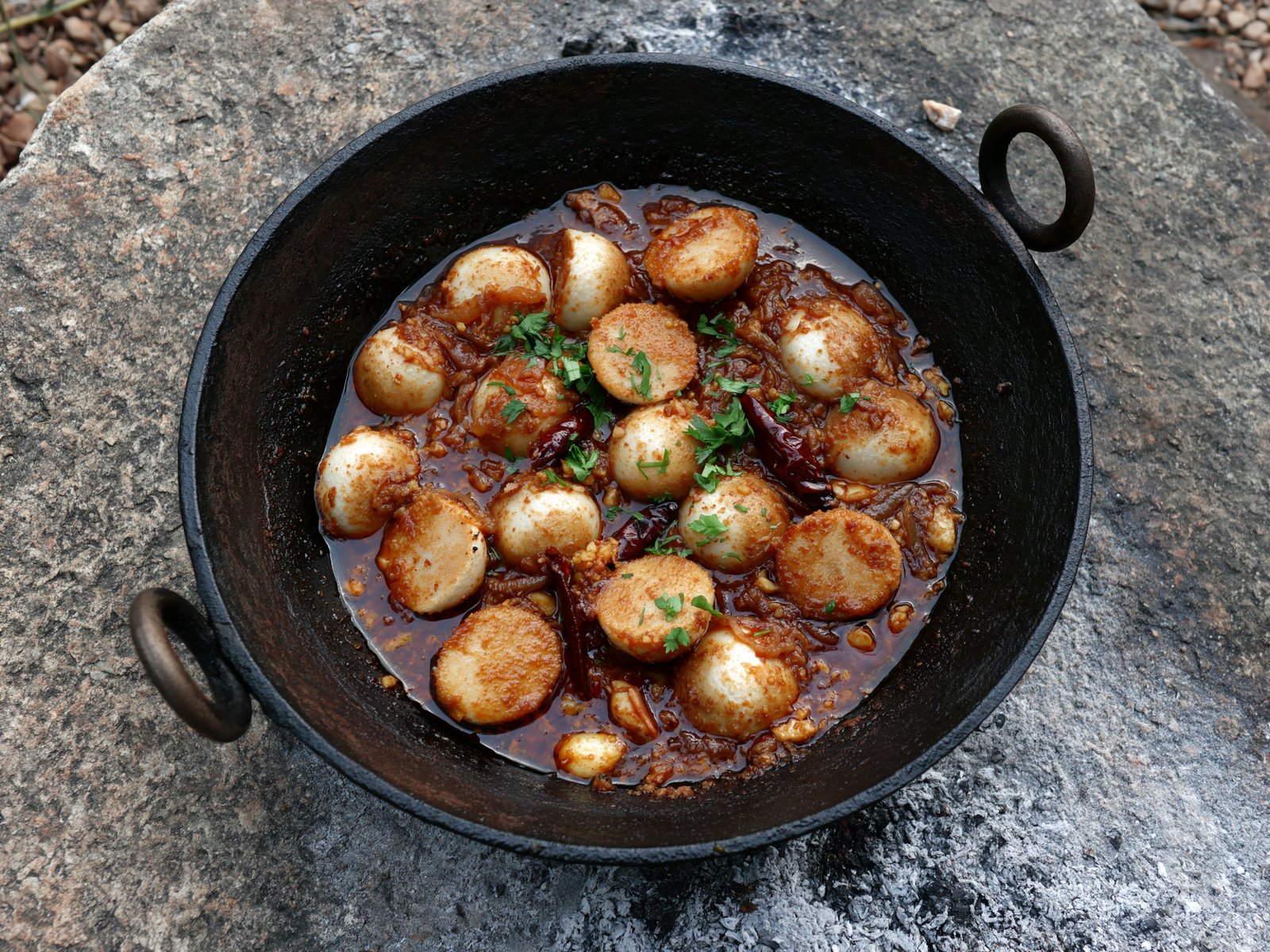
Start Cooking

NOTES

UK adaptation: Rugra is not sold in Britain and cannot be farmed, so this is a substitution rather than a swap — but a good one. Use king oyster mushrooms (eryngii), sold at Waitrose, Ocado and most Asian supermarkets: the thick stems cut into 2cm rounds are the only widely-stocked mushroom dense enough to hold their shape through a simmer. Chestnut and button mushrooms weep water and collapse; do not use them here. Add a small handful of dried porcini or shiitake, soaked in warm water, and use the strained soaking liquor in place of the plain water — that is what carries the savoury depth the fresh mushroom lacks. If you forage, Britain’s own common and giant puffballs fruit in late summer and early autumn and are the closest thing in the country, botanically and seasonally; cut any puffball in half from top to bottom and use it only if the inside is pure, even white with no gills and no outline of a mushroom shape inside, or buy from a reputable forager. Mustard oil from a South Asian grocer. Everything else widely available.
US adaptation: Rugra is not available in the United States in any form. Use king trumpet or king oyster mushrooms from Whole Foods, H-Mart or an Asian grocery, cut into thick rounds; skip cremini and white button, which release too much water. Dried porcini from any supermarket, soaked, chopped in, and the strained liquor used in place of water. Foragers in the eastern and midwestern states will find common and giant puffballs in late summer — cut any puffball top to bottom and use it only if the interior is uniformly white with no gills or internal mushroom outline. Mustard oil from Patel Brothers or an Indian grocery. Everything else widely available.
Cook’s note: Whatever you cook this with, density is the dish — brown the mushroom hard and dry before any liquid comes near it. With real rugra, sort each one by pressing it between finger and thumb and discard any that give, soak for an hour so the clay softens, then wash through several changes of water until it runs clear; grit left in ruins the pot. With king oyster, cut the stems into 2cm rounds, sear them in a dry hot pan with no oil at all until they squeak and take colour, and only then add the mustard oil — mushrooms put in wet steam themselves and turn slippery, which is the one failure this dish cannot survive. Do not salt the mushrooms early, as salt pulls the water straight back out and undoes the sear. And treat the dried porcini as structural rather than optional in the substituted version: soak them while you prep, chop them into the gravy, and pour the strained soaking liquor in instead of the water. The fresh mushroom gives you the bite; the dried one gives you the savour, and you need both to get near what rugra does on its own.
No ratings yet
Cook this differently? Share your family’s version — or tell us what we’re missing.
Contribute

Leave a Comment

Your email address will not be published. Required fields are marked *

Recipe Rating


Scroll to Top