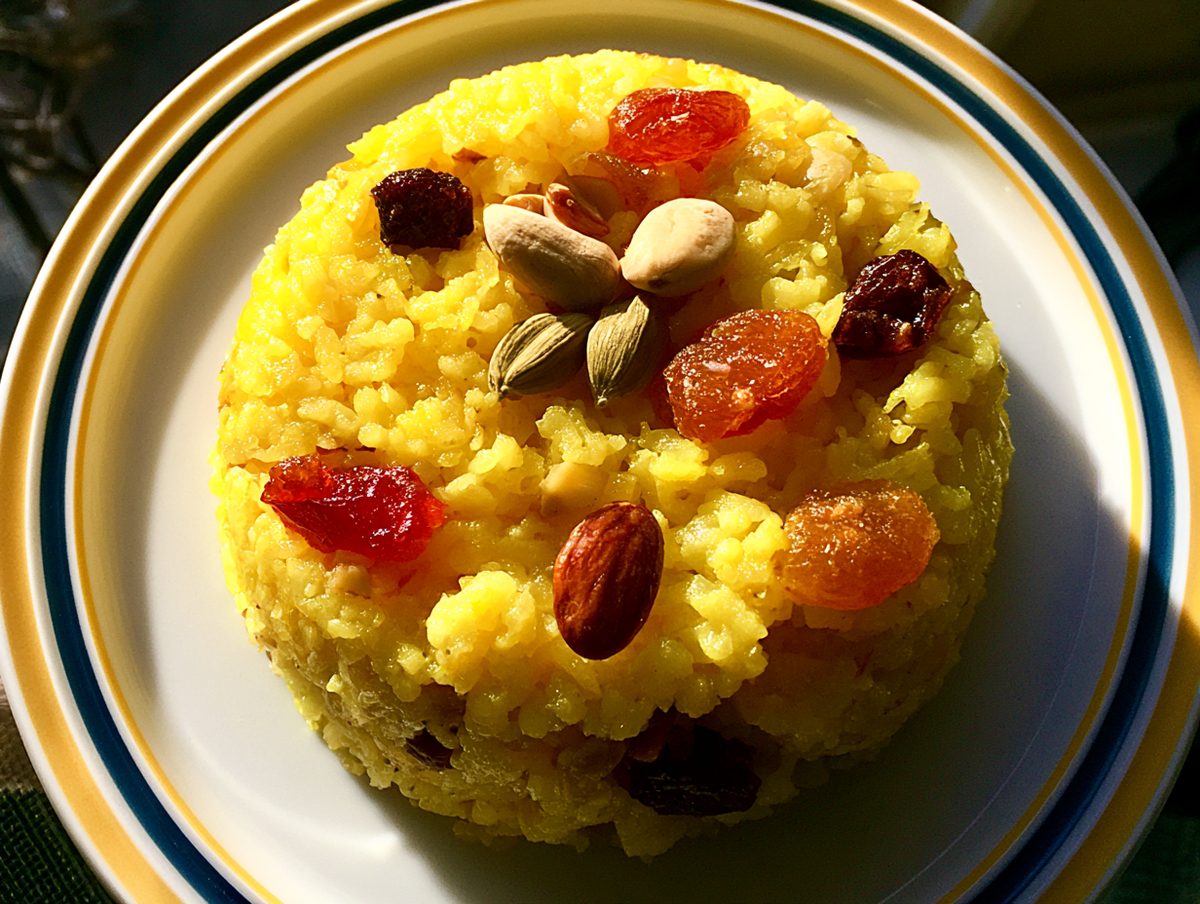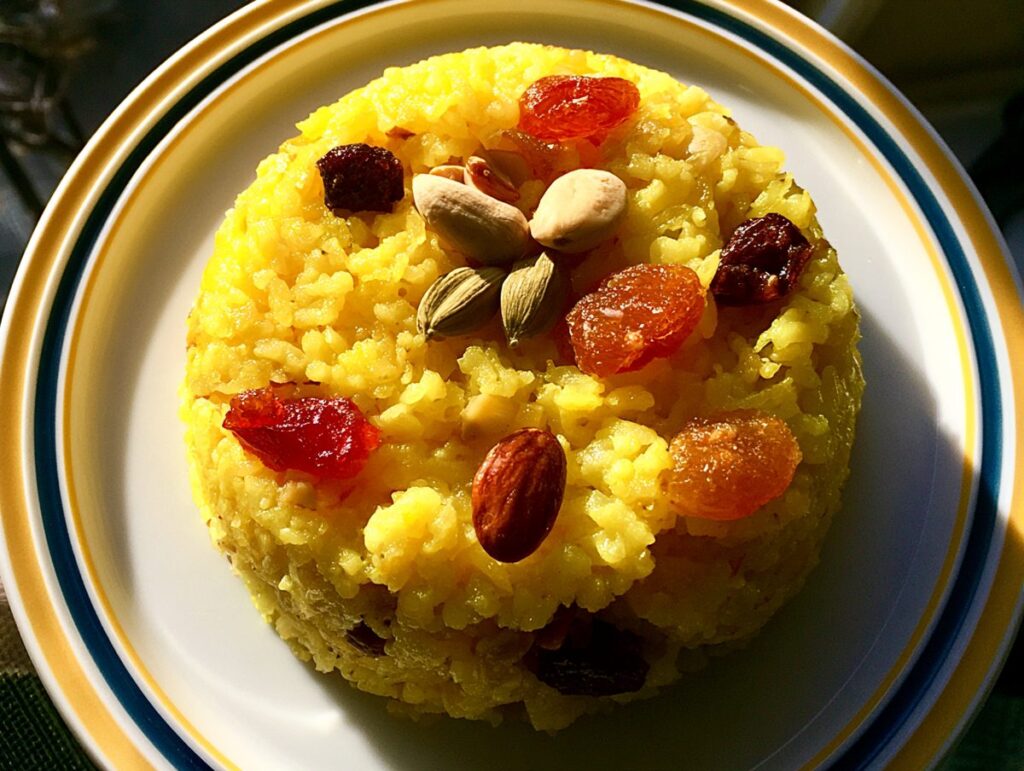
Zarda is the bright sweet rice of celebration across the Mughlai north and Punjab — long basmati grains stained saffron-yellow, sweetened, and studded with nuts, raisins and candied fruit, served at weddings and on Eid, often alongside a spicy biryani. The name is the giveaway: zard is Persian and Urdu for yellow, and the dish traces to the Mughal table, where saffron, sugar and dry fruits marked a royal sweet. The technique is biryani’s cousin — the rice is parboiled with cardamom, cloves and a little colour, drained while still firm, then layered with sugar and fried nuts and finished on dum so each grain stays separate and glossy rather than collapsing into pudding. This version follows Nosheen of Untold Recipes by Nosheen, whose zarda keeps the firm, separate grains and the dum that set it apart from a mush.
INGREDIENTS
- 2 cups sella (parboiled basmati rice, soaked 30 minutes)
- a pinch of saffron (soaked in 2 tbsp warm milk (or a little yellow food colour))
- 4 green cardamom pods
- 4 cloves
- 4 tbsp ghee
- 1 cup sugar
- 3 tbsp mixed almonds (pistachios and cashews, slivered)
- 2 tbsp raisins
- 3 tbsp tutti-frutti (candied papaya)
- ¼ tsp ground cardamom
- khoya (mawa, to garnish (optional))
METHOD
- Boil plenty of water with 2 of the cardamom pods, 2 cloves and the food colour (if using), then add the drained rice.
- Cook until the rice is about 80 per cent done — still firm — then drain at once.
- Heat the ghee in a heavy pan and fry the slivered nuts and raisins until light golden, then lift most out.
- Sizzle the remaining cardamom and cloves in the ghee, then return the drained rice gently.
- Layer in the sugar, fried nuts, raisins, tutti-frutti, ground cardamom and the saffron milk.
- Cover tightly and cook on the lowest heat (dum) until the sugar has melted in and the rice is cooked through, about 15 minutes.
- Fold through gently with a slotted spoon, taking care not to break the grains.
- Serve warm, garnished with the reserved nuts and a little khoya if you like.