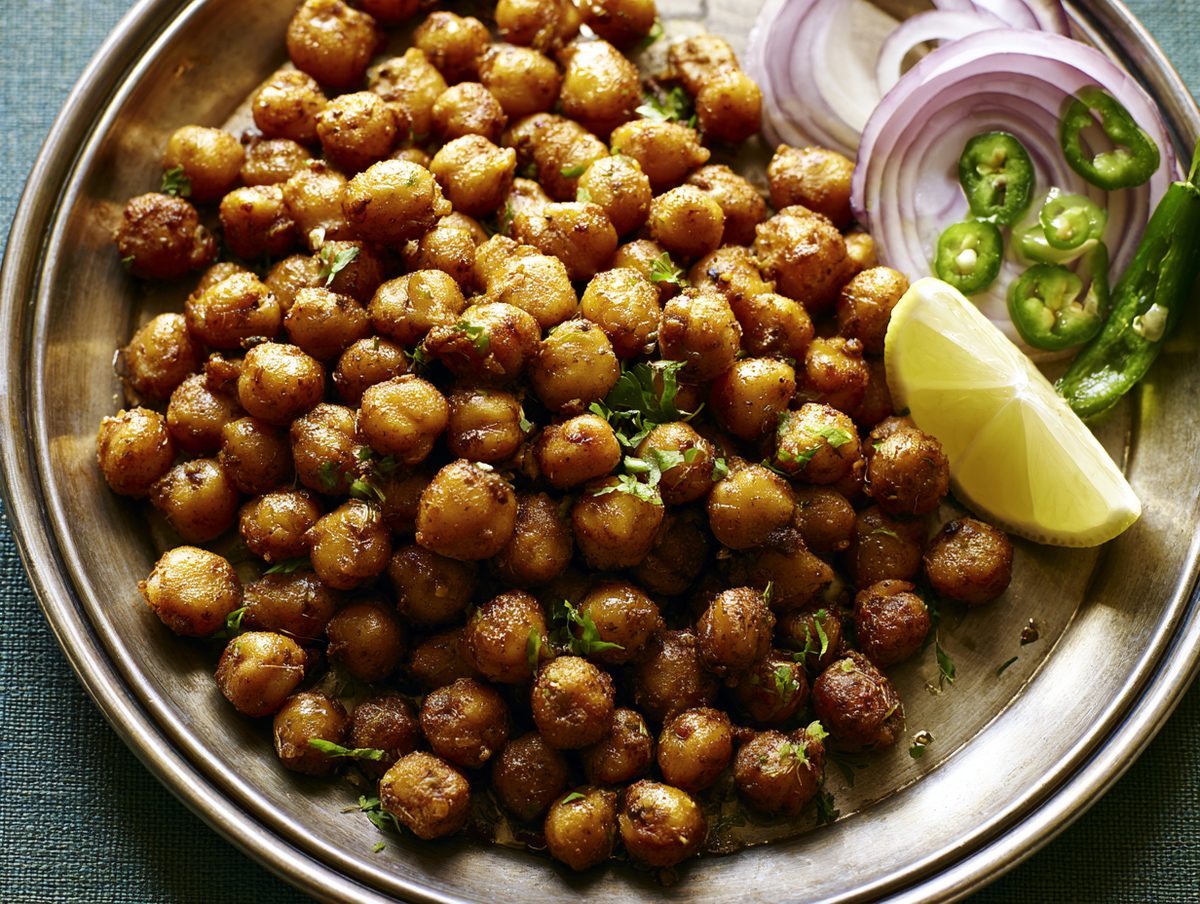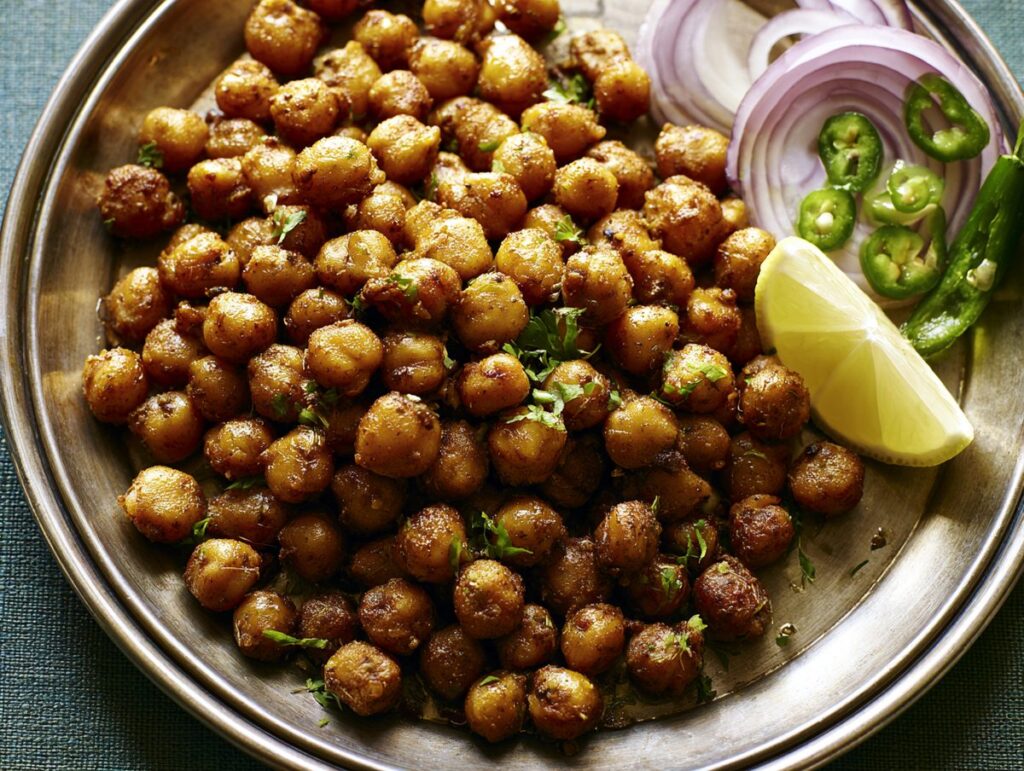
Pindi chana takes its name from Rawalpindi, the old garrison city on the Pothohar plateau now in Pakistani Punjab, and it is defined as much by what it leaves out as what it puts in: no onion, no tomato, no gravy. The chickpeas are boiled dark — cooked with black tea and sometimes a piece of dried amla to stain them almost black — then tossed, still hot, in a dry roasted-spice mix sharp with amchur and ground pomegranate seed (anardana), so the masala clings to each chickpea rather than drowning it in sauce. At Partition the dish travelled east with migrating families and threw off a close cousin, Amritsari chole, across the new border; both are darker and tangier than an everyday Punjabi chole masala. It is eaten with bhatura, kulcha or puri, slivered raw onion, ginger juliennes and a wedge of lemon on the side. This version follows the food writer Kanan Patel, whose Spice Up The Curry keeps the dish in its dry, no-onion, no-tomato Rawalpindi form rather than the gravied versions that pass for pindi chana elsewhere — an English-language record of the older, plainer dish.
INGREDIENTS
- 250 g dried chickpeas (kabuli chana, soaked overnight (or 2 x 400g tins, drained))
- 1 black tea bag (or 1 tsp loose black tea tied in muslin)
- 1 piece dried amla (optional, for colour)
- 1 black cardamom pod
- 1 small cinnamon stick
- 2 bay leaves
- 1 tsp salt (plus more to taste)
- 2 tbsp anardana (dried pomegranate seeds)
- 1 tbsp cumin seeds
- 1 tbsp coriander seeds
- 1 tsp Kashmiri red chilli powder
- ½ tsp red chilli powder
- 1 tsp amchur (dry mango powder)
- ½ tsp garam masala
- ¼ tsp black salt (kala namak)
- 3 tbsp ghee or oil
- 1 inch ginger (julienned)
- 2 green chillies (slit)
- 1 small onion (sliced, to serve)
- lemon wedges and chopped coriander (to serve)
METHOD
- Drain the soaked chickpeas and pressure-cook them with the tea bag, dried amla, black cardamom, cinnamon, bay leaves, 1 tsp salt and plenty of water until very soft, 20–25 minutes; if using tins, simmer them with the tea bag and whole spices for 10 minutes instead.
- Drain, reserving a cup of the cooking liquid, and discard the tea bag and whole spices — the chickpeas should have taken on a deep brown colour.
- Dry-roast the anardana, cumin and coriander seeds in a hot pan until fragrant and a shade darker, then grind to a coarse powder.
- Mix the ground spices with the Kashmiri chilli, red chilli, amchur, garam masala and black salt.
- Warm the ghee in a wide pan, add the ginger and green chillies, and let them sizzle for a few seconds.
- Tip in the drained chickpeas with the dry spice mix and toss over medium heat for 4–5 minutes so the masala coats them, mashing a few against the pan to thicken.
- Add a splash of the reserved cooking liquid only if it looks too dry, and cook another 2–3 minutes; it should be dry, not saucy.
- Check the salt, scatter with coriander, and serve with sliced raw onion, lemon wedges and bhatura, kulcha or puri.