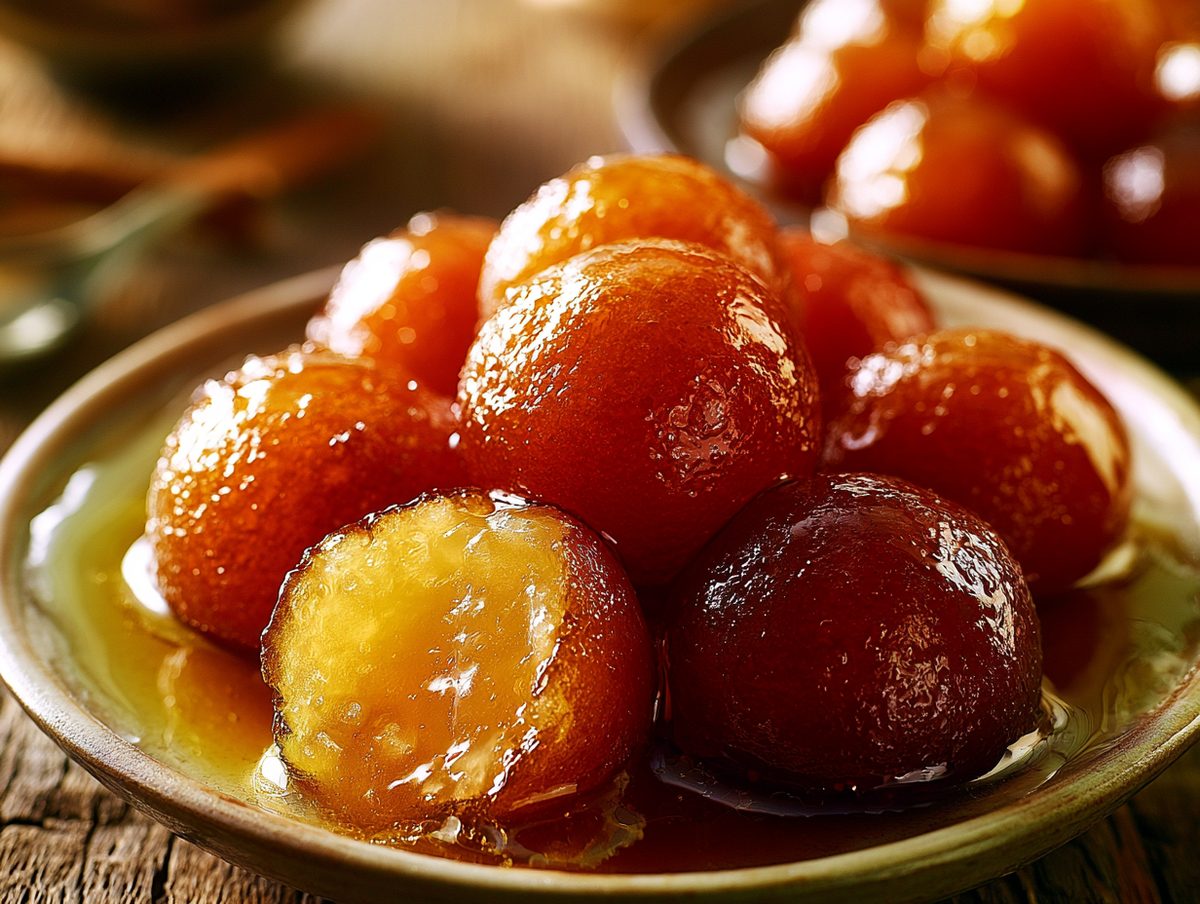
Gulab jamun is the Mughlai sweet the whole subcontinent claims — soft khoya dumplings fried dark and bathed in rose-and-cardamom syrup, the festival sweet of Diwali, Eid and every wedding from Old Delhi outwards. The name is Persian-rooted, gol and ab for flower and water, after the rose-scented syrup, and legend has it the dessert came together in a Mughal royal kitchen — Shah Jahan’s cooks are the usual claim. The body is khoya, milk reduced to solids, kneaded soft with a little flour and paneer, rolled crack-free, fried slow until deep brown, then rested in a warm one-string syrup until it swells and turns juicy. This version follows Hebbar’s Kitchen, whose khoya gulab jamun keeps the mawa base and the slow fry that make them melt rather than bounce.
INGREDIENTS
- 200 g khoya (mawa, grated)
- 75 g paneer (grated)
- 4 tbsp plain (maida flour)
- ¼ tsp baking powder (or a pinch of baking soda)
- ½ tsp ground cardamom (for the dough)
- 1 –2 tbsp milk (to bind)
- ghee or oil (for deep-frying)
- 400 g sugar (for the syrup)
- 400 ml water (for the syrup)
- a generous pinch of saffron
- ½ tsp ground cardamom (for the syrup)
- 1 tsp rose water
- a squeeze of lemon juice
- slivered pistachios (to garnish)
METHOD
- Make the syrup first: simmer the sugar and water with the saffron and cardamom until it reaches a one-string consistency, then stir in the rose water and lemon juice and keep warm.
- Mash the grated khoya and paneer smooth, then gently mix in the flour, baking powder and cardamom.
- Add a little milk and bring together into a soft dough without kneading hard.
- Roll into smooth, crack-free balls, smaller than you want them, as they swell.
- Heat the ghee to medium-low and fry the balls slowly, stirring the oil so they colour evenly, until deep golden-brown.
- Lift out and drop the hot balls straight into the warm syrup.
- Rest them in the syrup at least 1–2 hours until they swell and turn juicy.
- Serve warm, garnished with slivered pistachios.