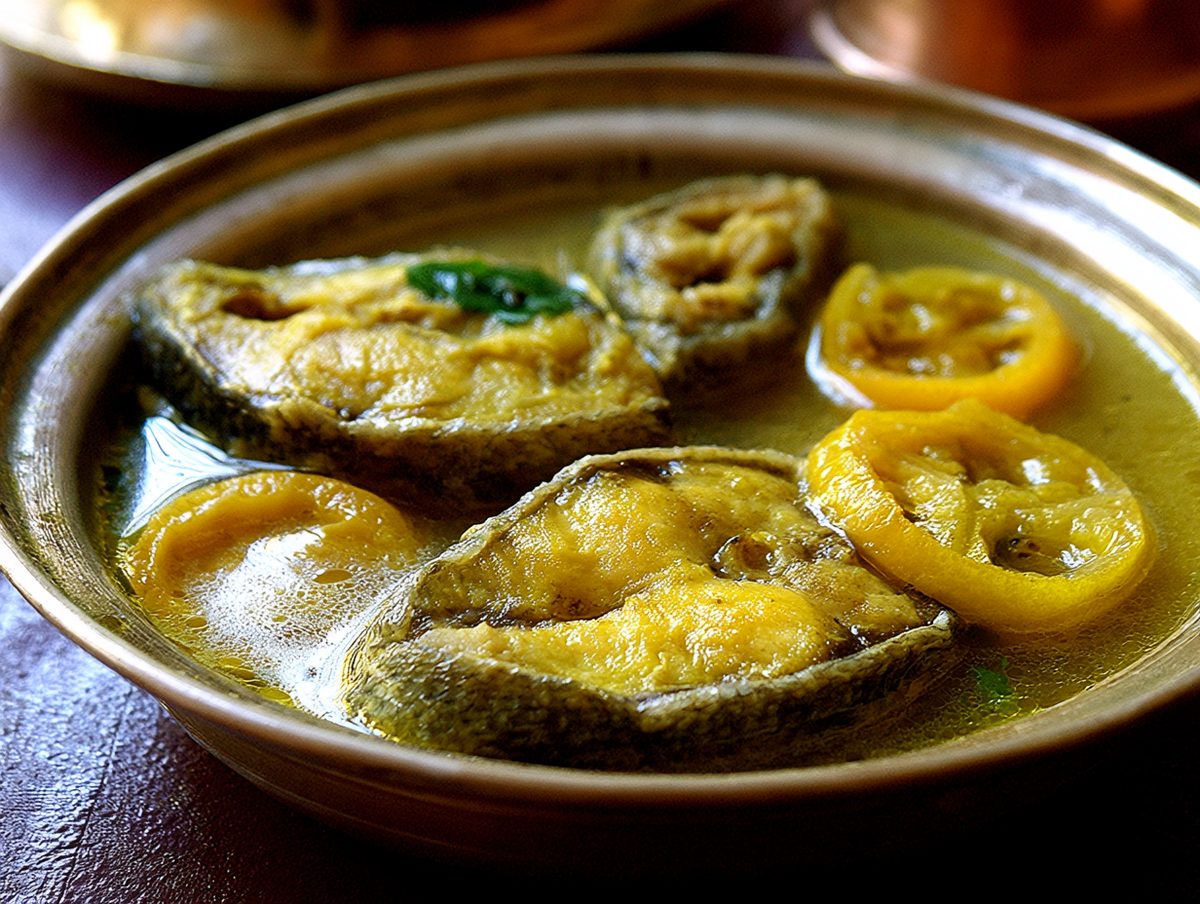
Fish tenga — tenga meaning sour — is the defining dish of the Assamese table, a light, broth-like fish curry built around the acidity of elephant apple (ou tenga), tomato, or the dried rind of the kordoi fruit. Where most of the Delta’s fish preparations are mustard-heavy and rich, tenga is the opposite: pale, clean, and aggressively sour, with almost no oil and no frying of spices.
It is eaten in summer specifically because the sourness is believed to cool the body. The elephant apple brings a tartness unlike any citrus — faintly astringent, deeply aromatic, entirely its own thing.
Zone: River Delta
SOURCE: Assamese home cook recipe, Jorhat, Assam, transcribed from Assamese-language food blog, 2020. Translated from Assamese.
LOCAL NAME: মাছ টেঙা
INGREDIENTS
- 600 rohu or catla fish (cut into steaks (or trout or sea bream))
- 0.5 teaspoons turmeric
- 1 teaspoons salt
- 3 tablespoons mustard oil
- 1 teaspoons tsp mustard seeds
- 2 dried red chillies
- 2 medium tomatoes (roughly chopped)
- 2 green chillies (slit)
- 3 slices elephant apple (ou tenga or 2 tbsp kokum, soaked)
- 600 milliliters water
- 1 sprig fresh coriander (to finish)
METHOD
- Marinate the fish: Rub the fish steaks with the turmeric and salt. Set aside for 15 minutes.
- Fry the fish: Heat the mustard oil in a wide pan over medium-high heat until it shimmers. Fry the fish steaks for 2 minutes each side until lightly golden. Remove and set aside — they will finish cooking in the broth.
- Build the broth: In the same pan add the mustard seeds and dried red chillies. Let them pop for 20 seconds. Add the tomatoes and cook for 3 minutes until they begin to soften and collapse.
- Simmer the souring agent: Add the water, elephant apple or kokum, and green chillies. Bring to a gentle boil and simmer for 8 minutes. The broth should be thin, pale golden, and sharply sour. Taste and adjust salt.
- Finish and serve: Return the fish to the pan. Simmer gently for 5 minutes until cooked through. Do not stir — move the pan gently if needed. Finish with fresh coriander and serve immediately over steamed white rice.
NOTES
UK: Elephant apple (ou tenga) from specialist South Asian grocers; dried slices occasionally from online Assamese food retailers. Tinned kokum as a sourness substitute with a different but compatible flavour profile. Rohu or catla fish from South Asian fishmongers; trout or sea bream as accessible alternatives. Kordoi (starfruit) dried rind almost impossible outside specialist suppliers — omit or substitute a strip of dried lime rind.
US: Elephant apple very rarely available outside Assamese community shops in NYC or Chicago. Kokum from Patel Brothers or Indian grocery stores as substitute. Rohu from South Asian or Chinese fishmongers; trout from any fishmonger as alternative. Starfruit (carambola) available fresh from H-Mart and Latin American grocery stores — use fresh slices as kordoi substitute.
Cook this differently? Share your family’s version — or tell us what we’re missing.
Contribute